Finding Wheelchair Accessible Clinics and Medical Facilities
Navigating the healthcare system in a new country is daunting enough, but when you add a wheelchair or limited mobility into the mix, the logistics can feel overwhelming. I remember the sinking feeling of arriving at my first specialist appointment in Oslo only to find a heavy manual door and a "quaint" set of three stone steps that weren't mentioned on the website. This guide provides the practical, boots-on-the-ground strategies you need to find truly accessible clinics and medical facilities across Norway.
Understanding Accessibility Standards in Norwegian Medical Facilities
Norway is often lauded for its commitment to social equality, and this extends to "Universell utforming" or Universal Design. This legal principle dictates that the environment should be usable by all people, regardless of their physical abilities. However, as any veteran expat will tell you, the reality on the ground is a mix of cutting-edge modern architecture and charming, but inaccessible, historical buildings.
The primary regulation governing this is TEK17, the current building code. Any medical facility built or significantly renovated after 2017 must adhere to very strict accessibility standards, including wide corridors, automatic door openers, and specific bathroom configurations. The challenge usually lies with older clinics located in the city centers of Oslo, Bergen, or Trondheim, where "grandfathered" buildings may still have narrow elevators or high thresholds.
When you are looking for a new doctor within The Fastlege Scheme: Navigating Norway’s GP System, you must realize that the digital list provided by the government doesn't always have a filter for "wheelchair accessible." This means the burden of verification often falls on the patient. It is common to find that a clinic is technically accessible via a back entrance or a freight elevator, but these details are rarely advertised. You have to be proactive and ask the specific questions that receptionist staff might overlook if they don't use a chair themselves.
How to Vet a Medical Facility Before Your Visit
Before you even book an appointment, there are several layers of "reconnaissance" you should perform. The first stop for any resident is the national health portal. While Navigating the Helsenorge App in English: A Step-by-Step Translation can help you manage your appointments, it doesn't always show the physical floor plan of the clinic.
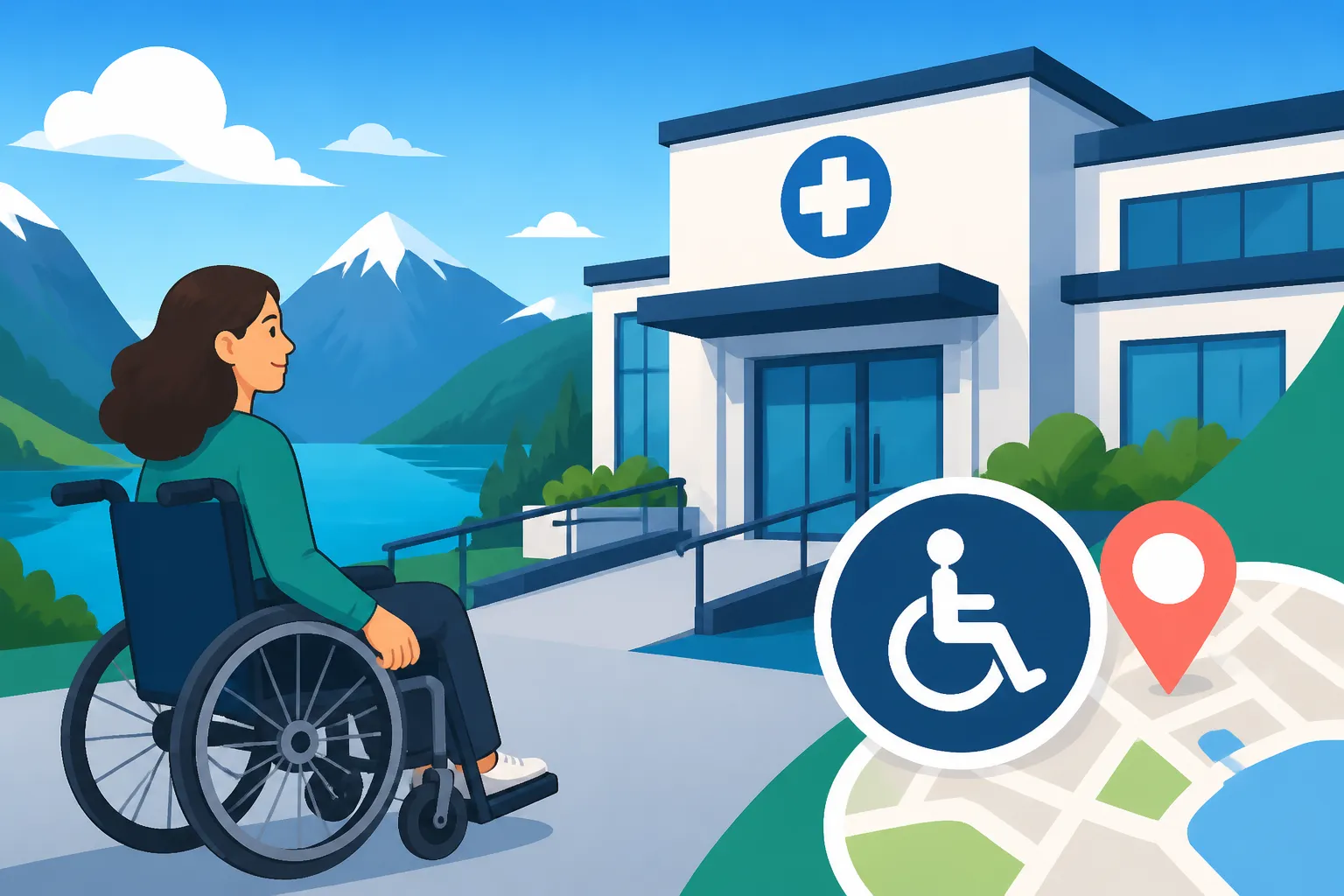
One of the most reliable ways to check a facility is to use Google Maps Street View to look at the entrance. Look for "Handikap-parkering" (disabled parking) signs and the presence of a ramp. However, even a ramp can be deceptive if there is a heavy manual door at the top. I have often had to call ahead and ask: "Er det automatiske døråpnere?" (Are there automatic door openers?). This small detail is the difference between independence and having to wait for a stranger to help you enter the building.
If you are a digital nomad or a frequent traveler using a plan like SafetyWing, you might prefer more modern, private clinics. Brands like Dr. Dropin or Aleris are almost always located in newer commercial buildings or shopping centers, which are 100% compliant with the latest accessibility codes. While Private Health Insurance in Norway: Is It Worth the Extra Cost? is a common debate among expats, the guarantee of a modern, accessible building is often a strong "pro" for those with mobility challenges.
Navigating Public Hospitals and Specialist Care
If your GP issues Specialist Referrals in Norway: How the Waiting Times Work, you will likely be sent to a larger regional hospital or a specialized outpatient clinic. The good news is that Norwegian Hospitals: Inpatient Care, Outpatient Care, and Patient Choice generally offer the highest level of accessibility. Facilities like Rikshospitalet in Oslo or Haukeland in Bergen are sprawling complexes designed with wheelchairs in mind. They feature lowered reception counters, spacious elevators with tactile buttons, and accessible bathrooms on every floor.
When attending a hospital, always check which "Inngang" (Entrance) is closest to your department. Large hospitals have multiple wings, and arriving at the wrong entrance can mean a half-mile trek through internal corridors. Most hospitals provide internal maps on their websites, and you can often request a "portør" (porter) to assist you with navigation if you are alone and the facility is particularly complex.
For those who have more comprehensive coverage through Cigna Global, you might have access to private specialists who operate out of smaller, high-end offices. Always confirm that these private suites have an elevator that can accommodate a motorized wheelchair, as some older "luxury" buildings in Frogner or Sentrum have elevators that are surprisingly small.
| Feature | Public Hospitals | Private Clinics (Modern) | Older GP Offices |
|---|---|---|---|
| Entrance | Level or Ramped | Level / Automatic | Often 1-2 steps |
| Elevators | Large / Stretcher size | Standard / Modern | May be very small |
| Restrooms | Fully Accessible | Fully Accessible | Hit or miss |
| Parking | Dedicated HC spots | Often in garages | Street parking only |
| Doorways | Automatic | Automatic | Manual / Heavy |
Specialized Transportation and Pasientreiser
One of the most critical services for wheelchair users in Norway is Pasientreiser. This is the department responsible for "Patient Travel." If your medical condition prevents you from using public transport, or if the public transport in your area isn't accessible, you are entitled to subsidized or free transport to and from your medical appointments.
To use this, your doctor must submit a requisition. For wheelchair users, this usually means a "TT-bil" (a specialized taxi with a ramp or lift). Do not assume this happens automatically. When you get your referral, explicitly ask your doctor: "Kan du skrive en rekvisisjon for Pasientreiser på grunn av rullestol?" (Can you write a requisition for patient travel because of the wheelchair?).
Even if you are using Legevakten (116 117): When and How to Use the Out-of-Hours Service for an urgent but non-life-threatening issue, you can still access Pasientreiser. However, in an emergency, you should always call 113. If you have international coverage through SafetyWing or Cigna Global, they may also provide assistance with medical transport, but Pasientreiser is the primary public solution for residents.
Patient Advocacy and Your Rights
If you encounter a medical facility that is advertised as accessible but fails to meet basic standards, you have the right to speak up. The Norwegian Federation of Organizations of Disabled People (FFO) and the Norwegian Association of the Disabled (NHF) are excellent resources for advocacy. They can provide advice on how to navigate the system and how to hold facilities accountable to the Equality and Anti-Discrimination Act.
Furthermore, if you feel that your care has been compromised due to lack of access, you should know about Patient Rights: How to File a Complaint with the Health Authority. Norway takes these complaints seriously. It is not just about your personal inconvenience; it is about ensuring the system works for everyone.
When searching for specific care in major cities, looking for Finding English-Speaking Doctors and Specialists in Oslo can also lead you to clinics that are more accustomed to international standards of service, which often includes better communication regarding physical access. Many of these doctors have worked abroad and understand that accessibility is a prerequisite for care, not an afterthought.
Practical Tips for the Norwegian Winter
The "hidden" barrier to medical accessibility in Norway is the weather. Between November and March, even a perfectly designed ramp can become a hazard if it isn't properly cleared of snow and ice. When booking winter appointments, try to schedule them for midday when the sun (if it's up!) has had a chance to melt the overnight frost, or when the "vaktmester" (janitor) has finished salting the walkways.
Always carry a "brodder" (ice spikes) for your wheels or your shoes if you are an ambulatory wheelchair user. Additionally, be aware that salt used on Norwegian roads is incredibly corrosive to metal. If you are visiting clinics frequently in the winter, make sure to wipe down your chair's frame and moving parts regularly to prevent rust. Most modern clinics will have a large mat at the entrance; take a moment to spin your wheels there to get the slush off before heading into the sterile environment of a doctor's office.
If you are newly arrived and still setting up your life, consult a First 30 Days Health Checklist: GP, Frikort, and Pharmacies to ensure you have your ID numbers ready. Having your "Fødselsnummer" makes the process of requesting specialized transport and booking appointments at accessible facilities significantly smoother.
Summary of Key Terminology for Access
When communicating with clinics, using the right Norwegian terms will ensure you get accurate information. Receptionists may be hurried, so being specific helps.
- Heis: Elevator. Ask if it fits a "elektrisk rullestol" (electric wheelchair).
- Terskel: Threshold. Ask if there are "høye terskler" (high thresholds) inside the clinic.
- HC-toalett: Accessible bathroom.
- Rullestolrampe: Wheelchair ramp.
- Døråpner: Door opener (usually a silver button on the wall).
By combining these linguistic tools with the digital resources provided by Helsenorge and the safety net of providers like Cigna Global or SafetyWing, you can navigate the Norwegian medical landscape with confidence. Accessibility may require an extra step of planning here, but the quality of care you receive once you are inside is among the best in the world.
Disclaimer
This guide is for informational purposes only and does not constitute legal or medical advice. While every effort has been made to ensure the accuracy of this information for 2026, building accessibility and healthcare regulations in Norway are subject to change. Always verify the physical accessibility of a facility directly with the clinic before your appointment. If you are in a medical emergency, call 113 immediately.