Prescription Deliveries: Using Online Pharmacies like Farmasiet
Trying to navigate a physical pharmacy in the middle of a Norwegian winter when you have a fever and the sun sets at 3:00 PM is a special kind of misery. I remember my first winter in Oslo, shivering in a queue at Vitusapotek while trying to translate medical terms on my phone, only to realize I’d forgotten my physical ID. This guide will walk you through the seamless world of online prescription deliveries in Norway, ensuring you never have to trudge through the snow for a bottle of cough syrup again.
How the Digital Prescription System Works in Norway
The backbone of the Norwegian medical system is the "e-resept" (electronic prescription). Unlike many other countries where you might still receive a signed piece of paper, Norway has gone almost entirely paperless. When you visit your doctor—likely through The Fastlege Scheme: Navigating Norway’s GP System—they do not hand you a slip. Instead, they upload the prescription directly to a central national database. This database is linked to your national identity number (fødselsnummer) or D-number. Because everything is stored digitally, any pharmacy in the country, whether it is a physical storefront in Bergen or an online giant like Farmasiet, can "pull" that prescription down and fulfill it once you have authenticated your identity.
To access these prescriptions online, the non-negotiable tool you need is BankID. Without it, you are effectively locked out of the digital healthcare world. When you log into an online pharmacy, you are using BankID to verify that you are the rightful owner of the prescriptions sitting in the system. If you are still waiting for your permanent ID, you might find the process more manual. In those cases, looking into What to Do if You Need a Doctor but Don't Have BankID is essential, as it often means you’ll have to rely on physical pharmacies until your digital identity is sorted.
Online pharmacies like Farmasiet have revolutionized the expat experience because they provide a calm, English-translatable interface where you can see exactly what your doctor has prescribed, how many refills are left, and what the cost will be before you commit. It removes the "counter anxiety" where you might struggle to understand a pharmacist's explanation of dosage in rapid-fire Norwegian. If you are covered by international plans such as Cigna Global, you can often download the digital receipts from these online portals to file your claims much faster than scanning crumpled paper slips.
Step-by-Step Guide to Ordering from Farmasiet and Other Portals
Once you have your BankID ready, the process of ordering is surprisingly straightforward, but there are a few quirks you should know. First, you need to navigate to the "Mine resepter" (My prescriptions) section of the website. After a secure login, you will see a list of all active prescriptions linked to your name. This list includes everything from long-term chronic medications to that one-off antibiotic course.
One of the most helpful features for foreigners is the ability to see the breakdown of Pharmacies and Prescriptions in Norway: White vs Blue Slips. You will notice that some items are marked with a "Blå resept" (blue prescription) status, meaning the government covers a significant portion of the cost. Others are "Hvit resept" (white prescription), where you pay the full price out of pocket. If you are managing a chronic condition, the online portal will also track your progress toward the Healthcare Budgeting: The Frikort Exemption Card and User Fees limit. Once you hit that spending cap, the online pharmacy system automatically updates, and your eligible "blue" medications will suddenly show a price of zero NOK at checkout.
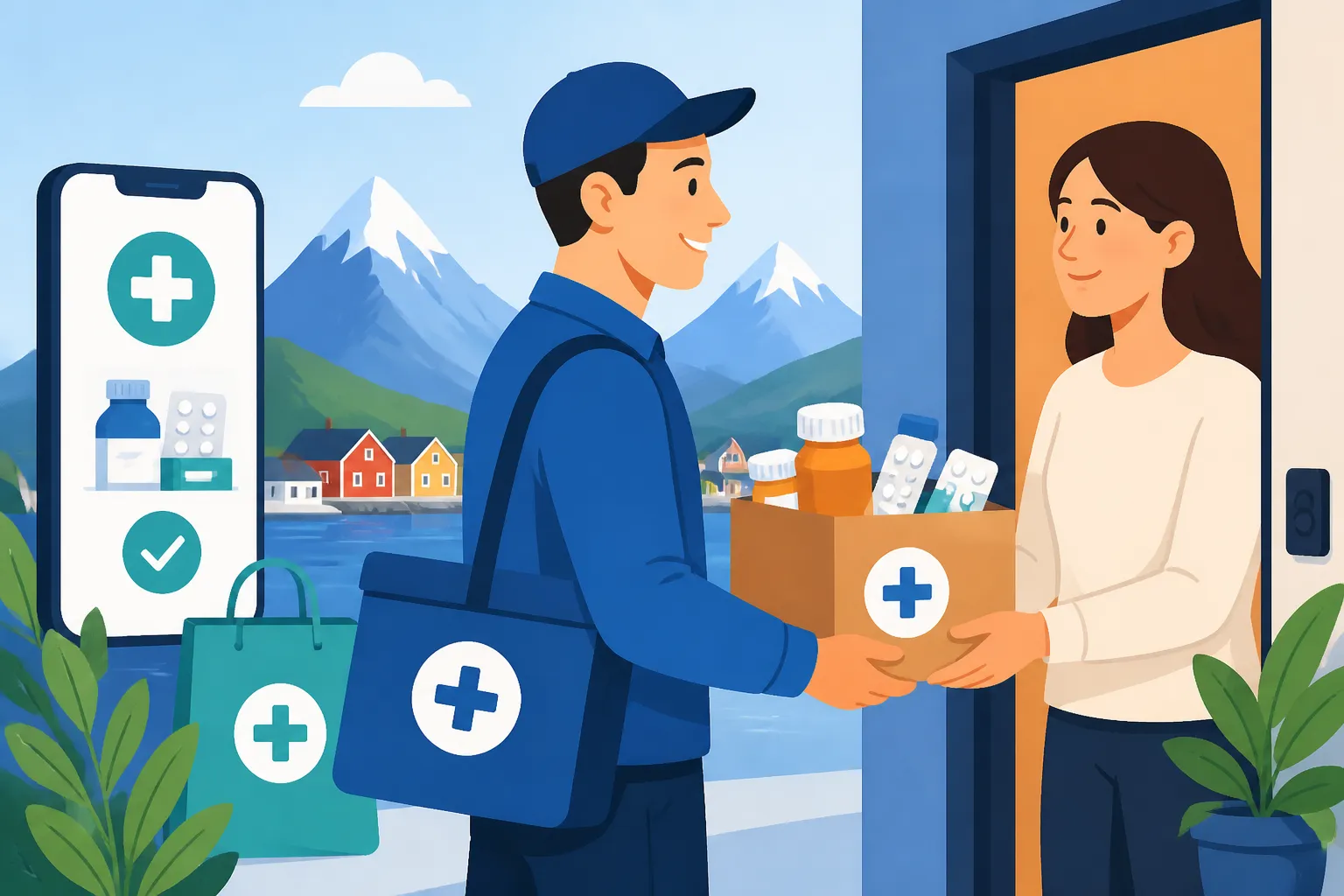
The checkout process itself is where you choose your delivery method. In major cities like Oslo, Bergen, Stavanger, and Trondheim, you often have the option for "Porterbuddy" delivery. This is a game-changer. You can select a window—often the very same evening—and a courier will bring the medication directly to your door. For those living in more rural areas, you can choose delivery to a "Pakkeiboks" (parcel locker) or your local Posten-in-store. If you are using a digital nomad setup or are just visiting and using insurance like SafetyWing, keep in mind that they may require a permanent address for the delivery of certain controlled medications, even if the ordering process is digital.
Choosing the Right Delivery Method
| Delivery Option | Estimated Speed | Best For | Privacy Level |
|---|---|---|---|
| Porterbuddy | Same day / Next day | Urban dwellers needing meds fast | High (Home delivery) |
| Posten (Home) | 2-4 business days | Non-urgent refills | Moderate (Mailbox) |
| Pakkeiboks | 1-3 business days | People not home during the day | High (Secure locker) |
| Instore Pickup | 1 hour | Emergency needs | Low (Must visit store) |
Managing Costs and Insurance Reimbursements
One of the biggest surprises for expats is the cost of medication in Norway. While the public system is generous, the initial out-of-pocket expenses can feel high. When you use an online pharmacy, you get a clear view of the "Egenandel" (user fee). This is the amount you pay that contributes toward your annual Understanding the Frikort: The 2026 Healthcare Exemption Card Limit. The system is automated, so you don't need to save paper receipts to prove you’ve spent enough; the online pharmacy communicates directly with Helfo.
For those who use private health insurance like Cigna Global to bypass the public waiting lists for specialists, your prescriptions might still come through the public e-resept system. However, if the specialist gives you a "white" prescription for something not covered by the state, you will be paying the full price at Farmasiet. The benefit of using the online platform here is the digital archive. You can easily download a PDF invoice that meets the strict requirements of international insurers, often including the necessary VAT (MVA) breakdowns and pharmacy registration numbers.
It is also worth noting that online pharmacies frequently offer better deals on non-prescription items. If you are ordering your asthma inhaler, you can easily toss in some Over-the-Counter (OTC) Drugs in Norway: What You Can Buy in Supermarkets like paracetamol or high-dose vitamin D for the winter. This is often cheaper than buying them at a physical Apotek 1 or Vitusapotek, and definitely cheaper than the convenience prices found at Narvesen or 7-Eleven. For expats on a budget, especially students, these small savings on "daily" health items add up over a long Norwegian winter.
Security, Privacy, and Controlled Substances
A common concern for many expats is whether it is safe to have sensitive medications delivered to a doorstep or a shared mailbox. Norwegian online pharmacies are held to incredibly high privacy standards. Medications are always shipped in discreet, unbranded packaging. There is no indication on the outside of a Farmasiet box that it contains heart medication or antidepressants. Furthermore, if you are ordering "Class A" or "Class B" substances (such as certain strong painkillers or ADHD medications), the delivery rules become much stricter.
For controlled substances, you cannot simply have the package dropped on your doorstep by Porterbuddy. You will be required to show a valid ID (passport or Norwegian bank card with a photo) upon delivery. This is a crucial detail to remember: if you aren't home to show your ID, the package will be taken to a pickup point, which defeats the purpose of home delivery. I learned this the hard way when I missed a delivery because I was in a Zoom meeting, resulting in a 20-minute walk to the local Meny to retrieve my package.
If you are a traveler or a new arrival using SafetyWing and you need to continue a prescription from your home country, you should be aware that Norwegian online pharmacies generally cannot fulfill foreign prescriptions directly. You will likely need to take your home-country medical records to a local doctor to have them converted into the Norwegian e-resept system. Once that is done, you can use How to Renew a Prescription on Helsenorge to keep the refills coming without needing a new doctor's appointment every month. Also, if you are moving with a significant supply of medicine, always check Bringing Medication into Norway: Customs Rules and Schengen Certificates to avoid issues at the border that could disrupt your treatment plan.
The Expat Advantage: Why Digital Wins
The real "veteran" tip for living in Norway is to automate as much of your life as possible to save your energy for the things that matter—like hiking or surviving the dark season. Using online pharmacies is part of that automation. When you use Navigating the Helsenorge App in English: A Step-by-Step Translation, you can see when your refills are running low and order a new batch from Farmasiet in under two minutes.
Many expats also find that the online descriptions for medications are easier to parse through a browser's translation tool than trying to read the tiny Norwegian print on a box in a store. You can cross-reference the active ingredients with brands you knew back home, ensuring you are taking exactly what you expect. If you are ever unsure, most online pharmacies in Norway offer a chat function where you can speak with a licensed pharmacist in English. This level of accessibility is a massive comfort when you are dealing with health issues in a foreign language.
Finally, for those who might be struggling with the transition to life in the North, remember that mental health support is also integrated into this system. If you are Accessing Psychologists with Public Funding vs Private Practice and are prescribed medication for anxiety or SAD (Seasonal Affective Disorder), having those meds delivered discreetly to your home can remove one layer of stress from your recovery process. The goal of the Norwegian system is to make health "seamless," and once you've set up your first Farmasiet order, you'll see that it truly is one of the more efficient parts of expat life here.
Disclaimer
This guide is for informational purposes only and is based on the author's personal experience as an expat in Norway. Healthcare laws and digital systems can change. Always consult with a licensed Norwegian medical professional or the official Helsenorge website for the most current medical advice and regulatory requirements. We do not provide medical diagnoses or treatment recommendations.