Financial Checklist for Your Last 30 Days in Norway Before Leaving
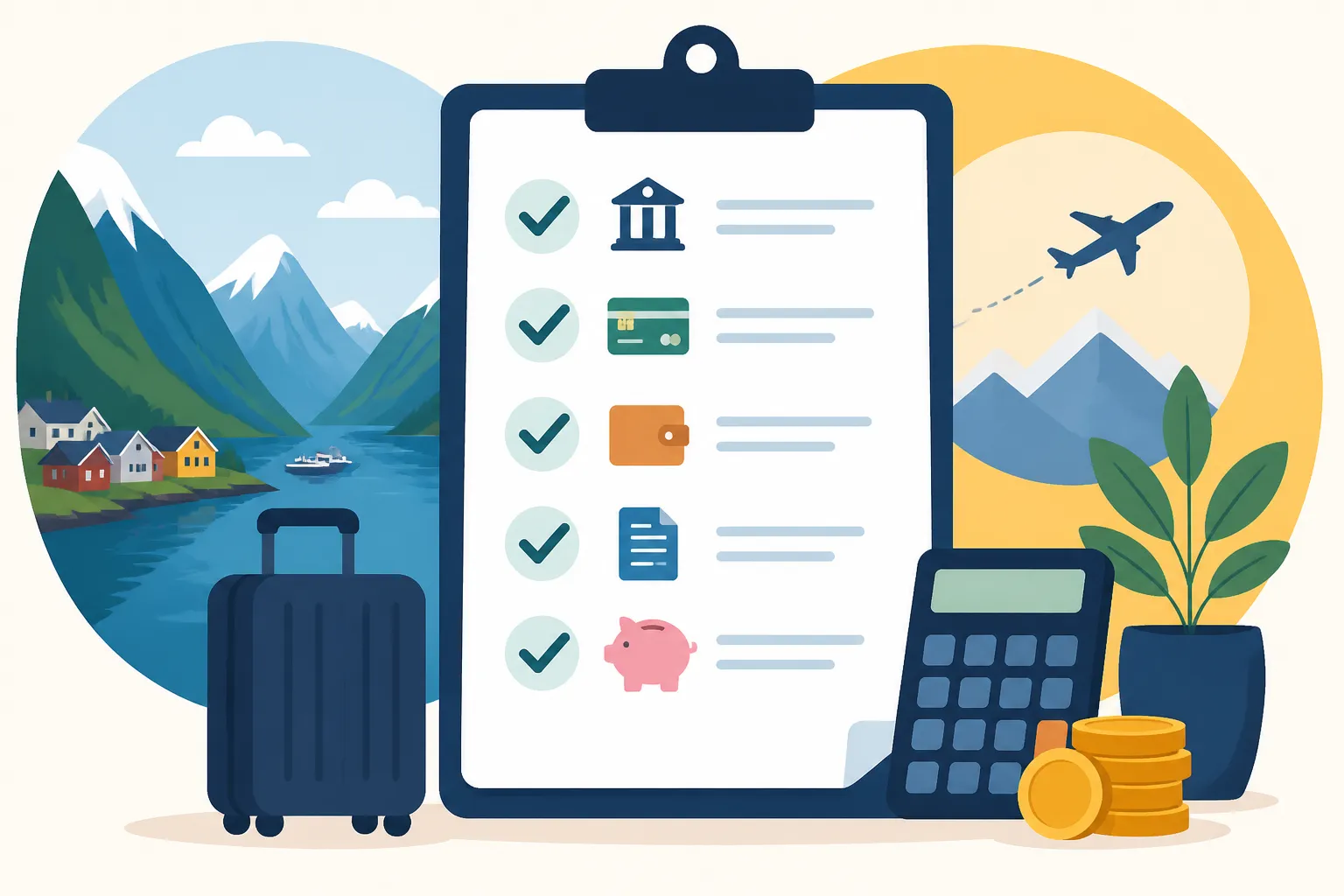
Leaving Norway is often a bittersweet whirlwind of final hikes, saying goodbye to colleagues at a "lønningspils," and packing up years of memories. However, the administrative tail that follows an expat out of the country can be long and expensive if you don't cut the cords correctly. This guide provides a comprehensive financial checklist for your last 30 days to ensure you don't leave money on the table or face surprise tax bills years later.
Closing the Loop with Skatteetaten and Tax Obligations
The most significant hurdle for any departing expat is the Norwegian Tax Administration (Skatteetaten). Unlike some countries where you can simply stop filing once you leave, Norway considers you a tax resident until you have formally broken those ties and proven your residency elsewhere. One of the first things you must do in your final 30 days is submit the "Flyttemelding til utlandet" (Notification of move abroad). This form is crucial because it triggers the process of determining your tax residency status and ensures your final tax assessment is sent to the correct international address.
Navigating the complexities of Tax Residency Rules: When Do You Become a Tax Resident of Norway? is vital because Norway often applies a three-year rule. If you have lived in Norway for more than ten years, you may remain tax-resident for three years after the year you move. For shorter stays, the rules are different, but the paperwork remains just as dense. You need to be particularly careful if you own property in Norway or have significant global assets. Failing to report your move correctly can result in being taxed on your worldwide income in both Norway and your new home country, leading to a bureaucratic nightmare of claiming double taxation relief.
For many expats, especially those moving back to the United States or dealing with complex investment portfolios, the DIY approach to a final Norwegian tax return is risky. This is where professional services like Taxes for Expats become invaluable. They specialize in the intersection of Norwegian and international tax law, ensuring that you take advantage of all possible deductions before you close your books in Scandinavia. Whether it is The Complete Guide to Norwegian Taxes for Expats (Skatteetaten) or understanding how to handle your final year’s "Skatteoppgjør," having an expert eye can prevent the dreaded "Restskatt" (underpaid tax bill) from showing up in your inbox six months after you have left.
Finally, remember that your tax return for the year you leave won't be processed until the following year. You must ensure that Skatteetaten has your updated foreign bank account details. If you don't, any refund you are owed will be stuck in a dormant Norwegian account or sent as a check that many modern banks abroad won't even accept. Dealing with Claiming Tax Refunds After Moving Away From Norway requires patience and a clear paper trail established before you board your flight.
Banking, Vipps, and Moving Your Money Internally
The biggest mistake I see expats make is closing their Norwegian bank account the day they move. This is a recipe for disaster. You need your Norwegian account active for at least six to twelve months after departure to receive your final "Feriepenger" (holiday pay), tax refunds, and the return of your security deposit. In your final 30 days, your goal should be to "prune" your accounts rather than axe them. Ensure your BankID is updated and that your physical code chip (if you still use one) hasn't expired. Without a working BankID, managing your Norwegian affairs from abroad becomes nearly impossible.
When it comes to the actual movement of your savings, do not use a standard wire transfer from a major Norwegian bank like DNB or Nordea to an overseas account. The exchange rates and "hidden" fees will eat a significant chunk of your hard-earned Krone. Instead, look into Remittances: Cheapest Ways to Transfer NOK to International Accounts and consider using a specialized service like Wise. These platforms allow you to hold NOK and convert it to your target currency at the mid-market rate, which can save you thousands of dollars depending on the size of your balance. In your final month, set up and verify your international transfer accounts so you aren't stuck waiting for ID verification while sitting in a hotel room in your new country.
If you have been renting, the Security Deposits (Depositumskonto): How to Protect Your Money in Norway process is another area where your bank account remains vital. By law, your deposit should be in a separate account in your name. After the "overtakelse" (handover) of your apartment, the landlord must signal the bank to release the funds. This can take weeks. If you close your main account, the bank will struggle to find a place to send that released deposit. Keep your account open and ensure you have the app-based BankID active on your phone, as Keeping Your Bank Account Open After Moving Away From Norway is often the only way to facilitate these final transfers.
| Financial Task | Deadline | Action Required |
|---|---|---|
| Notify Skatteetaten | 14 Days Before Move | Submit form RF-1401 (Move abroad) |
| Holiday Pay Check | 30 Days Before Move | Confirm with HR when "Feriepenger" will be paid |
| Close Non-Essential Accounts | 20 Days Before Move | Keep one main account with BankID active |
| Utility Cancellations | 30 Days Before Move | Set exact end-date for power and internet |
| Address Change (Posten) | 15 Days Before Move | Set up mail forwarding for at least 3 months |
| Pension Status | 30 Days Before Move | Log in to Norsk Pensjon to view accumulated funds |
Navigating the Social Safety Net and Pensions
Norway’s social safety net is one of the best in the world, but as you leave, you transition out of the "Folketrygden" (National Insurance Scheme). Within your last 30 days, you should log into NAV to ensure all your contact information is correct and to check if you are entitled to any final payouts, such as child benefit (Barnetrygd) or sick pay that hasn't been settled. Once you move your official address out of Norway, your membership in the National Insurance Scheme generally ends, which has immediate implications for your healthcare coverage and disability insurance.
The question of what happens to your retirement savings is a major concern for long-term expats. You have likely accumulated funds in the state pension system as well as a private occupational pension (Tjenestepensjon) through your employer. Before you leave, you should consult Pensions in Norway: State Pension, Occupational, and Private Savings to understand your rights. Generally, you do not "lose" your Norwegian pension; it stays in the system and can be paid out to you when you reach retirement age, regardless of where you live in the world. However, if you are moving to a non-EU/EEA country, the rules for "exporting" these benefits can be more restrictive.
Additionally, if you have reached your "Frikort" limit for the year, any healthcare costs incurred in your final weeks should be covered. Make sure your Helsenorge profile is updated. If you are moving within the EU, ensure your European Health Insurance Card (EHIC) issued by Norway is still valid for the transition period. For those moving further afield, you will need to arrange private health insurance immediately, as your Norwegian coverage stops the moment you are no longer a resident.
Utility Contracts and Final Living Expenses
The final 30 days are usually when the "hidden" costs of leaving Norway start to pile up. Canceling utilities in Norway is generally straightforward, but notice periods can catch you off guard. Most internet and mobile providers require 30 days' notice, often calculated from the end of the current month. If you wait until your last week to cancel, you might end up paying for a full month of service you aren't using. For electricity, you need to provide a final meter reading on the day you hand over the keys to avoid being billed for the next tenant’s heating.
A major financial pitfall is the "Utvask" (final cleaning). Norwegian landlords have incredibly high standards for how an apartment should look upon exit. If the cleaning is deemed insufficient, they can deduct professional cleaning fees—which are exorbitant in Norway—from your deposit. Refer to the Moving Out Checklist: Cleaning Standards (Utvask) and Deposit Return to decide if it is cheaper to hire a professional cleaning company with a "moving guarantee" or to spend three days scrubbing every surface yourself. Professional cleaners often cost between 5,000 and 10,000 NOK, but it can be a wise investment to ensure the full return of a 60,000 NOK deposit.
Lastly, don't forget the small but meaningful costs like "Bompenger" (toll road) bills and garbage disposal. If you have an AutoPASS tag in your car, you must cancel the agreement and return the tag, or you will continue to be billed every time the new owner drives through a toll station. Similarly, make sure you understand the Electricity Bills in Norway: Spot Prices, Grid Fees (Nettleie), and Support structure one last time to ensure your final settlement is accurate. Many expats forget that the "Nettleie" (grid fee) is a separate part of the bill that must also be settled upon departure.
Final Checklist for the Last 30 Days
- Week 4 Before Moving: Submit your move notification to Skatteetaten and notify your employer's HR department of your final day. Request a written "Sluttattest" (work reference), as these are essential for future jobs in or out of Norway.
- Week 3 Before Moving: Start canceling your recurring subscriptions (SATS, newspapers, streaming services) and your home insurance. Check the notice periods for your Electricity Bills in Norway: Spot Prices, Grid Fees (Nettleie), and Support to ensure a smooth transition.
- Week 2 Before Moving: Book your final inspection with the landlord. If you are selling furniture on Finn.no, this is the time to get aggressive with pricing to ensure everything is gone. Start moving your bulk savings into a multi-currency account like Wise to avoid last-minute transfer stress.
- The Final Week: Perform the final "Utvask." Take photos of every room, inside the oven, and the back of the fridge as evidence. On the day of "Overtakelse," read the electricity meter together with the landlord and sign the handover protocol.
- Moving Day: Ensure your mail forwarding is active with Posten and that your BankID app is working perfectly. Do not delete your Norwegian banking apps yet!
Disclaimer
The information provided in this guide is for informational purposes only and does not constitute professional financial, tax, or legal advice. Regulations regarding taxes, residency, and banking in Norway are subject to change. Always consult with the Norwegian Tax Administration (Skatteetaten) or a qualified tax professional to discuss your specific circumstances.