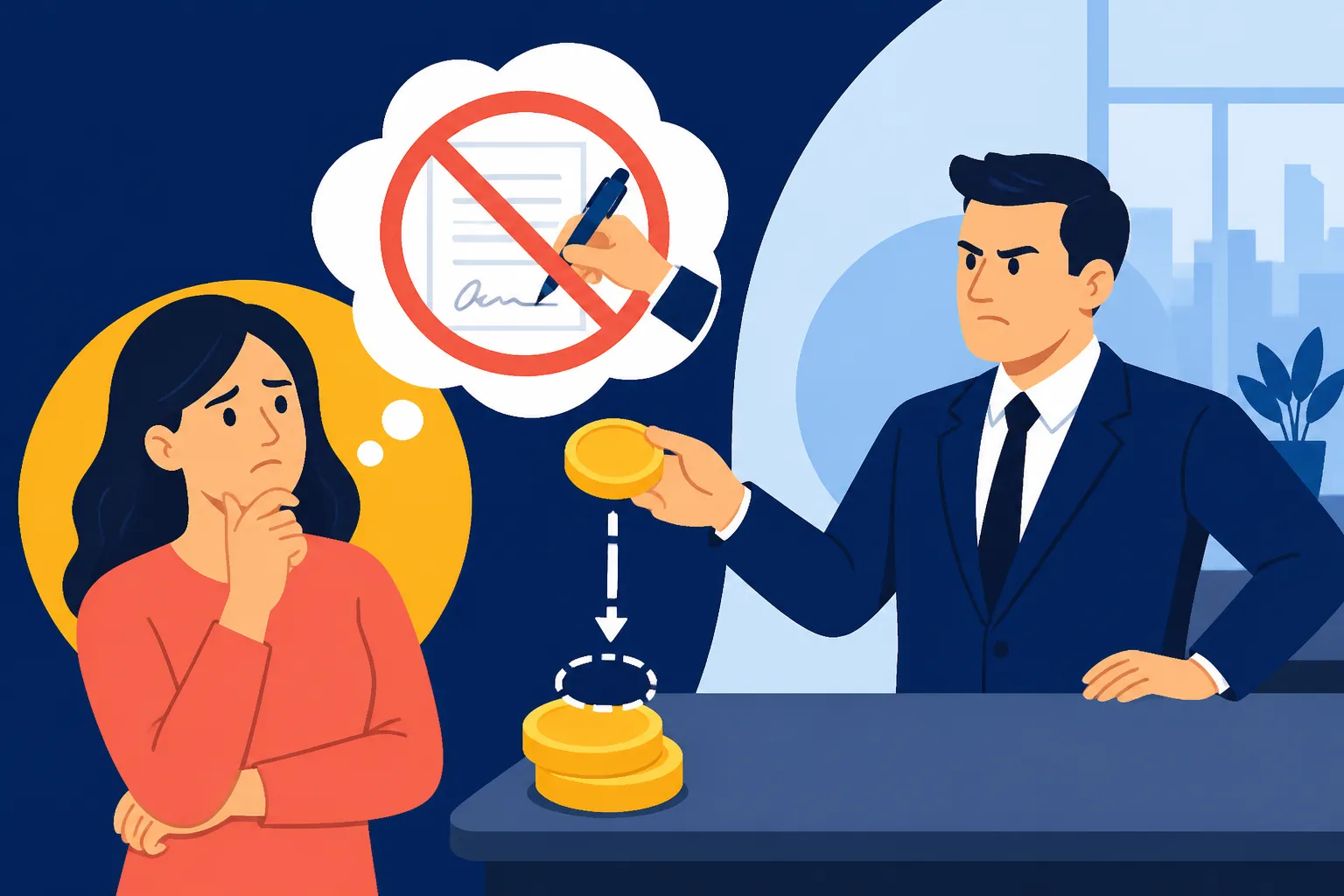
Can My Employer Deduct Wages Without My Written Consent?
Seeing a smaller number than expected on your paycheck is a total gut-punch, especially when you’re already juggling Norway’s high cost of living. I remember staring at my first Norwegian payslip, confused and frustrated by a deduction I hadn't explicitly cleared. This guide explains exactly when your employer can—and absolutely cannot—touch your hard-earned wages under Norwegian law.
The Working Environment Act: Your Shield Against Wage Theft
In Norway, the law is heavily weighted in favor of the employee. The foundational principle is that your wages are your property, and once you’ve earned them, they are protected. This isn't just a courtesy; it's a legal fortress built into the Employment Rights in Norway: The Working Environment Act Explained. Under Section 14-15 of this Act, wage deductions are strictly prohibited as a general rule.
When I first arrived in Oslo, I assumed that if I made a mistake at work—say, breaking a piece of equipment—the company could just take it out of my next check. I was wrong, and happily so. The Norwegian system recognizes that as a worker, you are in a weaker bargaining position than your employer. If companies were allowed to deduct money at will, it could lead to "debt bondage" or situations where workers are effectively penalized for the inherent risks of doing business.
The law is so strict that even if you sign a general contract saying "the employer may deduct for losses," that clause might not be worth the paper it’s printed on unless very specific conditions are met. Before you panic about a missing 500 NOK, you need to understand the "protected" nature of your salary. This protection extends to your base pay, overtime, and even your Feriepenger: How Norwegian Holiday Pay is Calculated and Disbursed.
The Six Legal Exceptions: When They Can Actually Deduct
While the general rule is "hands off," there are six very specific scenarios where an employer is legally permitted to deduct money from your pay. If your situation doesn't fit into one of these buckets, the deduction is likely illegal.
1. Statutory Deductions (Taxes and Social Security)
This is the most common deduction and the only one that requires no extra paperwork from you. Your employer is legally obligated to withhold income tax and your contribution to the National Insurance Scheme (Folketrygden): What Your 7.7% Contribution Covers.
When you look at your What Should Be Included in a Standard Norwegian Payslip?, you will see your "Brutto" (gross) and "Netto" (net). The difference is usually your tax. If you find the Norwegian tax system overwhelming, especially as an American or Brit abroad, services like Taxes for Expats can be a lifesaver in ensuring you aren't being double-taxed or missing out on deductions.
2. Mandatory Pension Contributions
If your workplace has a mandatory occupational pension scheme (OTP), they will deduct your portion (usually around 2%) automatically. This is a legal requirement for most companies in Norway and is considered a "statutory" deduction.
3. Prior Written Agreements
This is where most expats get tripped up. An employer can deduct wages if it has been "stipulated in advance by written agreement." However, this doesn't mean a vague sentence in your initial contract covers everything. The Norwegian courts generally require that the agreement be specific to the incident or the type of deduction.
For example, if you agree in writing to pay for a subsidized canteen or a company gym membership, that is a valid written agreement. But a blanket clause saying "we can deduct for any mistakes you make" is often viewed as too broad to be enforceable. This is why meticulously reviewing your Norwegian Employment Contracts: Mandatory Clauses and Legal Formats is essential before you start your first day.
4. Trade Union Fees
If you are a member of a union, your dues are often deducted directly from your salary. This is actually a benefit, as it ensures your membership never lapses. If you aren't sure if the cost is worth it, I highly recommend looking into whether Trade Unions in Norway (LO, YS, Unio): Should Expats Join? is the right move for your specific industry. In many cases, the legal protection they provide far outweighs the monthly fee.
5. Compensation for Damage or Loss
This is the "danger zone." An employer can only deduct for damage you caused if:
- You caused the damage willfully or through gross negligence.
- You explicitly acknowledge liability in writing, or it has been decided by a court.
- The deduction is agreed upon in writing after the damage occurred.
Simply being "clumsy" or making a standard human error (like a barista dropping a milk pitcher or a programmer having a bug in their code) does not qualify as gross negligence. The employer carries the "business risk" for those things.
6. Termination of Employment
If you leave your job and have already used more vacation days than you earned, or if you have an outstanding debt to the company (like a relocation loan), the employer may be able to settle these in your final paycheck. Even then, they must ensure you are left with enough money to support yourself and your family.
| Deduction Type | Written Consent Required? | Legal Basis |
|---|---|---|
| Income Tax | No | Tax Payment Act |
| Pension (OTP) | No | Mandatory Occupational Pension Act |
| Union Dues | Yes (via membership) | Collective Agreement / WEA |
| Accidental Damage | Yes (Post-incident) | Working Environment Act § 14-15 |
| Overpayment Correction | Yes (Usually) | Working Environment Act § 14-15 |
| Canteen/Gym Fees | Yes (In Contract) | Working Environment Act § 14-15 |
The "Good Faith" Trap: Dealing with Overpayments
One of the most awkward situations expats commonly faceis the payroll error. Your employer accidentally pays you 5,000 NOK too much one month. Can they just take it back the next month?
Technically, no. They cannot simply subtract the overpayment from your next salary without your consent. In Norway, there is a legal principle called "condictio indebiti." It basically looks at whether you received the money in "good faith." If the extra amount was small and you reasonably assumed it was a bonus or overtime you forgot about, the employer might have a hard time demanding it back legally.
However, most of us want to stay on good terms with our bosses. If an overpayment happens, the standard procedure is for the employer to notify you, explain the error, and ask you to sign a "repayment agreement." This agreement allows them to deduct the amount over several months so it doesn't ruin your budget. If they just "grab" it from your next paycheck without this written agreement, they are violating the law, even if you technically owe them the money.
If you struggle to understand the nuances of these conversations with your HR department because of the language barrier, I suggest using italki to find a tutor who specializes in business Norwegian. It’s much easier to defend your rights when you can accurately read the emails they are sending you. Investing time in Learning Norwegian for Work: Norskprøven and Language Courses is the best long-term strategy for any expat wanting to navigate the workplace confidently.
What to Do If Your Wages Were Deducted Illegally
If you look at your slip and see a deduction that wasn't for taxes or pension, and you didn't sign anything agreeing to it, you need to act. Don't wait; the longer you wait, the harder it is to prove you didn't tacitly accept it.
Step 1: Request a Written Explanation
Send a polite but firm email to your HR or payroll department. Ask them to specify which part of Section 14-15 of the Working Environment Act they are relying on for the deduction. Sometimes, it’s a simple mistake or a new HR person who doesn't understand the strictness of Norwegian law.
Step 2: Dispute the Deduction
If their explanation doesn't hold water, you should formally dispute it in writing. State that you have not given written consent for this deduction and that you request the full amount be paid out immediately. You can find more specific advice on this in our guide on What to Do if You Don’t Receive Your Wages on Time in Norway.
Step 3: Use Your Union or Legal Help
If the company refuses to budge, this is where your union membership pays for itself. Their lawyers deal with this every day and can send a letter on your behalf. If you aren't in a union, you might need to contact the Norwegian Labour Inspection Authority (Arbeidstilsynet), though they generally provide guidance rather than acting as your personal lawyer.
Step 4: The Conciliation Board (Forliksrådet)
If the amount is significant, your final stop is the Conciliation Board. This is a low-cost way to settle financial disputes in Norway without going to full-blown court. Most wage theft cases are settled here because employers know they will lose if they haven't followed the strict "written consent" rules.
Practical Scenarios: Is This Legal?
To help you visualize how this works in real life, let's look at three common expat scenarios that often come up in the Facebook groups.
Scenario A: The Company Laptop.
You spill coffee on your company-issued MacBook. Your boss says, "That's coming out of your pay."
- Verdict: Illegal. Unless you threw the coffee on it in a fit of rage (gross negligence), this is an accidental business cost. They cannot deduct it without a post-incident written agreement where you admit liability.
Scenario B: The Training Bond.
Your company pays for a 50,000 NOK certification. You quit three months later, and they deduct the cost from your final pay.
- Verdict: Only legal if you signed a very specific "repayment clause" before the training started. If that clause exists and is reasonable (e.g., the amount reduces the longer you stay), they can deduct it. If you never signed anything specific to that training, they can't touch your salary.
Scenario C: The Unpaid Lunch.
You notice 150 NOK missing every month for "Coffee and Fruit." You never eat the fruit.
- Verdict: Usually legal if it’s in your collective agreement or your individual employment contract. However, you should check if there's a way to opt-out if you aren't using the service. You can learn more about how to handle these smaller cultural friction points in our article on How to Ask for a Pay Raise in a Flat Hierarchy Culture, as these conversations often lead to better overall compensation packages.
Summary Checklist for Employees
Before you sign any document or accept a deduction, run through this mental checklist:
- Is this for tax or mandatory pension? (If yes, it's fine).
- Did I sign a specific written agreement for this exact type of deduction?
- Did I cause damage through "gross negligence" (not just an accident)?
- If I quit, is the deduction for vacation days I haven't earned yet?
- After the deduction, do I still have enough money to pay my rent and buy food? (The law requires you to be left with a "reasonable" amount).
Norway is a fantastic place to work, but even in a high-trust society, payroll errors and aggressive management tactics happen. Understanding that your consent is the "master key" to your paycheck is the first step in protecting your financial life here. If something feels wrong, it probably is—and the law is likely on your side.
Disclaimer
The information provided in this article is for informational purposes only and does not constitute legal or financial advice. While we strive to provide accurate and up-to-date information regarding Norwegian labor laws and tax regulations, rules can change, and individual circumstances vary. Always consult with a qualified legal professional, a trade union representative, or the Norwegian Labour Inspection Authority (Arbeidstilsynet) regarding specific workplace disputes. For tax-specific concerns, please contact the Norwegian Tax Administration (Skatteetaten) or a certified tax professional.