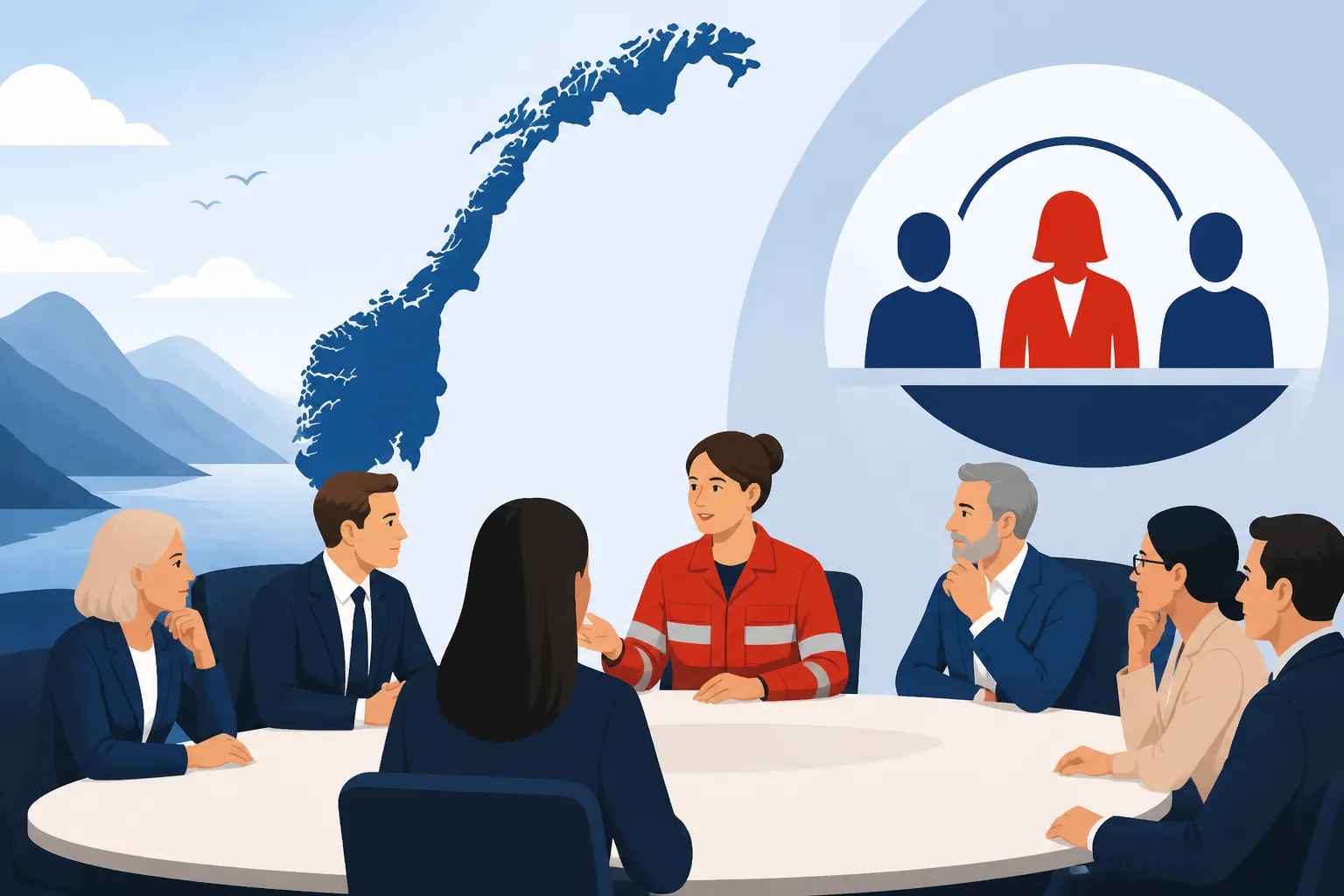
Employee Representation on Company Boards in Norway
Moving to Norway often brings with it a whole new set of cultural norms, especially in the workplace. One particular aspect that can really throw newcomers for a loop is the concept of employee representation on company boards – it’s not just a nice-to-have here, it’s often deeply ingrained in law and culture. I know firsthand how bewildering it can be to navigate these seemingly unspoken rules. This guide is going to break down exactly what employee representation entails in Norway, how it works, and why it matters to you as an expat.
Understanding Employee Representation in Norwegian Companies
When you first land a job in Norway, you might be surprised by how much emphasis is placed on employee involvement in decision-making. This isn't just a casual suggestion; it's part of the fabric of what Norwegians call "medbestemmelse" – co-determination or shared decision-making.
The Philosophy Behind "Medbestemmelse"
"Medbestemmelse" isn't merely a corporate policy; it’s a fundamental principle deeply woven into Norway's social democratic values and labor legislation. The idea is that employees, as key stakeholders, should have a say in the strategic direction and daily operations of the companies they work for. This isn't about micromanagement; it’s about ensuring that decisions consider the human element, sustainability, and long-term societal benefit alongside profit. It's a concept that significantly shapes the overall Norwegian Work Culture: Flat Hierarchies and Communication Styles.
Historically, this philosophy gained traction after World War II, as Norway sought to build a society based on cooperation and trust between employers and employees. It's codified in various acts, most notably the Working Environment Act (Arbeidsmiljøloven) and the Public Limited Companies Act (Allmennaksjeloven), which mandate certain levels of employee participation. This commitment ensures a more stable and equitable working environment, fostering a sense of ownership and shared responsibility among staff. For an expat, understanding this core principle is crucial to grasping why certain discussions happen the way they do, or why transparency levels might seem higher than what you're used to back home. It's all about mutual respect and collective engagement.
Why Employee Representation Matters for Expats
As an expat, you might initially wonder how this directly impacts you. Well, in short, it impacts almost everything. Employee representation on boards means that your voice, or at least the collective voice of your colleagues, is brought directly to the highest level of decision-making. This can influence everything from major restructuring, investment in new technologies, to even the company's approach to Workplace Harassment (Varsling): Whistleblowing Rules under the WEA.
For instance, if your company is considering a significant change that could affect jobs or working conditions, employee representatives on the board will be there to voice concerns, ask critical questions, and ensure that the impact on the workforce is properly assessed. This means more transparency in decision-making, which can be incredibly reassuring in a new country where you're still figuring out the local employment landscape. It's also a powerful mechanism for preventing purely profit-driven decisions that might overlook employee welfare. Moreover, it creates a healthier, more inclusive work environment, where employee perspectives are genuinely valued and integrated into the overall business strategy. This often translates to better benefits, fairer working conditions, and a stronger sense of job security, which is certainly a comfort when you're navigating your new life here.
Legal Frameworks and Requirements for Board Representation
Navigating the legalities of employee representation can feel a bit like deciphering an ancient scroll, especially when you're still getting the hang of the language. But fear not, there are clear rules governing when and how employees get a seat at the big table.
When is Employee Representation Mandatory?
The rules for mandatory employee representation on company boards in Norway are primarily dictated by the size and type of the company. It's not a one-size-fits-all approach. For private limited companies (Aksjeselskaper – AS), employee representation on the board of directors becomes mandatory if the company has more than 30 employees on average. In such cases, employees have the right to elect at least one board member and one alternate. If the company exceeds 50 employees, they gain the right to elect two board members and two alternates. For larger private limited companies with more than 200 employees, employees have a right to elect a third of the board members, but always at least two, and this applies to the board of directors itself.
The requirements are even stricter for public limited companies (Allmennaksjeselskaper – ASA), which are typically larger and often listed on the stock exchange. These companies, regardless of their size, are generally required to have employee representation on their boards. Specifically, employees usually elect a third of the board members, with a minimum of two representatives if the board has fewer than nine members. These regulations are crucial under the Employment Rights in Norway: The Working Environment Act Explained. This ensures that even in the most significant corporate entities, the voice of the workforce is present in strategic discussions. Understanding these thresholds is important, as it helps you identify whether your workplace should have employee representatives and what your rights are in that regard. It’s a powerful testament to the value placed on collective input in Norway’s corporate governance.
The Election Process for Employee Representatives
The election of employee representatives to the company board isn't a casual affair; it's a structured process designed to ensure fair and democratic representation. Usually, the entire workforce is involved, and the process is often facilitated by local trade unions or an existing works council. This is where getting familiar with Trade Unions in Norway (LO, YS, Unio): Should Expats Join? becomes incredibly relevant.
Typically, the process begins with a call for nominations from the employees. Any employee who has been with the company for a certain period (often one year, though this can vary by collective agreement) and is above a certain age (usually 18) is generally eligible to stand for election. The election itself is conducted by secret ballot, ensuring that employees can vote without fear of reprisal. The number of representatives and alternates to be elected will depend on the company's size, as outlined in the legal framework. In companies with active trade unions, the unions often play a central role in proposing candidates and organizing the election. Even if you're not a union member, you still have the right to vote and even stand for election in many cases. Once elected, these representatives are afforded legal protections against dismissal or detrimental treatment due to their role, safeguarding their ability to represent employee interests without fear. This robust process underscores the serious commitment to employee voice in Norwegian corporate structures.
Roles, Responsibilities, and Influence of Employee Board Members
So, once elected, what exactly do these employee representatives do, and how much power do they truly wield? It's more than just showing up to meetings; it's a demanding and impactful role.
What Does an Employee Representative Do?
An employee representative on a company board has the same legal duties and responsibilities as any other board member, including a fiduciary duty to the company. This means they are expected to act in the company's best interest, even when it might seem to conflict with immediate employee demands. However, their unique position is to bring the employee perspective to these discussions. They attend all board meetings, participate in debates, and cast votes on strategic decisions that shape the company's future. This includes everything from approving annual financial statements and budgets, deciding on major investments, to overseeing significant organizational changes like mergers, acquisitions, or restructuring.
For example, when the board discusses a plan to automate a significant portion of the production line, the employee representative won't just sit there silently. They will ask questions about the impact on jobs, retraining opportunities, and how displaced employees will be supported. They might highlight potential challenges that management overlooks, or suggest alternative approaches based on direct experience from the shop floor. They also play a critical role in the hiring and, if necessary, firing of top management, including the CEO. While they are bound by confidentiality regarding sensitive company information, their presence ensures that employee welfare is a consistent consideration in high-level discussions. It's a heavy responsibility, demanding a deep understanding of both the company's business and its workforce.
Balancing Employee Interests with Company Strategy
One of the most delicate and challenging aspects of being an employee representative is the constant balancing act between safeguarding employee interests and ensuring the long-term strategic success of the company. These aren't always opposing forces, but sometimes tough decisions must be made. Imagine a scenario where the company faces economic hardship and needs to consider cost-cutting measures, perhaps even redundancies. The employee representative must weigh the necessity of these measures for the company's survival against the immediate impact on individual employees and their families.
They often advocate for solutions that mitigate negative impacts, such as proposing alternative cost-saving methods, seeking opportunities for internal re-skilling, or ensuring fair severance packages. Their role is not to be a union agitator in the boardroom, but rather a bridge – translating employee concerns into a language that resonates with other board members, while also helping employees understand the strategic imperatives of the company. This requires strong communication skills, an analytical mind, and a willingness to engage in constructive dialogue. They are often privy to confidential information, which they cannot share with the general workforce, adding another layer of complexity to their role. Organizations often provide training and support to help these representatives navigate this dual responsibility effectively, recognizing the critical nature of their contribution.
Challenges and Opportunities for Expats in Board Representation
For expats, the idea of sitting on a Norwegian company board might seem like a distant dream, or perhaps a daunting prospect due to various barriers. But it's an area where your unique perspective can be incredibly valuable.
Language and Cultural Barriers
Let's be honest, board meetings in Norway, especially in larger, established companies, are predominantly conducted in Norwegian. While many Norwegians are fluent in English, the formal and nuanced discussions required at a board level can be incredibly challenging without a solid grasp of the local language. This isn't just about vocabulary; it's about understanding subtle cultural cues, unspoken assumptions, and the specific jargon of Norwegian corporate governance. I remember struggling to follow complex discussions when I first arrived, even in more informal settings. This language barrier can make it difficult to fully grasp intricate proposals, articulate your own points effectively, or engage in spontaneous debate.
Beyond language, there are cultural norms that might differ significantly from your home country. Norwegian boardrooms often operate with a consensus-seeking approach, where direct confrontation is generally avoided in favor of building agreement. An expat might find it challenging to navigate these dynamics, especially if they come from a culture where more assertive debate is the norm. It’s not just about what is said, but how it is said, and understanding the subtext is key. This is where dedicating time to learning Norwegian, perhaps through online platforms like italki, can make a huge difference, not just for board participation but for everyday integration and even for navigating personal Taxes for Expats. The better you understand the language and culture, the more effectively you can contribute and represent diverse perspectives.
Getting Involved and Making an Impact
Even if you’re not immediately vying for a board seat, there are ample opportunities for expats to get involved in workplace democracy and make a real impact. Many companies have local works councils (bedriftsutvalg) or health, safety, and environment committees (arbeidsmiljøutvalg – AMU) where employee representatives play an active role. These are fantastic training grounds and a way to influence company policies at a practical level. Becoming active in your local trade union chapter is another excellent route. Unions in Norway are incredibly influential, not just in negotiating Salaries and Minimum Wage in Norway: Industry Benchmarks, but also in shaping workplace regulations and promoting employee rights.
Your unique perspective as an expat can be a significant asset. You bring different experiences, problem-solving approaches, and cultural insights that can enrich discussions and lead to more innovative solutions. For example, if your company is looking to expand internationally or cater to a more diverse customer base, your input could be invaluable. Don't underestimate the power of simply asking questions from a different viewpoint. By actively participating in employee meetings, voicing your ideas, and connecting with colleagues, you build trust and demonstrate your commitment. Over time, this engagement can open doors to more formal representation roles, allowing you to contribute meaningfully to the decisions that affect your workplace and your community in Norway. Whether you're interested in Temporary vs Permanent Contracts: Strict Rules Under Norwegian Law or looking at career progression, knowing your rights and getting involved makes a huge difference.
Overview of Employee Board Representation Requirements
Here’s a quick overview to help you understand the general requirements for employee representation on company boards in Norway:
| Company Type | Employee Count Threshold | Employee Representatives on Board |
|---|---|---|
| Private Limited Company (AS) | 30-50 employees | 1 representative, 1 alternate |
| Private Limited Company (AS) | 51-200 employees | 2 representatives, 2 alternates |
| Private Limited Company (AS) | 200+ employees | 1/3 of board members (min. 2) |
| Public Limited Company (ASA) | All sizes | 1/3 of board members (min. 2) |
Please note that these are general guidelines, and specific collective agreements or company charters might have slightly different provisions, particularly for certain sectors or larger groups of companies.
Navigating Board Decisions and Broader Implications
Being on a board, or even just understanding its structure, means grasping the full scope of its decisions, from strategy to the very specifics of Norwegian Employment Contracts: Mandatory Clauses and Legal Formats. The implications of board-level discussions stretch far beyond the boardroom itself, affecting every employee and the company’s future.
Strategic Influence and Accountability
Employee representatives aren't just there to nod along; they actively participate in shaping the company’s strategic direction. This can include voting on major financial decisions, such as significant investments in new markets or technologies, or even decisions about mergers or acquisitions. Their input ensures that any strategic shifts consider the human capital aspect, not just financial projections. For example, a decision to invest heavily in a new, unproven technology might be seen differently through the lens of potential job displacement versus pure market opportunity. The employee representative is accountable to their colleagues, and this accountability ensures a robust debate.
Furthermore, these representatives play a crucial role in holding management accountable. They can question management's proposals, request additional information, and ensure that due diligence is performed on all critical matters. This provides an important check and balance within the corporate structure, reinforcing the principles of transparency and good governance that are central to Norwegian business. Their presence helps ensure that executive decisions are not made in a vacuum, but rather with an awareness of their broader impact on the organization and its people. For expats who are used to less transparent corporate environments, this level of oversight can be a refreshing and empowering aspect of working in Norway.
Connecting Board Decisions to Employee Welfare
The link between board decisions and employee welfare is often direct and tangible. When a board approves a new budget, it directly impacts the resources available for training, employee benefits, and even the company's ability to offer competitive Salaries and Minimum Wage in Norway: Industry Benchmarks. For example, if a board decides to outsource a department, the employee representatives will fight to ensure that affected employees receive comprehensive support, including retraining, job placement assistance, and fair severance.
Consider the ongoing energy transition in Norway; many companies are shifting focus, and board decisions about these shifts directly affect the skills required from the workforce. Employee representatives can push for proactive measures, such as investing in upskilling programs or establishing internal mobility initiatives, rather than simply letting employees go. This forward-thinking approach, driven by strong employee representation, is often crucial in minimizing the negative social impact of economic changes. Even understanding things like how Navigating NAV: Unemployment Benefits and Social Safety Nets works becomes less daunting when you know that employee voices are already at the highest level, advocating for fair and humane transitions. It’s a holistic view where the well-being of the workforce is intricately linked to the company's strategic choices.
Disclaimer
The information provided in this guide is for general informational purposes only and does not constitute legal or professional advice. While we strive to keep the information up-to-date and correct, laws and regulations in Norway can change. Always consult with a qualified legal professional or relevant authorities for advice tailored to your specific situation.