National Insurance Scheme (Folketrygden): What Your 7.7% Contribution Covers
Ah, the Norwegian payslip. It often arrives looking like a cryptic message from a faraway land, full of deductions and terms that leave you scratching your head. One of the biggest head-scratchers for many expats is often the "folketrygdavgift" – your contribution to the National Insurance Scheme. This guide is here to unravel that mystery, explaining what this 7.7% deduction actually means for you and the wide array of benefits it unlocks in Norway.
What Exactly is Folketrygden? A Deep Dive into Norway's Safety Net
Moving to a new country, you quickly learn that understanding the local social security system is paramount. In Norway, this system is primarily encapsulated by the Folketrygden, or the National Insurance Scheme. It's not just a government program; it's a foundational pillar of Norwegian society, designed to provide comprehensive social security for everyone residing or working here. Many expats initially see it as 'just another tax,' but it's far more than that. It’s the very fabric that weaves together public healthcare, pensions, unemployment benefits, and family support, creating the robust welfare state Norway is famous for.
More Than Just a Contribution: The Philosophy Behind It
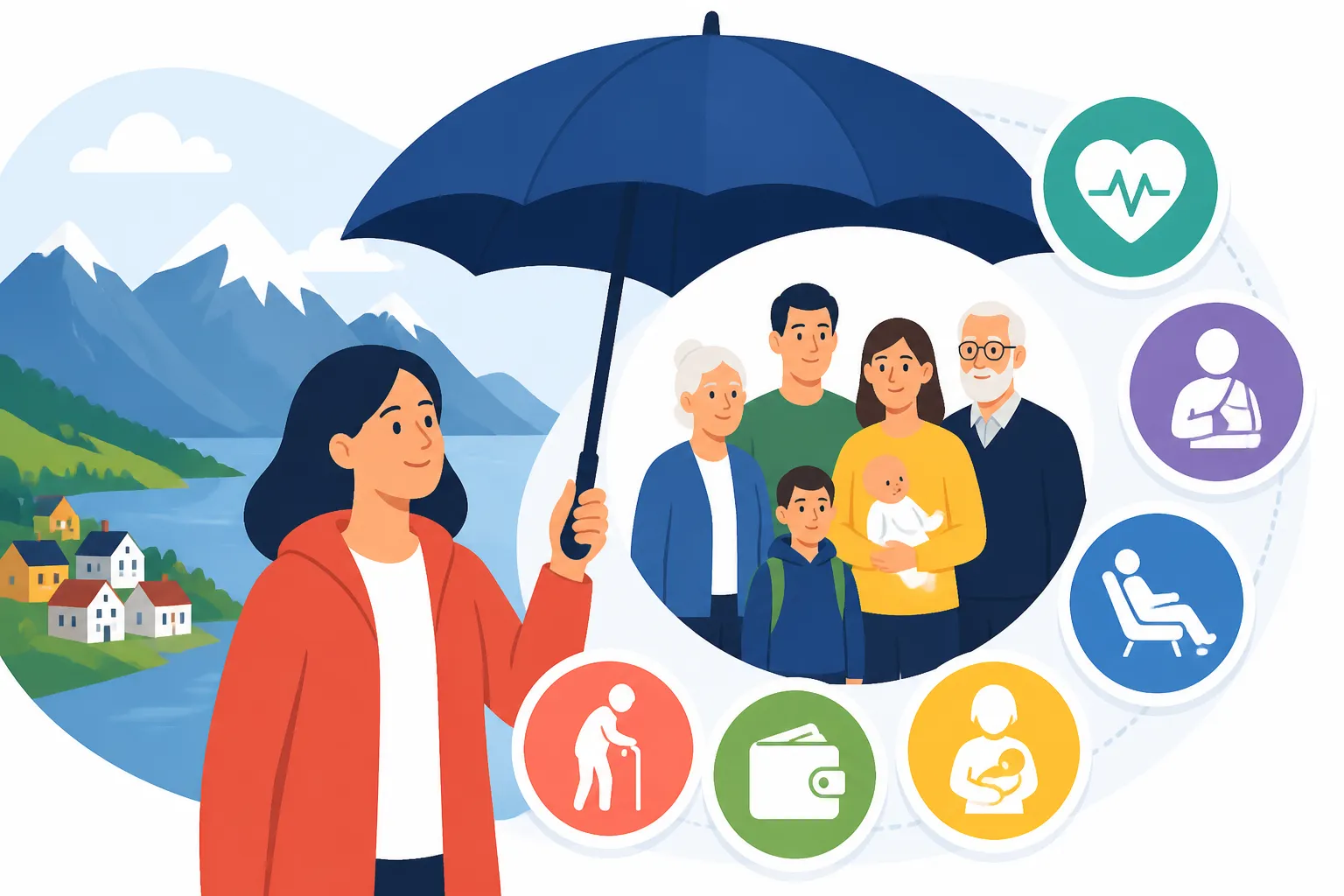
At its heart, Folketrygden operates on a principle of solidarity. It's a collective insurance scheme where everyone contributes according to their ability (through taxes and contributions), and benefits are distributed according to need. This means that a portion of your income, specifically 7.7% as an employee, goes into a communal pot that funds a safety net for all. This system ensures that whether you're a recent arrival or a long-term resident, you have access to essential services and financial support during various life events – be it illness, unemployment, childbirth, or retirement. It’s a reciprocal agreement: you contribute while you're able, and the system supports you when you need it. This social contract is deeply ingrained in Norwegian culture, fostering a sense of shared responsibility and collective well-being.
Who is Covered and Who Isn't?
Generally, if you are working in Norway and paying taxes, you are considered a member of the National Insurance Scheme. This membership typically begins the moment you start working for a Norwegian employer or establish residency. For most expats, especially those on skilled worker visas, this means automatic inclusion. However, there are nuances. For instance, if you're working here temporarily, especially from another EU/EEA country, you might be covered by your home country's social security system through agreements, meaning you might be exempt from Norwegian Folketrygden contributions in some cases (though this requires specific forms like an A1 certificate). On the other hand, if you're a D-number holder without full tax residency or working rights, your coverage might be limited to emergency healthcare only, not the full spectrum of benefits. It's a crucial distinction, and understanding Healthcare Rights for D-Number Holders: Exclusions and Alternatives can save you a lot of grief and confusion. The general rule of thumb is that if you are contributing income tax in Norway, you are most likely contributing to and covered by Folketrygden.
Breaking Down Your 7.7% Contribution: Where Does Your Money Go?
When you look at your payslip, that 7.7% deduction might seem like a single, monolithic chunk. In reality, it’s a specific contribution called "folketrygdavgift," which is your personal payment into the National Insurance Scheme. It's a direct percentage of your gross income, paid by you as an employee, and it's separate from the general income tax (trinnskatt and kommunal/statlig skatt) that also comes out of your pay. This contribution directly funds the wide array of social security benefits managed by institutions like Helfo and NAV. It's a mandatory deduction for anyone who is a member of the scheme and has taxable income in Norway.
The Different Components of Your Contribution
While you see a single 7.7% on your payslip, it’s actually contributing to several different benefit areas within Folketrygden. The scheme is broadly divided into different branches, each covering distinct aspects of social security. Your contribution goes towards funding things like pensions, healthcare, sickness benefits, parental benefits, unemployment benefits, and various disability schemes. Unlike some countries where you might have separate deductions for "health insurance" and "pension," in Norway, your "folketrygdavgift" bundles these together into one comprehensive contribution. This integrated approach ensures that the entire system remains robust, providing support across the lifespan and for a multitude of unforeseen circumstances. It’s a testament to Norway's commitment to ensuring a strong social safety net for all its residents.
Understanding Your Pay Stub: Folketrygdavgift in Practice
Decoding your Norwegian payslip can be an exercise in patience. You'll typically see your gross salary at the top, followed by various deductions. The "folketrygdavgift" will be listed as a percentage of your gross income, or sometimes as a fixed amount if your income fluctuates significantly. Alongside this, you’ll also see your regular income tax deductions, determined by your Understanding Your Skattekort Tax Deduction Card and How to Change It. It's essential to differentiate between these two. The 7.7% National Insurance contribution is a flat rate (for most earned income), whereas your income tax rate varies based on your income bracket and deductions. For expats, especially those new to Norway, this can be a point of confusion. Many assume that their entire tax bill covers social security, but the 7.7% is explicitly for Folketrygden, ensuring dedicated funding for these vital services. If you ever have doubts about your deductions, don't hesitate to check with your employer's payroll department or consult Skatteetaten (the Norwegian Tax Administration).
The Benefits: What Folketrygden Actually Covers for Expats
Now for the good part: what do you actually get for that 7.7%? The National Insurance Scheme is incredibly broad, providing a safety net for almost every stage and challenge of life. It’s not just about retirement; it's about making sure you have access to essential services and financial stability when you need it most. For expats, these benefits are often a huge relief, especially coming from countries with less comprehensive social support. From medical care to family support, Folketrygden has you covered.
Healthcare Access and Sickness Benefits (Sykepenger)
One of the most immediate and tangible benefits of Folketrygden membership is access to Norway's public healthcare system. This means that once you are registered with a permanent address and have a fødselsnummer (or D-number with appropriate registration), you are entitled to a fastlege (GP), subsidized doctor visits, hospital care, and prescription medications (often through the blue prescription system for chronic illnesses). Your 7.7% contribution helps fund this entire system, reducing out-of-pocket costs significantly, especially after you reach the annual limit for user fees, known as the Understanding the Frikort: The 2026 Healthcare Exemption Card Limit.
Beyond general healthcare, Folketrygden also provides robust sickness benefits, known as sykepenger. If you get sick and are unable to work, this scheme ensures you continue to receive an income. After a certain period (usually 16 days, with the employer covering the initial days), NAV takes over payments, often covering 100% of your income up to a certain threshold. This is a massive relief for anyone, let alone an expat navigating a new country, knowing that a sudden illness won't immediately jeopardize your financial stability. Learning about Sick Leave (Sykepenger) in Norway: Who Pays and For How Long? is critical for all employees.
Parental Benefits (Foreldrepenger) and Child Benefits (Barnetrygd)
For expats starting or expanding families in Norway, Folketrygden offers incredibly generous parental benefits, or foreldrepenger. This scheme provides paid leave for new parents, allowing both mothers and fathers (and often partners) significant time off work following the birth or adoption of a child, while still receiving a substantial portion of their income. This is a crucial support system that enables parents to bond with their newborns without immediate financial pressure. The duration and exact percentage of income replacement can vary based on the chosen parental leave model, but it’s undeniably one of the most generous systems globally.
In addition to parental leave, Folketrygden also provides barnetrygd, a universal child benefit paid monthly for every child under the age of 18 residing in Norway. This isn’t means-tested; it's a fixed amount paid to parents to help cover the costs of raising children. For families, especially those with multiple children, these payments can add up and provide a welcome boost to the household budget. These benefits highlight Norway's strong commitment to supporting families and ensuring children have a good start in life.
Unemployment Benefits (Dagpenger) and Pensions
Losing a job can be a terrifying prospect, even more so when you're in a foreign country. However, Folketrygden provides a safety net here too, through dagpenger (unemployment benefits). If you meet certain income and work requirements, and you've become involuntarily unemployed, NAV can provide financial support while you search for a new job. This benefit is designed to help you maintain a reasonable standard of living during a challenging period, allowing you to focus on retraining or job hunting rather than immediate financial panic. It's a lifeline that many expats greatly appreciate, as it offers a level of security that might be unavailable in their home countries. Understanding Getting Unemployment Benefits (Dagpenger) as a Foreign Resident is a must if you ever find yourself in this situation.
Furthermore, a significant portion of your 7.7% contribution, along with employer contributions and general taxes, goes towards the Norwegian pension system. This system is multi-layered, consisting of the state pension (Folketrygden), occupational pensions (tjenestepensjon) from your employer, and optional private savings. Your contributions ensure that when you reach retirement age, you will have a baseline income from the state, provided you have accrued sufficient insurance periods. Even if you don't stay in Norway for your entire career, your accrued pension rights are typically portable or can be drawn upon later, though specific rules apply depending on your nationality and the length of your stay. Learning about Norway’s Pension System Explained: Folketrygden vs Tjenestepensjon can help you plan your long-term financial future.
Other Key Benefits: Occupational Injury, Disability, and Funeral Grants
Folketrygden's reach extends to less common, but equally vital, scenarios. For instance, it provides coverage for occupational injuries and diseases, ensuring that if you get hurt at work, you receive appropriate medical care and compensation for any lost income. This takes a huge burden off individuals and employers, knowing that there's a system in place to support recovery and rehabilitation.
Should you become permanently unable to work due to illness or injury, the scheme also offers disability benefits (uføretrygd). This long-term financial support is crucial for those whose working capacity is significantly reduced, ensuring they can maintain a dignified life regardless of their health challenges. The process can be complex, involving medical assessments and applications to NAV, but the underlying principle is to provide a safety net for the most vulnerable.
Finally, in the unfortunate event of a death, Folketrygden even provides funeral grants. While not covering the entire cost, these grants offer some financial assistance to help with the expenses associated with a funeral, providing a small measure of relief during a difficult time. These often-overlooked benefits underscore the comprehensive nature of the Norwegian National Insurance Scheme, truly aiming to support individuals from cradle to grave.
Navigating the System: Helfo, NAV, and Your Rights
Understanding the benefits is one thing, but knowing how to access them and who to talk to is another challenge entirely for expats. Norway's social security system is administered by two main bodies: Helfo and NAV. While their roles sometimes overlap, they primarily handle different aspects of Folketrygden, and knowing which agency is responsible for what will save you a lot of time and frustration. For comprehensive financial planning in Norway, many expats also find it helpful to consult with specialists like Taxes for Expats to ensure they're optimizing their situation, especially with cross-border considerations.
Helfo: Your Gateway to Healthcare Refunds and Rights
Helfo is the public agency primarily responsible for administering health and healthcare benefits from Folketrygden. Think of them as your go-to for anything related to public healthcare, reimbursements, and your rights within the system. This includes managing your fastlege registration, ensuring you get your Frikort: The 2026 Healthcare Exemption Card Limit once you hit the annual user fee threshold, and handling claims for subsidies on medications or specialized treatments. If you've paid out-of-pocket for medical services that should have been covered or partially subsidized, Helfo is where you apply for refunds. They also deal with cross-border healthcare, such as using your European Health Insurance Card (EHIC) in other EU/EEA countries or ensuring you have proper documentation for healthcare if you travel internationally. For practical matters concerning your health, Helfo is your primary point of contact.
NAV: The Hub for Social Security and Benefits
NAV, the Norwegian Labour and Welfare Administration (Arbeids- og velferdsetaten), is a much broader institution. It's the primary agency for everything from unemployment benefits (dagpenger) and sickness benefits (sykepenger) to parental benefits (foreldrepenger), disability pensions (uføretrygd), and even basic social assistance. If you become unemployed, get long-term sick, need parental leave, or require support for a disability, NAV is the agency you will interact with. They also handle aspects of the state pension system.
NAV’s role is extensive, encompassing employment services, welfare, and family support. For expats, navigating NAV can be particularly challenging due to the sheer volume of information and the complexity of some application processes. Their website (nav.no) is a treasure trove of information, though not always perfectly translated, and it's essential to use your BankID to access personalized services and applications. Understanding The Fastlege Scheme: Navigating Norway’s GP System is often the first step to accessing health benefits, but for anything related to income replacement or welfare, NAV is your destination.
The Importance of a Fødselsnummer and BankID
To fully utilize the benefits of Folketrygden and effectively interact with both Helfo and NAV, having a Norwegian fødselsnummer (national identity number) and BankID is almost essential. While you can start with a D-number, a fødselsnummer grants you full access to digital services like Helsenorge.no (your personal health portal) and nav.no. These platforms are indispensable for checking your benefits, communicating securely with health professionals, applying for services, and tracking your case statuses.
BankID, Norway’s digital identity system, is the key to unlocking these portals securely. Without it, you're often relegated to paper forms and phone calls, which can be incredibly slow and frustrating. Obtaining a fødselsnummer usually requires a permanent residence permit and registering your address, while BankID typically requires a fødselsnummer and a Norwegian bank account. It’s a bit of a chicken-and-egg situation for new arrivals, but prioritizing these two items will significantly ease your administrative burden in Norway.
Common Expat Questions and Challenges
While Folketrygden is designed to be comprehensive, its interaction with international lives often throws up unique challenges for expats. Your past work history, nationality, and future plans can all influence how you experience and benefit from the scheme. It’s not always a straightforward transfer of benefits, and careful planning is often required.
The D-Number Dilemma: Limited Access vs. Full Coverage
One of the most persistent frustrations for many newcomers is the "D-number dilemma." A D-number is a temporary identification number, often issued to individuals who don't yet qualify for a fødselsnummer but need an ID for things like opening a bank account or working. While a D-number allows you to pay taxes and contribute to Folketrygden, your access to its full range of benefits can be limited, particularly when it comes to long-term entitlements like pensions or certain welfare schemes.
Initially, D-number holders might only have access to emergency healthcare, rather than the comprehensive fastlege system. To get full coverage and a fastlege, you generally need to be registered as a resident and obtain a fødselsnummer. This gap in coverage can create anxiety, especially if you experience an unexpected health issue during your initial months. Understanding these limitations is crucial, and it underscores the importance of getting your permanent residence registered and securing a fødselsnummer as soon as possible after moving to Norway. Until then, some expats opt for private health insurance to bridge any perceived gaps, even if they are technically contributing.
When You Leave Norway: Your Folketrygden Rights Abroad
So, what happens to your hard-earned contributions if you decide to move away from Norway? This is a common and important question. Generally, your pension rights accrued under Folketrygden are maintained, even if you leave the country. You can typically claim your Norwegian state pension when you reach retirement age, regardless of where you live, although specific tax rules and international agreements will apply. The same often goes for occupational pensions from your employers.
However, other benefits like unemployment benefits, sickness benefits, or parental benefits are usually tied to your current residency and membership in the scheme. If you leave Norway, you generally lose access to these benefits, as they are designed to support residents. There are exceptions, particularly for certain EU/EEA citizens who might be able to transfer some unemployment benefits for a limited period to another EU/EEA country, but these are specific cases. It’s wise to clarify your individual situation with NAV before you leave, especially if you have ongoing claims or significant pension savings. Making sure your finances are in order, perhaps through services like Wise for international money transfers, is key to a smooth exit.
Double Taxation and International Agreements
For many expats, the fear of double taxation—paying taxes on the same income in both Norway and their home country—is a real concern. This applies not just to income tax but also to social security contributions. Fortunately, Norway has an extensive network of double taxation treaties and social security agreements with many countries. These agreements are designed to prevent you from paying social security contributions in two different countries simultaneously and to ensure that your accumulated social security periods (like pensionable years) are recognized across borders.
For example, if you are from an EU/EEA country and are posted to Norway, an A1 certificate from your home country might exempt you from Norwegian Folketrygden contributions for a period, as you would continue contributing in your home country. Similarly, if you are from a country like the US with a totalization agreement, your contributions in Norway might count towards your social security benefits back home, or vice versa. It's a complex area, and this is where specialist advice from firms like Taxes for Expats truly shines. They can help you navigate the specific rules that apply to your nationality and work situation, ensuring you're compliant and not overpaying.
Here’s a quick overview of some key Folketrygden benefits and the administering agencies:
| Benefit Category | Key Benefits Covered | Administering Agency |
|---|---|---|
| Health | Fastlege, hospital care, subsidized prescriptions | Helfo |
| Sickness/Injury | Sickness benefits (sykepenger), occupational injury | NAV |
| Family Support | Parental benefits (foreldrepenger), child benefit (barnetrygd) | NAV |
| Unemployment | Unemployment benefits (dagpenger) | NAV |
| Disability | Disability benefits (uføretrygd) | NAV |
| Pension | State pension (alderspensjon) | NAV |
| Bereavement | Funeral grants, survivor's pension | NAV |
Understanding the National Insurance Scheme is a cornerstone of successfully living and working in Norway. While the initial 7.7% deduction might seem significant, the safety net it provides—from robust healthcare to generous parental leave and essential pension provisions—is truly invaluable. It’s a system built on collective responsibility, ensuring that you’re supported through life’s ups and downs in your new Norwegian home. Embrace it, understand it, and leverage the peace of mind it offers.
Disclaimer
The information provided in this guide is for general informational purposes only and does not constitute legal, financial, or medical advice. Regulations and policies related to Norway’s National Insurance Scheme, taxes, and social benefits can change frequently. It is always recommended to consult with the official Norwegian authorities (such as NAV, Helfo, and Skatteetaten) or a qualified professional for advice tailored to your specific situation.