Getting a Mortgage Without a Permanent Residence Permit (Bank Practices)
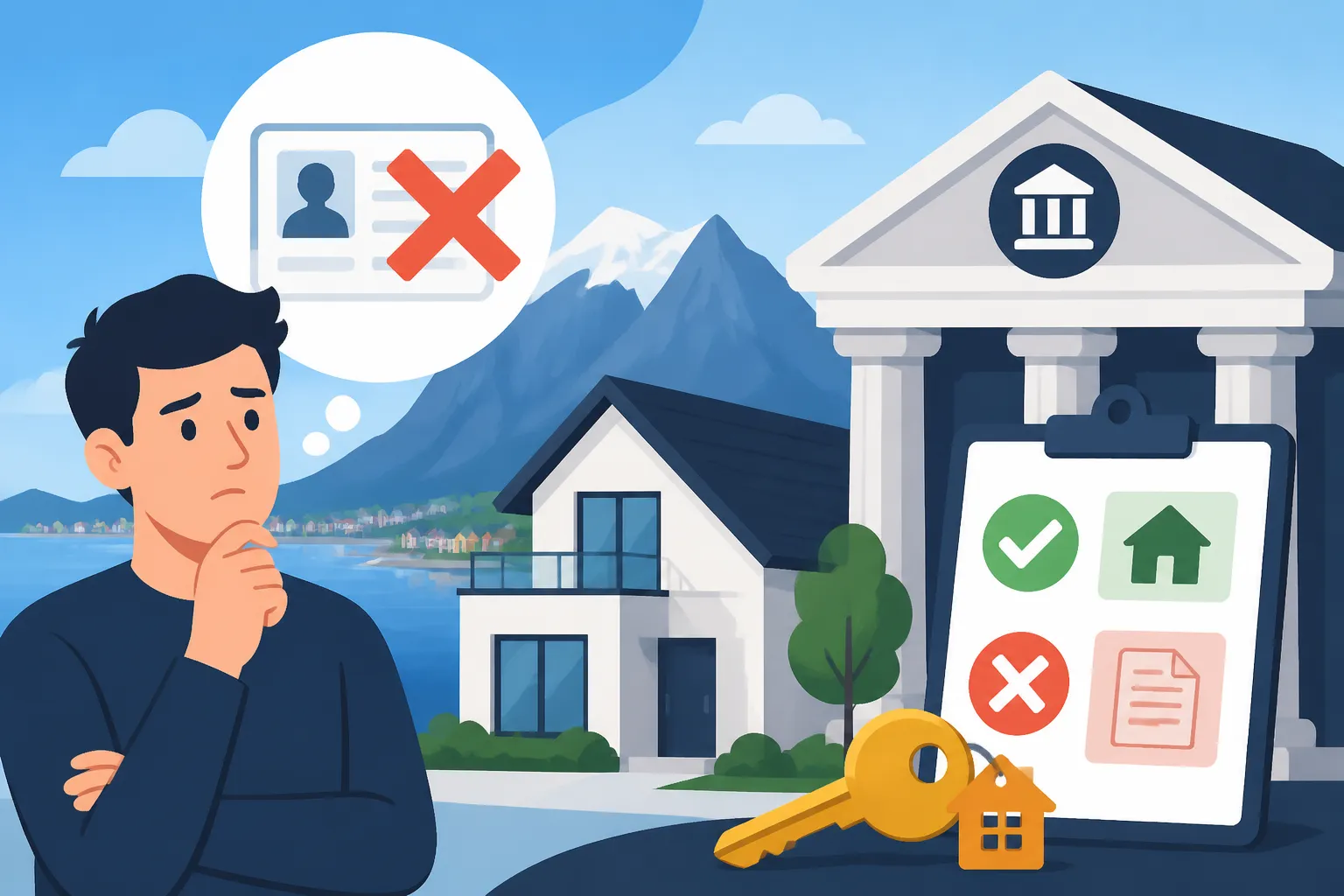
One of the biggest dreams for many expats settling in Norway is finding a place to call their own. But if you’ve been here for a while, you’ve probably already bumped up against the unique challenges of the Norwegian system, and getting a mortgage without that elusive permanent residence permit can feel like trying to climb a slippery fjell in winter. It’s frustrating, bewildering, and often feels like an impossible task, especially when you have a stable job and good income. This guide will walk you through the realities, the banking practices, and the actionable steps you can take to make your homeownership dream a reality in Norway, even if your residence permit isn’t yet permanent.
The Initial Hurdle: Why Permanent Residence Matters for Mortgages
Let's be honest, the Norwegian banking system can feel like it's designed by and for Norwegians, which makes perfect sense when you consider the relatively low expat population compared to other European countries. However, it doesn't make navigating it any easier for us foreigners. The primary reason banks prefer, and often explicitly require, a permanent residence permit (or permanent oppholdstillatelse) for mortgage applications boils down to perceived risk. It's not personal, it's just how they're wired.
Risk Assessment and Long-Term Stability
When a bank lends you a significant sum of money for a mortgage, they're making a long-term investment in your financial future. From their perspective, a permanent residence permit signals a strong, legally binding commitment to staying in Norway. It suggests a higher degree of stability in your life here – less likelihood of suddenly packing up and moving back to your home country, leaving them with a complicated asset recovery situation. Without that permanent status, you are, in the eyes of the system, a potentially temporary resident, even if you’ve lived here for years and intend to stay forever. This perception of higher risk translates directly into stricter lending criteria. It’s infuriating when you're contributing to the economy and paying your taxes diligently, but it's the reality of their internal guidelines. This perceived risk also touches on the concept of your long-term connection to the Folketrygden Basics: Who is Covered by the National Insurance Scheme, which banks see as another layer of stability.
The Folkeregisteret and Your Fødselsnummer
Another key factor is your fødselsnummer, the eleven-digit national identity number. While D-numbers are great for many things, they don't quite carry the same weight of permanence as a fødselsnummer when it comes to major financial commitments. Banks like to see that you're firmly ensconced in the national registry (Folkeregisteret), which a fødselsnummer implies. This number is intricately linked to your entire financial and social profile in Norway, making it easier for banks to assess your history, creditworthiness, and general integration into the system. While it's possible to get a D-number and still get a mortgage, it often means proving your long-term intent in other, more substantial ways. For a deeper dive into these numbers, check out our guide on D-Number vs Fødselsnummer: How It Affects Your Banking Options.
Beyond Permanent Residence: What Banks Actually Look For
Alright, so the permanent residence permit is the golden ticket, but what if you don't have it yet? This is where understanding the underlying factors banks actually evaluate becomes crucial. It’s not an outright "no," but rather a "prove it to us" situation. They need to see evidence that despite your permit status, you are just as stable, if not more so, than a local resident.
Income Stability and Employment Contracts
This is arguably the most critical factor. Banks want to see a steady, reliable income that demonstrates your ability to comfortably afford the monthly mortgage payments. This typically means having a permanent employment contract (fast ansettelse). A temporary contract, even a well-paying one, raises red flags. They want to see consistent paychecks, ideally from a well-established Norwegian employer, over a significant period – usually at least two to three years. If you’re self-employed, the bar is even higher; they’ll want to see several years of robust business accounts and consistent profit, not just an enkeltpersonforetak (sole proprietorship) that's just getting off the ground. Your income is directly tied to the Boliglånsforskriften, Norway's strict lending regulations, which state that you generally cannot borrow more than five times your gross annual income. For a good overview of what to expect, read up on Salary and Minimum Wage in Norway: Industry Benchmarks.
Existing Financial History in Norway
Your financial behavior here in Norway is incredibly important. Banks will scrutinize your local banking history, including:
- Savings: Do you have a significant amount of savings in a Norwegian bank account? This shows financial responsibility and provides a buffer.
- Debt: Do you have consumer debt, credit card debt, or other loans? High existing debt will negatively impact your borrowing capacity.
- Payment History: Have you paid your bills on time? Any betalingsanmerkninger (payment defaults) will be a major obstacle.
- Credit Score: While not as prominent as in some other countries, Norway does have credit checks (kredittsjekk). Building a positive financial history is vital. If you're new, it's worth starting to build this as soon as possible, perhaps by getting a local credit card and paying it off diligently. Our guide on Credit Cards and Loans: Building a Credit Score in Norway has more on this.
Having a robust financial footprint that signals responsibility and long-term planning will significantly strengthen your case.
Down Payment (Egenkapital)
Norwegian regulations are quite strict about the minimum down payment for a mortgage, typically requiring at least 15% of the property's purchase price. However, for those without permanent residence, banks often demand a significantly higher percentage, sometimes 20%, 25%, or even more. This larger down payment acts as an additional risk buffer for the bank. It demonstrates your serious commitment and reduces the amount they are exposed to if you were to default. It's also worth remembering that beyond the down payment, there are omkostninger (transaction costs) like dokumentavgift (stamp duty) and registration fees, which can add another 2.5% to 3% to the purchase price, all paid out of pocket. For more on these costs, refer to Buying Property in Norway: Bidding Wars, Mortgages, and Rules.
Strategies for Non-PR Holders to Secure a Mortgage
So, if you don't have that coveted permanent permit, what can you do? It's not a lost cause, but it definitely requires more legwork, a strong financial position, and a willingness to be persistent.
Option 1: Larger Down Payment and Impeccable Finances
As mentioned, increasing your egenkapital (down payment) is one of the most direct ways to mitigate risk for the bank. If you can put down 25-30% or more, you'll instantly look like a much more attractive borrower. Combine this with a stable job, low existing debt, and a solid savings record, and your chances improve dramatically. The key here is to present a financial picture that is so undeniably strong that the bank feels comfortable overlooking the residence permit status. Think about optimizing your tax situation as well; platforms like Taxes for Expats can help ensure you’re always in good standing, which indirectly supports your financial credibility.
Option 2: Co-Borrower with Permanent Residence
This is often the most effective route if you have a partner or family member in Norway who does have permanent residence (or is Norwegian) and has a stable income. Applying for a mortgage together (felles lån) significantly strengthens the application. The co-borrower’s permanent status and financial stability effectively 'cover' for your lack thereof. Be aware that the co-borrower will be equally responsible for the debt, so this is a serious commitment for both parties. This option makes the bank's risk assessment much easier, as they have a clear long-term resident accountable for the loan.
Option 3: Target Specific Banks and Build Relationships
Not all banks are created equal when it comes to expat-friendliness. While the larger national banks like DNB, Nordea, and SpareBank 1 have strict, often centralized policies, some smaller, regional, or local banks might be more flexible. They sometimes have a more personalized approach and might be willing to consider your individual circumstances beyond a checklist. It's worth calling around and arranging in-person meetings. Explain your situation thoroughly, emphasize your long-term plans in Norway, and bring all your documentation. Sometimes, speaking directly with a loan advisor can make all the difference, allowing them to see you as a person, not just a set of criteria. Sbanken, while not physically present, is known for its modern approach and competitive rates, and might be worth exploring once you have a fødselsnummer.
Option 4: The Path to Permanent Residence
While this might seem obvious, for many, the most straightforward path is simply to wait until you qualify for permanent residence. This typically involves living in Norway for three to five years on a valid permit (depending on your initial visa type), meeting language and social studies requirements, and demonstrating a stable income. Once you have that permanent oppholdstillatelse, the mortgage application process becomes significantly smoother. It’s a waiting game, but often the most secure way forward. You can learn more about the specifics in our guide on Permanent Residence in Norway: Requirements, Timelines, and Language Tests.
Navigating the Application Process and Essential Documentation
Once you've decided on your strategy, prepare for a rigorous application process. Being organized and having all your documents in order will make a significant difference.
Key Documents You'll Need
Even if you don't have permanent residence, you'll still need to provide a comprehensive set of documents:
- Residence Permit: A copy of your current valid residence permit.
- Passport/ID: Valid passport or other official identification.
- Fødselsnummer/D-Number: Your Norwegian identification number.
- Employment Contract: Your permanent employment contract, clearly stating your position, start date, and salary.
- Payslips: Usually the last three months' payslips (lønnslipper).
- Tax Return: Your most recent tax return (skattemelding). This is crucial for banks to verify your declared income against actual earnings. Understanding your tax obligations is key, and resources like Taxes for Expats can provide insights.
- Bank Statements: Statements from your Norwegian bank account(s) showing savings and transaction history.
- Proof of Down Payment: Documentation proving the source of your egenkapital.
- Debt Overview: Statements for any other loans, credit cards, or existing debt.
- Property Information: If you've already found a property, relevant details like the prospekt (property prospectus).
The Pre-Approval Process (Finansieringsbevis)
In Norway, you generally need a finansieringsbevis (financing certificate) from a bank before you can start bidding on a property. This is a pre-approval stating how much the bank is willing to lend you. Without it, you won't be taken seriously in the competitive housing market. For non-PR holders, getting this finansieringsbevis can be particularly challenging, as it's often where the residence permit issue first arises. You might find that some banks are unwilling to issue one without more extensive documentation or a larger down payment upfront.
Differences in Bank Practices
Each bank has its own internal guidelines, which can change. What one bank considers an insurmountable hurdle, another might view as a manageable risk if other factors align. DNB, as Norway's largest bank, often has the most rigid requirements. Nordea and SpareBank 1 are also major players. However, smaller, local banks might offer more flexibility. It’s imperative to engage in direct conversations with loan officers, not just rely on generic online application forms. Be prepared to argue your case, highlight your stability, and demonstrate your financial responsibility. If you're managing international finances, consider using services like Wise to handle transfers for your down payment or other expenses, as they often offer better exchange rates than traditional banks, which can save you a significant amount over time.
| Factor | Permanent Residence Permit | No Permanent Residence Permit (D-Number/Temporary) |
|---|---|---|
| Risk Assessment | Lower Risk, Standard Approach | Higher Risk, Stricter Scrutiny |
| Minimum Down Payment | Typically 15% | Often 20-30% or higher |
| Employment Contract | Permanent (Fast Ansettelse) | Strictly Permanent, Long Track Record Required |
| Income Stability | 3+ years expected | 3-5+ years solid employment history in Norway |
| Co-Borrower (PR holder) | Not usually required | Highly recommended, significantly increases chances |
| Credit History in Norway | Established is good | Essential to be flawless and well-established |
| Bank Flexibility | High | Limited, often requires direct negotiation |
| Documentation Needed | Standard set | More extensive proof of stability and intent |
| Finansieringsbevis | Relatively straightforward | Can be harder to obtain, more conditions |
The journey to homeownership in Norway as an expat without permanent residence is undoubtedly more complex than for a Norwegian citizen, but it's not entirely impossible. It requires thorough preparation, a robust financial profile, and strategic thinking about which banks to approach and how to present your case. Don't get discouraged by initial rejections. Keep building your financial history, maintain strong employment, and explore all the avenues available to you. With persistence and the right approach, you can indeed find your place here.
Disclaimer
The information provided in this guide is for general informational purposes only and does not constitute financial, legal, or tax advice. Mortgage lending criteria can vary significantly between banks and are subject to change based on economic conditions and regulatory updates. It is highly recommended to consult directly with a Norwegian bank and, if necessary, a financial advisor or legal professional for personalized advice regarding your specific situation.