How to Link Your Bank Account to Vipps Safely
Navigating Norway's digital-first landscape can feel like trying to run a marathon in snowshoes when you first arrive, especially when it comes to something as fundamental as payments. One of the biggest hurdles many new expats face is getting properly set up with Vipps, Norway's ubiquitous payment app. This guide is here to cut through the jargon and the common frustrations, walking you through exactly how to link your bank account to Vipps safely, ensuring you're not left out of daily Norwegian life.
Why Vipps is Non-Negotiable in Norway
When you first land in Norway, you'll quickly realize that cash is practically a relic of a bygone era. Everyone, and I mean everyone, uses Vipps. It’s not just a convenience; it’s an absolute necessity for daily transactions and social interactions, making it as essential as knowing how to say "takk" and "unnskyld".
The Ubiquity of Vipps in Daily Norwegian Life
Think of Vipps as Norway's answer to everything from Venmo to PayPal, but woven much more deeply into the fabric of society. You'll use it to split the bill at dinner with friends, send money to your flatmate for your share of the utilities, or even pay for a used item you found on Finn.no. Small businesses, market stalls, and even some public services accept Vipps. Want to pay for your kid's school trip? Vipps. Contribute to a colleague's farewell gift? Vipps. Buy a coffee from a local artisan at a pop-up market? You guessed it, Vipps.
It's not just peer-to-peer payments, either. You can pay bills, set up recurring payments, and even donate to charities directly through the app. Without it, you'll find yourself constantly asking friends to pay for you and then transferring them money through a traditional bank transfer, which feels incredibly clunky and slow by comparison. You’ll truly feel like an outsider if you can’t Vippse someone quickly.
The Fundamental Requirement: A Norwegian Bank Account
Here’s the thing that often catches newcomers off guard: to properly and safely link to Vipps, you absolutely need a bona fide Norwegian bank account. While it might be tempting to try to make do with an international solution like Wise for some financial needs, for the core functionality of Vipps, a local account is non-negotiable. This is because Vipps isn't just a separate digital wallet; it's intricately tied into the Norwegian banking infrastructure and leverages Norway's strong digital identification system, BankID.
Without a local bank account, you might be able to receive money via Vipps with limited functionality if you're a D-number holder, but you won't be able to initiate payments or fully utilize all the features that make Vipps so indispensable. It's a closed system in many ways, designed to work seamlessly within Norway's secure digital ecosystem. This tight integration is precisely what makes it so secure and efficient, but it also creates a significant initial hurdle for expats just trying to get their financial footing.
The Essential Pre-Requisites for Linking Your Account to Vipps
Before you even think about downloading the Vipps app, there are a few foundational steps you absolutely must get sorted. Trust me, trying to bypass these will only lead to headaches, error messages, and a lot of frustrated sighs.
Getting Your Norwegian Fødselsnummer (or D-Number and BankID)
This is perhaps the biggest hurdle for new arrivals, and it's where many expats feel the system is intentionally opaque. To fully engage with Norway's digital society, including opening a proper bank account and getting BankID, you ideally need a Norwegian national identity number, known as a Fødselsnummer. This is a crucial distinction from a D-number, which is a temporary identification number.
A Fødselsnummer is a unique 11-digit number typically issued to those who plan to live in Norway for more than six months and register their residency. It grants you full access to public services and, critically, makes obtaining BankID much smoother. Without it, you're often stuck in a limbo of limited access. For example, understanding D-Number vs Fødselsnummer: How It It Affects Your Banking Options is paramount here. While some banks might offer limited services or a D-number, getting full BankID access, which Vipps requires for robust functionality, is significantly easier with a Fødselsnummer. Many expats find themselves frustrated trying to navigate official processes without this essential identifier.
If you only have a D-number, you might encounter difficulties in getting BankID from many traditional Norwegian banks. There are efforts to make the system more accessible for D-number holders, but it's a slow process. You might find yourself searching for Overcoming the BankID Block: Workarounds for D-Number Holders, but often these are temporary solutions or depend heavily on your specific bank's policies. The reality is, if you're planning on staying long-term, getting your Fødselsnummer should be a top priority. Expect the process to take some time; patience is key, but knowing How Long Does it Take to Get a Fødselsnummer for BankID? can help manage expectations.
Opening a Norwegian Bank Account
Once you have your Fødselsnummer (or if you're lucky, a D-number and a cooperative bank), the next step is opening a proper Norwegian bank account. This isn't just a suggestion; it's a mandatory requirement for integrating with Vipps. Norwegian banks are typically very diligent about KYC (Know Your Customer) regulations, which means you'll need a range of documents. These usually include your passport, residence permit, Fødselsnummer/D-number, and proof of address.
Popular banks for expats include DNB, Nordea, and SpareBank 1. Each has its own processes, but generally, you'll need to book an appointment. Don't just walk in expecting immediate service; Norway operates on appointments for most bureaucratic tasks. For more detailed insights, you might want to read up on Best Norwegian Banks for Expats: DNB, Nordea, SpareBank 1, and Sbanken. Remember that having a permanent address registered with the Norwegian National Registry (Folkeregisteret) is often a prerequisite, so researching Can I Open a Norwegian Bank Account Without a Permanent Address? might be useful if you're in the very early stages of settling in.
Getting your bank account set up is the critical gateway to the rest of Norway's financial services. It’s not just about Vipps; it’s about getting your salary paid, paying your rent and bills, and generally managing your finances in Norway. While international transfer services like Wise are fantastic for moving money into Norway or back home, they can't fully replace the functionality of a local bank account for day-to-day life within the country itself.
Activating BankID
Now, we come to BankID, the digital key to practically everything important in Norway. Think of it as your secure digital signature and identification system all rolled into one. You'll use BankID for online banking, accessing public services like Helsenorge to see your medical records or Skatteetaten (the Tax Administration) for your Taxes for Expats, and, yes, for linking and verifying your Vipps account. For a deeper dive, check out BankID Explained: Norway's Digital Identity System and Expat Challenges.
Your Norwegian bank is responsible for issuing your BankID. This isn't something you can get independently. Once your bank account is active and verified, you'll apply for BankID directly through your bank. They'll guide you through the process, which usually involves setting up a personal password and receiving a code device (or using a dedicated app) for two-factor authentication. The system is designed to be incredibly secure, which means it can feel a bit cumbersome initially, but it's worth the effort for the peace of mind it offers. Without an active BankID, linking your bank account to Vipps securely just won't be possible. This also impacts other vital services, such as accessing your health information, as detailed in articles like Receiving Lab Results on Helsenorge: Understanding Medical Terms.
Step-by-Step: Linking Your Bank Account to Vipps Safely
Alright, you've done the groundwork: you have your Fødselsnummer (or solid D-number setup), your Norwegian bank account is open, and your BankID is active. You're past the hardest part! Now, let's get you connected to Vipps.
Downloading the Vipps App and Initial Setup
First things first, head to your smartphone's app store (Google Play Store or Apple App Store) and search for "Vipps." Download the official app. Make sure it's the genuine one – the logo is a distinct pink square with a white "Vipps" text.
Once downloaded, open the app. It will ask for your Norwegian mobile phone number. Enter it carefully, as this number will be linked to your Vipps profile and is how others will "Vippse" you money. After entering your number, Vipps will send an SMS with a verification code to confirm it's truly your number. Enter this code into the app.
The app will then prompt you to create a 4-digit PIN code. This is your personal access code for the Vipps app itself. Choose something memorable but not easily guessable (avoid "1234" or your birth year!). You might also be given the option to enable biometric authentication (fingerprint or face ID) for quicker access, which adds another layer of convenience and security.
The BankID Verification Process
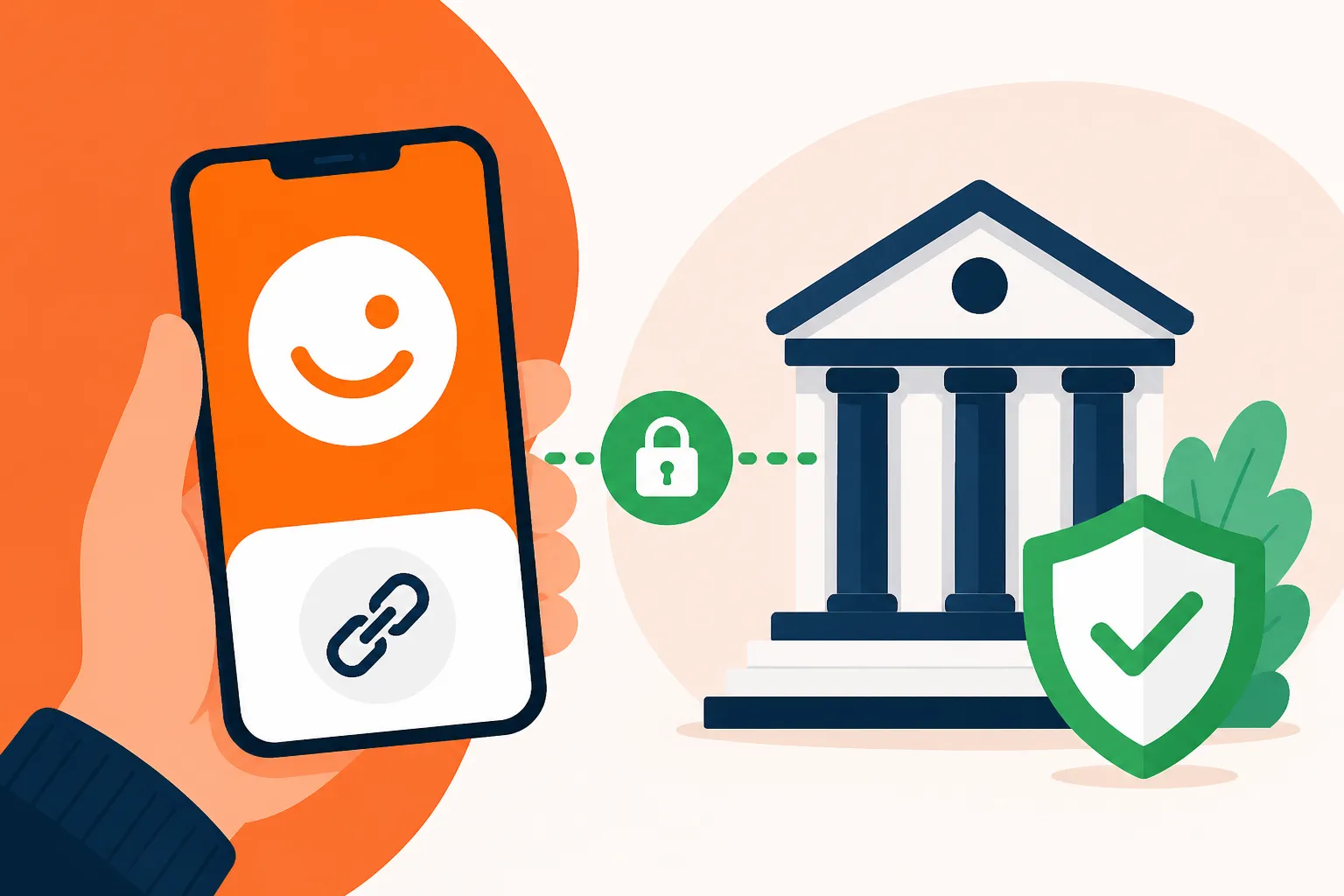
This is the absolutely critical step where Vipps securely links to your Norwegian bank account using your BankID. This process ensures that you are indeed the legitimate owner of both the phone number and the bank account.
- Initiate Linking: Within the Vipps app, you'll find an option to "Add bank account" or "Link account" during the initial setup, or later in the app's settings. Select this.
- Choose Your Bank: Vipps will present a list of Norwegian banks. Select the bank where you have your account and your BankID.
- Redirect to BankID: The Vipps app will then redirect you to a secure BankID login page. This isn't within Vipps itself, but a secure portal provided by your bank/BankID system. Here, you'll need to enter your Fødselsnummer (or D-number, if applicable and supported by your BankID setup) and your BankID password.
- Two-Factor Authentication: You'll then be prompted for the second factor of your BankID. This usually means using your physical code device to generate a one-time code, or confirming the login via your BankID app on another device.
- Authorization: Once authenticated, you will be asked to authorize Vipps to access necessary information from your bank account (like your account number and name) to link them. Don't worry, this doesn't give Vipps full control over your bank account, just the necessary permissions to facilitate payments.
- Confirmation: After successful authorization, you'll be redirected back to the Vipps app. It should now display your linked bank account information. You might be asked to select a primary account if you have multiple, though most expats start with just one.
The BankID system is designed to be robust against fraud, so any slight mismatch in information or an incorrect code will halt the process. If you encounter issues, double-check your BankID details and ensure your internet connection is stable. Remember, Vipps cannot process anything without this secure link, which is part of what makes Setting Up Vipps: The Requirements for Norway’s Leading Mobile Payment so dependent on BankID.
Confirming Your Linked Account
Once the BankID verification is complete, the Vipps app should clearly show your linked bank account. You'll typically see your name, account number (kontonummer), and possibly the bank's name. You can usually find this information in the "Profile" or "Settings" section of the Vipps app.
To be extra safe, try sending a small amount (like 1 NOK) to a friend to confirm everything is working, and then ask them to Vippse it back. This little test can give you peace of mind that your account is correctly linked and ready for action.
Common Challenges and Troubleshooting for Expats
Even with a step-by-step guide, things can sometimes go awry. As an expat, you're often navigating systems that weren't necessarily built with international newcomers in mind. Here are some common pitfalls and how to approach them.
D-Number Holder Hurdles
Let's be real: living in Norway with only a D-number can feel like playing life on "hard mode" sometimes. While D-numbers are useful for short-term stays, they often present limitations for long-term integration into essential services. While some banks have made strides, obtaining full BankID functionality with a D-number can still be a significant challenge, directly impacting your ability to use Vipps. Many D-number holders report issues during the BankID verification step, as some banks simply do not issue the necessary BankID types or have stricter requirements for non-permanent residents.
If you are struggling with a D-number, your best bet is to contact your specific bank directly and ask what their policy is for D-number holders regarding BankID and Vipps. Some might offer a "BankID på mobil" (BankID on mobile) or a specific app solution, but these options can be inconsistent. It's an area where the system still needs to catch up with the reality of a global workforce. You might find similar limitations when accessing other services, as discussed in Healthcare Rights for D-Number Holders: Exclusions and Alternatives or even trying to open a bank account without a permanent address, which is often tied to Fødselsnummer registration.
BankID Issues
Ah, BankID. It's wonderful when it works, but a nightmare when it doesn't. If your BankID isn't cooperating during the Vipps linking process, here's what to check:
- Expired BankID: BankID certificates do expire. Check with your bank if yours is still valid.
- Locked Out: If you've entered incorrect passwords too many times, your BankID might be locked. You'll need to contact your bank's customer service to unlock it. This can be particularly stressful if you're abroad, so knowing What to Do if You Get Locked Out of BankID While Abroad is a good backup plan.
- New Phone/SIM Card: If you've recently changed your phone or even just your SIM card, you might need to reactivate or reconfigure your BankID, especially if you use BankID på mobil. Again, your bank is the first point of contact.
- Technical Glitches: Sometimes, it's just a temporary technical issue. Try again later, or restart your phone and the Vipps app.
Switching Banks or Accounts
Life happens, and sometimes you might want to switch banks or perhaps you've opened a new account within the same bank that you want to use for Vipps. Changing your linked account in Vipps is straightforward.
- Go to your profile or settings within the Vipps app.
- Look for "Bank Accounts" or "Kontonummer".
- You should see an option to "Add new account" or "Change primary account".
- You'll then go through the BankID verification process again to securely link the new account.
Vipps is designed to be flexible, but it will always require that secure BankID authentication to make any changes to your linked accounts.
Keeping Your Vipps Account and Linked Bank Account Secure
Digital convenience comes with digital risks. While Norway's systems are generally very secure, it's crucial to remain vigilant.
Strong Passwords and PINs
It might sound obvious, but always use a strong, unique PIN for your Vipps app, and never share it. If your phone falls into the wrong hands, a simple PIN is the first line of defense. The same goes for your BankID password. Don't use easily guessable combinations like birth dates, "1234," or simple repeating numbers. Consider using biometric authentication (fingerprint, face ID) for an extra layer of security on your phone and within the Vipps app.
Recognizing Phishing Scams
Unfortunately, scams are a global phenomenon, and Vipps users are not immune. Be incredibly wary of any unsolicited SMS messages or emails that claim to be from Vipps or your bank, asking you to click a link, verify your account, or provide personal information. These are almost always phishing attempts.
Key things to remember:
- Vipps will never ask you for your PIN or BankID details via SMS or email.
- Always check the sender: Does the email address look legitimate? Is the SMS number a standard Norwegian number or a suspicious international one?
- Hover before you click: On a computer, hover over links to see the actual URL before clicking. If it looks fishy, don't click it.
- If in doubt, go directly to the source: If you get a suspicious message, open the Vipps app directly (or your bank's app) and check for notifications there, or call their official customer service number. Never use contact details provided in a suspicious message.
Expats can sometimes be more vulnerable to these scams due to unfamiliarity with local customs and legitimate communication channels, so extra caution is warranted.
What to Do if Your Phone or BankID is Compromised
If you suspect your phone has been stolen, lost, or your BankID credentials have been compromised, act immediately.
- Contact Your Bank: Call your bank immediately to report the compromise and temporarily block your BankID. Most banks have a dedicated fraud or security line.
- Contact Vipps: Inform Vipps customer service about the situation. They can block your Vipps account to prevent unauthorized transactions.
- Change Passwords: Change any other critical passwords (email, other banking apps) as a precaution.
- Report to Police (if stolen): If your phone was stolen, report it to the Norwegian police (Politiet).
Being proactive is the best defense. While the Norwegian financial system is incredibly robust, personal vigilance remains your strongest asset against digital threats. When planning your wider financial life in Norway, considering various options for managing money, including international services like Wise for remittances or specific expat financial advisors like Taxes for Expats for tax planning, can add layers of security and efficiency.
Overview of Payment Methods in Norway
| Payment Method | Pros | Cons | Ideal Use Case |
|---|---|---|---|
| Vipps | Instant, widely accepted, easy for peer-to-peer, bill pay | Requires Norwegian bank account & BankID, phone dependent | Daily transactions, splitting bills, small purchases, online shopping |
| Debit Card (Bankkort) | Widely accepted, secure, trackable, easy ATM access | May incur foreign transaction fees (if not Norwegian card) | Most retail purchases, ATM withdrawals |
| Credit Card | Purchase protection, rewards, international acceptance | Can accumulate debt, interest rates, annual fees | Online purchases (especially international), travel, emergencies |
| Bank Transfer | Secure for large sums, formal record | Slower than Vipps, requires account numbers, less convenient | Rent payments, salary transfers, large purchases from private sellers |
| Cash | Accepted in very limited scenarios | Rarely used, often inconvenient, not accepted everywhere | Very few places, small, informal transactions (e.g., small village markets) |
Disclaimer
The information provided in this guide is intended for general informational purposes only and does not constitute financial or legal advice. Regulations and procedures in Norway, particularly concerning banking, identification, and digital services, can change. Always consult with official sources such as your bank, UDI, Skatteetaten, or a qualified financial advisor for the most current and personalized information relevant to your specific situation. We are not responsible for any actions taken based on the information provided herein.