Norway Digital Nomad Visa: Independent Contractor vs Svalbard Routes
Oh, the dream of tapping away on your laptop with a fjord view, or perhaps under the glow of the Northern Lights! So many of us expats, myself included, arrive in Norway picturing this idyllic remote work life, only to quickly discover that Norway doesn't quite roll out the red carpet for the traditional "digital nomad." The reality can be a bit more complex, with bureaucratic hurdles that make you want to pull your hair out. But don't despair! While there's no single, straightforward "Norway Digital Nomad Visa" like you might find in some other countries, there are indeed pathways to make this dream a reality. This comprehensive guide will walk you through the two primary routes: the Independent Contractor Visa and the unique Svalbard option, sharing insights, requirements, and plenty of hard-won wisdom to help you navigate the system.
The Allure of Norway for Digital Nomads (And the Reality Check)
It's easy to see why Norway captures the imagination of anyone looking to blend work with an incredible lifestyle. The stunning landscapes, the high quality of life, the emphasis on work-life balance – it all sounds like a remote worker's paradise. But before you pack your bags and order that extra-strong coffee, it's crucial to understand that Norway's immigration system isn't really set up for the footloose, transient digital nomad we often read about.
Why Norway, Why Not? Dream vs. Practicality
The image of Norway as a haven for outdoor enthusiasts and progressive thinkers is certainly true. Imagine spending your mornings hiking in Jotunheimen, your afternoons coding from a cozy cabin, and your evenings chasing the aurora. For many, this dream is the driving force. The clean air, the safety, the advanced infrastructure (yes, even in remote areas, the internet can be surprisingly good) are all huge draws. The social welfare system, even if you're contributing to it as a self-employed person, offers a sense of security that is rare elsewhere.
However, the practicalities hit hard and fast. Firstly, the cost of living is notoriously high. What might be a comfortable income in Lisbon or Chiang Mai for a digital nomad will barely scratch the surface of expenses in Oslo or Bergen. Groceries, rent, transport – everything adds up. Secondly, and most critically for digital nomads, Norway is exceptionally particular about who gets to live and work within its borders. Their immigration policies are primarily geared towards skilled workers filling specific job shortages, family reunification, or students. The idea of someone simply wanting to be here and work for a foreign company, without directly contributing to the local job market, isn't a category they've traditionally embraced. This means you need a very clear and substantial reason for your presence that aligns with existing visa categories, rather than expecting a bespoke "digital nomad" solution.
The UDI Stance: No "Official" Digital Nomad Visa
This is the big one: Norway's Directorate of Immigration (UDI) does not, at the time of writing, offer a specific "digital nomad visa" or a short-term visa for remote workers who are employed by companies outside of Norway and have no intention of engaging with the Norwegian labor market. This is a common point of confusion and frustration for many prospective expats. If your plan is to simply work remotely for your US or UK employer from a Norwegian city, you cannot do so on a standard tourist visa, which generally allows stays of up to 90 days within any 180-day period in the Schengen area. Engaging in work activities while on a tourist visa is strictly prohibited and can lead to serious issues, including deportation and future entry bans.
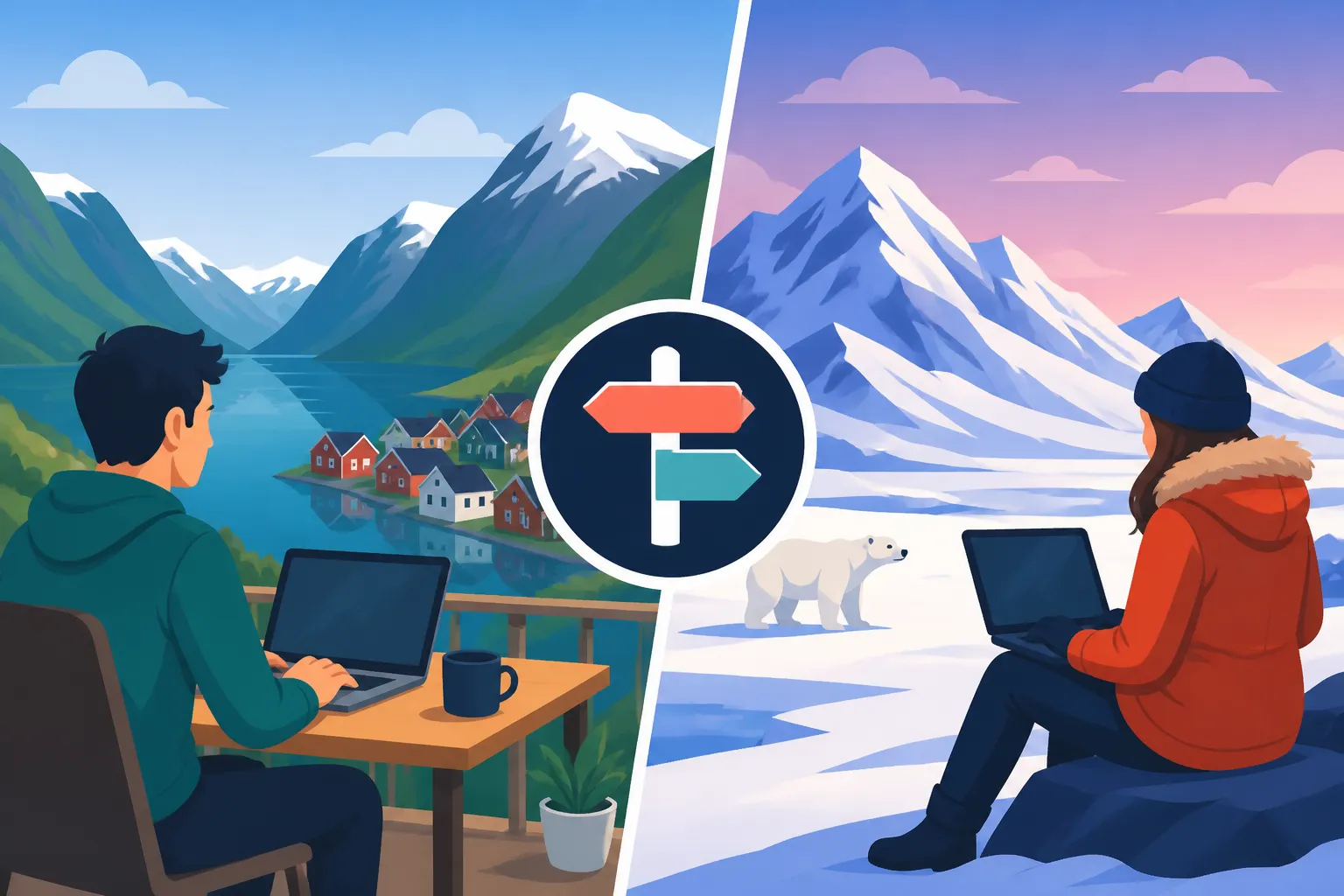
Instead, aspiring digital nomads must fit into one of the existing, more traditional visa categories. The two most plausible, albeit challenging, pathways are either qualifying as an independent contractor with a clear connection to Norway, or leveraging the unique status of Svalbard. Both require significant planning, financial proof, and a willingness to navigate intricate bureaucratic processes. It's not a casual "move and figure it out" situation; it demands diligence and often professional guidance.
Pathway 1: The Independent Contractor Visa (Selvstendig Næringsdrivende)
This is perhaps the closest most digital nomads will get to a "work-from-anywhere" visa in mainland Norway, but it comes with some very specific caveats. It’s essentially a self-employment visa, designed for individuals who intend to establish and run their own business in Norway. The key difference here is that you're not just working remotely for a foreign employer; you are actively engaging in economic activity in Norway.
Eligibility and Core Requirements
To even consider this route, you need to meet the general requirements for residence permits in Norway, which include having a valid passport, no criminal record, and sufficient funds. Beyond that, the UDI looks for a robust business plan. This isn't just a casual freelance gig; they want to see that you have a viable business idea that will contribute to the Norwegian economy. Your services or products should ideally be in demand in Norway, or at least show a clear market. This means conducting thorough market research before you even apply.
Furthermore, you typically need a relevant educational background or significant work experience in the field you plan to work in. Think about it: if you're presenting yourself as an expert graphic designer, you should have a portfolio and ideally a degree to back it up. If you're a software developer, your resume should clearly demonstrate your skills and experience. All these documents will need to be properly translated into Norwegian or English by certified translators. Services like RushTranslate or Translayte can be incredibly helpful for ensuring your official documents meet the UDI's stringent requirements. They specialize in certified translations, which UDI often insists upon for things like diplomas, professional certifications, and even your criminal background check from your home country.
Proving Your "Norwegian Connection" The Local Client Catch
This is where many aspiring independent contractor digital nomads hit a wall. While the visa is for self-employed individuals, UDI typically expects to see a strong connection to the Norwegian market. This often translates into a requirement to show that you either already have a contract with a Norwegian client or clients, or that you have a very clear and concrete plan for how you will acquire them. Simply stating that you'll work for your existing international clients from Norway often isn't enough. The UDI wants to see how your presence benefits Norway directly.
For example, if you're a marketing consultant, you might need to present letters of intent from Norwegian companies or outline specific strategies for targeting the Norwegian market. If you're a specialized craftsperson, you'd show how your unique skills fill a niche. This can be a huge hurdle, as securing a Norwegian client or even a letter of intent can be difficult to do remotely without being in Norway first. It's a bit of a chicken-and-egg situation. The strength of your business plan and your ability to convincingly argue your market presence will be paramount. Without a demonstrable link to the Norwegian economy, your application is likely to be viewed with skepticism, as it doesn't align with the primary purpose of this type of permit.
Financial Thresholds and Self-Sufficiency
Even if you tick all the boxes for a strong business plan and local connection, the UDI needs to be absolutely sure you won't become a burden on the Norwegian welfare system. This means proving significant financial self-sufficiency. You need to demonstrate that you have sufficient funds to support yourself and any dependents you bring to Norway, not just for the duration of the initial permit but for the foreseeable future. The exact figures can change, but generally, you'll need to show liquid assets or guaranteed income that far exceeds Norway's minimum wage for an employee.
This financial proof usually takes the form of bank statements showing substantial savings, or contracts with clients that guarantee a certain level of income. Remember, Norway is one of the most expensive countries in the world, and their minimum financial requirements reflect this. You can't just scrape by; you need to prove a robust financial footing. This requirement is in place to ensure that only those who can genuinely thrive independently, without relying on public services, are granted permits. It's not just about earning enough to pay your bills, but enough to pay taxes and contribute to the system that supports the high quality of life here.
The Application Process: Step-by-Step
Navigating the UDI application process can feel like a labyrinth, especially for something as complex as a self-employment permit. The process typically starts by gathering all your comprehensive documentation: passport copies, educational certificates, work experience letters, a detailed business plan (often requiring a financial forecast for at least the first year), and proof of funds. Any documents not in English or Norwegian will require certified translations, which, as mentioned, is where reliable services like Translayte or RushTranslate become invaluable.
Once your dossier is ready, you usually apply online through the UDI portal, paying the application fee. After submitting, you'll need to book an appointment with the police (Politiet) in Norway, often at a service centre for foreign workers (SUA), to submit your physical documents, provide biometric data (fingerprints and photo), and clarify any details. The waiting times for these appointments, and then for the permit decision itself, can be lengthy. It's not uncommon for decisions to take several months, sometimes up to a year, especially for more complex cases like independent contractor visas. Patience, meticulous organization, and perhaps some internal linking to our guide on Navigating the UDI and Police Portal: Booking Appointments and Tracking will be your best friends during this period. Remember, you cannot begin working in Norway as a self-employed person until your permit has been approved and you have received your residence card.
Pathway 2: The Svalbard Route – Arctic Remote Work (A Unique Exception)
For those looking for a true "digital nomad" experience without the strict mainland visa requirements, the Norwegian archipelago of Svalbard often comes up. It's a fascinating and unique place, but it's crucial to understand that while it offers visa-free entry, it is not a simple loophole for endless remote work. It comes with its own set of very real, very harsh challenges.
The Svalbard Treaty: A Visa-Free Zone
The Svalbard Treaty of 1920 grants citizens of signatory nations equal rights to reside and work on the archipelago without a visa. This means that, unlike mainland Norway, you generally don't need a specific residence permit from UDI to move to Svalbard. For many, this sounds like the ultimate digital nomad dream: bypass the bureaucracy and work from the Arctic. Citizens from a vast number of countries, including non-EU/EEA nations, can technically move to Svalbard and begin working or operating a business.
This unique status is a holdover from a bygone era, designed to promote economic activity and settlement in a remote and strategically important region. It has indeed led to a diverse, multinational community in the main settlement of Longyearbyen. However, the treaty doesn't exempt you from all Norwegian laws. While entry is unrestricted, your right to stay is conditional on your ability to support yourself. The local authorities, particularly the Governor of Svalbard (Sysselmesteren), have the power to expel anyone who cannot prove they have sufficient means to live or work, or who becomes a burden on the limited local services. This is a crucial distinction: visa-free doesn't mean consequence-free.
The Catch: Proving Self-Sufficiency and Housing
Here's the often-overlooked reality check for Svalbard. While you don't need a visa, you absolutely do need to prove that you can support yourself financially and secure housing. The Governor of Svalbard requires all new residents (who intend to stay longer than a few weeks) to demonstrate how they plan to live. For a digital nomad, this means showing proof of stable remote income (e.g., contracts with foreign clients, consistent bank statements) and, critically, a place to live.
Housing on Svalbard, particularly in Longyearbyen, is incredibly scarce and expensive. There is a severe housing crisis, and priority is often given to those employed by local businesses. You cannot simply arrive hoping to find a place; you must secure it before you move. This often involves landing a local job with accommodation provided, or having substantial funds to buy property (which is also highly restricted). Without a confirmed address and proof of sustenance, you won't be permitted to stay long-term. Many hopefuls arrive only to be turned away because they haven't sorted out these fundamental prerequisites. Our detailed article Svalbard Housing Constraints: Why No Visa Doesn’t Mean Easy Moving delves deeper into this very specific challenge.
Living and Working in Longyearbyen: Practicalities
Life in Longyearbyen is unlike anywhere else. It’s a small, isolated community in the High Arctic, where polar bears roam, daylight vanishes for months in winter, and everyday life requires a different kind of resilience. While working remotely, you'll still contend with these environmental realities. Internet infrastructure is generally good, but the limited amenities, higher prices for goods (everything is imported), and the unique social dynamics of a small, transient expat community need to be considered.
For digital nomads, the ability to focus on work amidst these unique conditions is paramount. While there are co-working spaces, the draw of the outdoors and the ever-present cold can be distractions. You also need to consider your social integration. While the community is international, it's also small, and long-term residents often have strong ties to local industries. It's a place where you're very much exposed to the elements and dependent on the local infrastructure. This is not a tropical beach with good Wi-Fi; it's a frontier environment with serious practical implications for daily living.
Tax Implications and Residency on Svalbard
Even though Svalbard is part of Norway, it has a distinct tax regime. Income tax rates are significantly lower than on the mainland, and there's no VAT (MVA). This makes it attractive financially for those who can establish legitimate residency and income generation there. However, you are generally considered a tax resident of Svalbard if you spend more than 30 days there and intend to reside there permanently. If your stay is more transient or primarily for working with foreign entities, your tax residency can become complex.
It's crucial to understand that simply being on Svalbard doesn't automatically mean you pay Svalbard taxes. If you maintain significant ties to mainland Norway or another country, tax authorities (Skatteetaten) might view you as a tax resident elsewhere. For a digital nomad, this means careful consideration of your primary residence, where your substantial interests lie, and where your income is truly generated. Consulting with a tax professional experienced in Norwegian and international tax law is highly recommended before making any long-term decisions about living and working on Svalbard, to understand your obligations fully and avoid potential double taxation or non-compliance. Our guide on Do I Pay Tax to Svalbard or Mainland Norway as a Digital Nomad? offers more nuanced insights into this complex topic.
Essential Documentation for Both Pathways (Getting Your Papers in Order)
Regardless of whether you're eyeing the independent contractor route on the mainland or the unique opportunities on Svalbard, one constant remains: meticulous documentation is non-negotiable. Norway's authorities, be it UDI, Sysselmesteren, or Skatteetaten, demand precision and completeness. Trying to cut corners here will only lead to delays and potential rejections.
Passport, Photos, and Application Forms
These are the absolute basics, but even here, details matter. Your passport must be valid for at least six months beyond your intended stay and ideally have several blank pages for stamps. Expired passports or those nearing expiration will cause immediate problems. For official applications, you'll need recent passport-style photos that adhere strictly to Schengen visa photo specifications – specific size, background color, and facial expression rules. Don't just use any old selfie!
Then there are the application forms themselves. For mainland permits, these are typically filled out online via the UDI portal. For Svalbard, while there isn't a visa application form per se, you'll likely complete various registration forms with the Governor of Svalbard upon arrival, and potentially with the local tax office (Skattekontoret) depending on your intended length of stay. Always double-check that every field is filled accurately and completely. Even a minor typo can trigger a delay in processing, so take your time and review everything before submission.
Financial Proof: Bank Statements and Contracts
As we've touched upon, demonstrating financial self-sufficiency is critical for both pathways. For the Independent Contractor Visa, this means submitting recent bank statements (showing a substantial balance over a period, not just a sudden influx of cash), detailed client contracts that outline scope of work and payment terms, and perhaps even invoices from past work. If your business plan includes projections, you'll need to back them up with solid financial data and market analysis.
For Svalbard, while the formal permit isn't required, you'll still need to show the Governor of Svalbard that you can support yourself. This often translates to consistent income from remote work contracts, substantial savings, or a letter from your foreign employer confirming your remote work status and salary. Remember, you're not just proving you can survive, but that you won't become a burden on the tiny, limited public services of the archipelago. If your income isn't stable or robust, your stay will likely be curtailed.
Business Plans and Professional Qualifications
For the Independent Contractor Visa, your business plan is the heart of your application. It must be detailed, realistic, and compelling. It should clearly outline your business idea, target market, marketing strategy, financial projections (including how you'll make enough money to support yourself), and how your business will contribute to the Norwegian economy. This isn't a casual sketch; it needs to be a professional document that showcases your entrepreneurial spirit and foresight.
Alongside your business plan, you'll need to provide proof of your professional qualifications. This includes copies of your diplomas, degrees, professional certifications, and a comprehensive CV. If your work requires specific licenses or registrations (e.g., for certain medical or legal professions), you'll need to demonstrate you meet those requirements or have a plan to do so. UDI wants to see that you are qualified to execute the business plan you're presenting. These documents often need certified translation if not in English or Norwegian, for which services like RushTranslate are highly recommended to ensure accuracy and UDI acceptance.
Document Translations and Verification
This point cannot be stressed enough: Norway's immigration and administrative bodies have very strict rules about foreign documents. Any document not originally issued in Norwegian or English will almost certainly need to be translated by a certified translator. This isn't a task for Google Translate or a friend who speaks a bit of Norwegian. It needs to be a professional, certified translation, often accompanied by the translator's stamp and signature, verifying its accuracy.
Failing to provide properly translated and verified documents is a common reason for application delays or outright rejections. Imagine having your entire application held up because your university degree from back home wasn't correctly translated. That's a frustration you absolutely want to avoid. Look for services that understand the requirements for legal and official documents for Norwegian authorities. Both Translayte and RushTranslate offer certified translation services that are generally accepted by Norwegian authorities for immigration purposes. Make sure you get multiple copies of certified translations, as you might need them for various steps in your journey, from UDI to banks and even potential co-working spaces.
Beyond the Visa: Practicalities of Digital Nomad Life in Norway
Securing your right to live and work in Norway, whether on the mainland or Svalbard, is just the first step. The day-to-day realities of life here present their own set of challenges and opportunities that every aspiring digital nomad needs to be prepared for. From setting up a home base to navigating a cashless society, a little foresight goes a long way.
Finding Accommodation and Setting Up Utilities
Finding a place to live in Norway can be tough, especially in popular cities like Oslo, Bergen, or Trondheim, or in constrained environments like Longyearbyen. Rental markets are competitive, and landlords often require proof of income, a local bank account, and sometimes even references that can be hard for newcomers to provide. You'll likely start your search on platforms like Finn.no, but be prepared for swift action – good places go fast. For a comprehensive overview, check out our guide on Renting in Norway: Apartments, Contracts, and Tenant Rights.
Once you've secured housing, you'll need to set up utilities. Electricity is a major variable expense, heavily influenced by spot prices and grid fees, especially during the long, dark, and cold winters. Internet is usually fast and reliable, with providers like Telenor, Telia, or local fiber companies offering various packages. Setting these up can sometimes require a D-number or Fødselsnummer (national ID number), which you might not have immediately, complicating the process. Our article Electricity Bills in Norway: Spot Prices, Grid Fees (Nettleie), and Support can help you budget for this significant cost.
Healthcare and Social Security Access
As an independent contractor in mainland Norway, once you are registered as a resident and paying taxes, you generally gain access to the public healthcare system, Folketrygden. This is the National Insurance Scheme, which provides comprehensive coverage. You'll register with a local GP (Fastlege) and pay user fees (egenandel) until you reach the annual exemption card (frikort) limit. Understanding Healthcare in Norway for Expats: How the System Works (2027) is crucial.
On Svalbard, healthcare is more limited. There's a hospital in Longyearbyen that provides basic medical care and emergency services, but more complex treatments often require evacuation to mainland Norway. Critically, residents of Svalbard are not automatically covered by Folketrygden in the same way mainland residents are. You will need to ensure you have comprehensive private travel or health insurance to cover potential medical emergencies, especially for evacuations. This is a vital point that many overlook.
Banking, BankID, and Local Payments
Norway is rapidly becoming a cashless society. You'll need a Norwegian bank account to manage your finances, receive payments from any local clients, and pay bills. Opening an account usually requires a D-number (temporary ID) or Fødselsnummer (permanent ID), and a valid residence permit if you're on the mainland. Many banks, like DNB, Nordea, or SpareBank 1, cater to expats, but the process can still be lengthy. Our guide on Banking in Norway: How to Open an Account as a Foreigner will walk you through it.
Once you have a bank account and a national ID, your next hurdle will be obtaining BankID, Norway's digital identification system. BankID is essential for everything from logging into government services (like UDI or Skatteetaten) to signing documents, accessing online banking, and using mobile payment apps like Vipps. Without it, you'll find daily administrative tasks incredibly difficult. However, obtaining BankID as a newcomer, especially with just a D-number, can be challenging. Some banks are more accommodating than others. Our article on D-Number vs Fødselsnummer: How It Affects Your Banking Options explains the complexities.
Learning Norwegian and Cultural Integration
While many Norwegians speak excellent English, especially in urban areas and Svalbard, making an effort to learn Norwegian will significantly enhance your experience. It's not just about practical communication; it's about showing respect for the culture and opening doors to deeper social integration. For mainland independent contractors, it can even be seen as a sign of your commitment to your business's presence in Norway. Check out Learning Norwegian for Work: Norskprøven and Language Courses for resources.
Culturally, Norway values modesty, punctuality, and a strong connection to nature (friluftsliv). The "Janteloven" (Law of Jante) emphasizes collective good over individual boastfulness, which can feel alien to some expats. Building friendships can take time, but joining local clubs, sports groups, or volunteering for a "dugnad" (community workday) are great ways to meet people. For digital nomads, co-working spaces, prevalent in cities like Oslo and Bergen, can also offer a community and a professional network. Consider our guide on Co-working Spaces in Oslo and Bergen: Pricing and Communities.
Tax Obligations for Digital Nomads in Norway
Understanding your tax obligations is paramount, whether you're a self-employed independent contractor on the mainland or pursuing the Svalbard route. Norway has a robust tax system, and ignorance is definitely not bliss when it comes to Skatteetaten (the Norwegian Tax Administration).
Understanding Tax Residency and D-Numbers
The first step is determining your tax residency. Generally, if you intend to live in Norway for more than 183 days within a 12-month period, or if you establish a permanent home here, you will become a Norwegian tax resident. This means you are liable to pay tax on your worldwide income to Norway. Even if you're working for foreign clients, that income needs to be declared. For a deep dive, consult The Complete Guide to Norwegian Taxes for Expats (Skatteetaten).
Upon arrival and registration with the police or a municipality, you'll typically be issued a D-number (a temporary identification number). If you plan a longer stay, you'll eventually receive a Fødselsnummer (a permanent national identity number), which is usually issued once UDI approves your residence permit and you register your move with the National Registry (Folkeregisteret). Both are used for tax purposes, but the D-number might have some limitations initially.
Income Tax: Self-Employment vs. Svalbard Specifics
For independent contractors on mainland Norway, you'll be taxed on your business income. You'll register your business (often as an enkeltpersonforetak or ENK, a sole proprietorship) with Brønnøysundregistrene. As a self-employed person, you are responsible for calculating and paying your own forskuddsskatt (advance tax) throughout the year, based on your estimated income. This is a significant difference from being an employee, where tax is automatically deducted. Failing to pay sufficient advance tax can lead to a hefty restskatt (underpaid tax bill) at the end of the tax year.
The tax situation on Svalbard, as mentioned, is unique. Income tax rates are significantly lower, and there is no VAT. However, this only applies if you are genuinely considered a tax resident of Svalbard. If you maintain strong ties to mainland Norway or another country, Skatteetaten might still consider you a tax resident of that location, leading to potential complications and the need to understand double taxation treaties. If you're physically working on Svalbard but your primary economic interests or family remain elsewhere, you might still be liable for taxes in your "home" jurisdiction or mainland Norway.
VAT Registration for Freelancers (MVA if You Hit the Limit)
If your independent contractor business on the mainland generates more than NOK 50,000 in taxable turnover within a 12-month period, you will need to register for VAT (MVA) with Skatteetaten. This means you'll add MVA to your invoices for services provided in Norway and then periodically report and pay this MVA to the tax authorities.
For digital nomads primarily serving international clients, the MVA rules can be complex. Services exported out of Norway are often exempt from Norwegian MVA. However, if you have Norwegian clients or provide services that are consumed within Norway, MVA will apply. It's crucial to understand these nuances to ensure compliance and avoid unexpected tax bills. Keep meticulous records of your income and expenses, and if in doubt, consult with an accountant (revisor) who specializes in small businesses and international tax. When it comes to the annual Filing Your Tax Return (Skattemelding): Deadlines and Common Deductions, accurate MVA reporting is key.
Challenges and Considerations (The Unvarnished Truth)
Living and working as a digital nomad in Norway is an incredible adventure, but it's not without its thorns. From the eye-watering cost of living to the potential for isolation, it's vital to enter this experience with your eyes wide open.
High Cost of Living and Financial Strain
Let's not sugarcoat it: Norway is expensive. Extremely expensive. This is perhaps the biggest hurdle for anyone considering a move here, especially for digital nomads who might not have the high salaries often associated with typical expat packages. Rent, groceries, eating out, transportation, entertainment – every single category of expense is likely higher than what you're accustomed to.
A small apartment in Oslo can easily set you back NOK 15,000-20,000 per month. A single coffee can be NOK 50-60. Supermarket runs, even for basics, will make your jaw drop. While the quality of life is high, it demands a significant income to maintain it comfortably. This means you need to budget meticulously and ensure your remote income is not just stable, but substantially high enough to afford the Norwegian lifestyle. Underestimating this can lead to severe financial strain and ultimately force an early departure.
The Isolation Factor and Building Community
Norway, particularly outside the major cities, can be a quiet place. Norwegians are generally reserved and can take time to open up. While incredibly friendly and polite, immediate deep friendships might not form as quickly as in other cultures. For someone used to a vibrant, easily accessible social scene, this can lead to feelings of isolation, especially during the long, dark winters (mørketid).
As a digital nomad, you might spend a lot of time working independently, further reducing opportunities for social interaction. Making an active effort to join clubs, volunteer, or participate in local activities is crucial. Expat groups on social media can provide a community, but truly integrating requires stepping out of your comfort zone and engaging with local culture and language. This challenge is even more pronounced on Svalbard, where the community is tiny and transient, and the environment itself is isolating.
Bureaucracy and Administrative Hurdles
The Norwegian administrative system, while efficient once you're in it, can be incredibly opaque and slow to navigate as a newcomer. The UDI, Skatteetaten, NAV (the Norwegian Labour and Welfare Administration), and the police all have their own processes, forms, and waiting times. Getting a D-number, then a Fødselsnummer, then a BankID, then setting up a bank account, then registering your business – it's a cascade of paperwork and appointments. Each step often depends on the previous one, leading to frustrating delays.
The language barrier, even with English options available, can add to the stress. Misunderstanding a form or a requirement can set you back weeks. My personal experience, and that of countless other expats, is that patience is not just a virtue, but a necessity when dealing with Norwegian bureaucracy. Having all your documents perfectly organized and translated (yes, another shout-out to services like RushTranslate and Translayte) before you even begin will save you immense headaches.
Future Pathways: From Nomad to Permanent Resident
For many digital nomads, the initial move is a trial run. But what if you fall in love with Norway and want to stay long-term, perhaps even pursue permanent residence or citizenship? The Independent Contractor Visa (if on the mainland) can be a stepping stone, but it has its own requirements for renewal and eventually for permanent residence. For example, to achieve permanent residence, you typically need to have held a valid residence permit for three years and meet specific language and social studies requirements.
The Svalbard route is generally not a pathway to permanent residence on mainland Norway, nor does it typically count towards the time requirements for Norwegian citizenship. Its unique status makes it distinct from the mainland immigration system. If your long-term goal is to become a full-fledged resident of mainland Norway, you would likely need to transition to a more traditional visa category, such as a Skilled Worker Visa in Norway: Eligibility, Salary Thresholds, and Process by securing an employment contract with a Norwegian company. This pivot requires careful planning and understanding of the distinct rules for each visa type.
Comparison Table: Independent Contractor vs. Svalbard Digital Nomad Route
Here's a quick overview to help you compare the two primary pathways for digital nomads in Norway:
| Feature | Independent Contractor Visa (Mainland Norway) | Svalbard Route (Arctic Archipelago) |
|---|---|---|
| Official Visa Status | A formal residence permit for self-employment, issued by UDI. | Visa-free entry and residence per Svalbard Treaty, not a visa. |
| Primary Requirement | Viable business plan, strong Norwegian market connection/clients. | Proof of self-sufficiency (income) & guaranteed housing before arrival. |
| Financial Proof | Substantial savings/guaranteed income for self and dependents. | Sufficient funds/income to cover high living costs and housing. |
| Housing | Competitive rental market, need to secure accommodation. | Extreme housing shortage, must secure before moving, often tied to jobs. |
| Taxation | Standard mainland Norwegian income tax rates (higher), VAT registration if applicable. | Significantly lower income tax rates, no VAT. Specific residency rules. |
| Healthcare Access | Full access to Folketrygden (public healthcare) as a resident. | Limited local healthcare, often requires private insurance for evacuation. |
| Bureaucracy | Extensive UDI application process, police appointments, permits. | Governor of Svalbard registration, less formal initial process, but strict ongoing monitoring. |
| Social Security | Contributions to National Insurance Scheme (Folketrygden). | Limited access to mainland social security benefits, separate system. |
| Long-Term Status | Potential pathway to permanent residence/citizenship after qualifying period. | Generally not a pathway to mainland permanent residence/citizenship. |
| Environment | Diverse climates, developed infrastructure, access to major cities. | Extreme Arctic climate, small isolated community, limited services. |
| Community | Larger expat communities, opportunities for local integration. | Small, transient, international community, high sense of isolation possible. |
Final Thoughts for Aspiring Norwegian Digital Nomads
So, is the dream of being a digital nomad in Norway attainable? Yes, but it's not the easy breezy experience some might hope for. It demands meticulous planning, financial readiness, and a healthy dose of persistence to overcome the administrative challenges. It’s less about being a "nomad" and more about establishing a legitimate, self-sufficient life within Norway's existing immigration frameworks.
Is it Worth It? A Personal Reflection
Having navigated some of these bureaucratic waters myself, I can tell you that the frustration is real. The paperwork, the waiting times, the sheer cost of living – it can all feel overwhelming. But for many of us, the immense rewards of living in Norway make it worth every struggle. The stunning nature, the emphasis on work-life balance, the safety, the quality of education for families, and the unique cultural experiences can truly enrich your life in ways you never imagined.
Whether you choose to establish yourself as an independent contractor on the mainland or embark on the truly unique adventure of Svalbard, approach it with realism. Do your homework, prepare your documents thoroughly, and don't underestimate the financial commitment. If you do, you might just find your corner of Norway, where you can blend your work with an extraordinary life, even if it took a little more effort to get there than you initially planned.
Disclaimer
The information provided in this guide is for general informational purposes only and does not constitute legal, financial, or immigration advice. While every effort has been made to ensure accuracy, laws and regulations in Norway are subject to change. It is highly recommended to consult with relevant official authorities (such as UDI, Skatteetaten, or the Governor of Svalbard) or seek professional legal or financial advice tailored to your specific situation before making any decisions.