Hiking Trolltunga and Preikestolen Safely as a New Resident
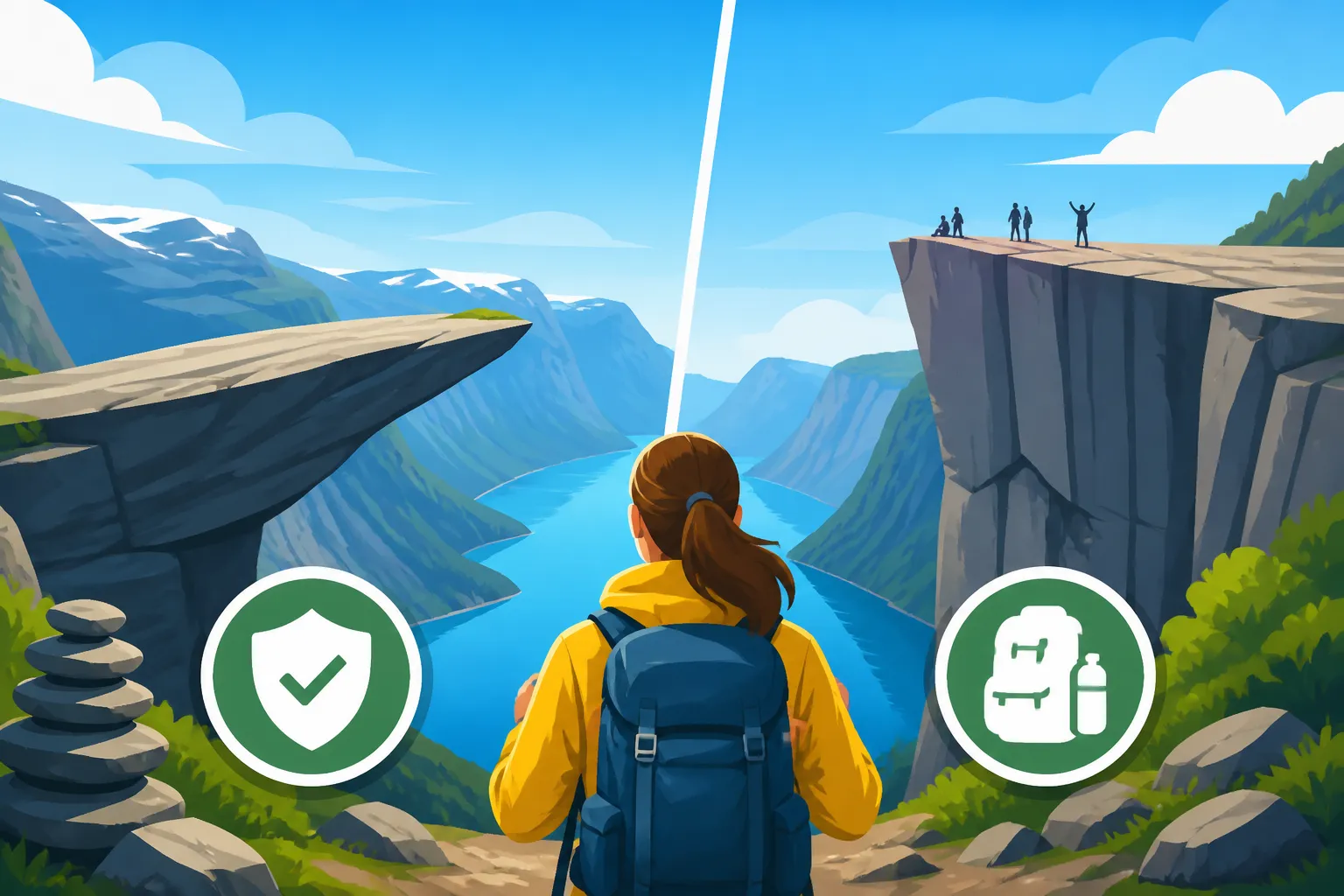
You’ve seen the pictures – that dramatic "tongue" of rock suspended over a fjord, or the iconic flat-top cliff inviting you to gaze into the abyss. Trolltunga and Preikestolen are postcard-perfect symbols of Norway, drawing adventurers from around the globe, and as a new resident, you’re probably itching to experience them yourself. But let me tell you, these aren't your average Sunday strolls in the park; they are serious mountain expeditions that demand respect, careful planning, and thorough preparation. This guide will walk you through everything you need to know, from packing the right gear to understanding the unique challenges of each hike, ensuring your adventure is memorable for all the right reasons, not for an unexpected call to mountain rescue.
The Lure and the Reality: What Awaits You at Trolltunga and Preikestolen
Norway's majestic landscapes are undoubtedly a huge draw, and these two hikes are often at the top of every expat's "must-do" list. However, it's crucial to understand that while stunning, they are also demanding. Don't let the Instagram filters fool you; these are proper wilderness experiences that require physical and mental readiness.
Trolltunga: The Ultimate Norwegian Challenge
Trolltunga, or "The Troll's Tongue," is arguably the most famous and visually dramatic rock formation in Norway, jutting horizontally out from the mountain above Ringedalsvatnet lake. It's the kind of place that stops you in your tracks, a natural wonder that feels almost impossible. The sheer beauty of the landscape here – with its deep blue waters, towering cliffs, and pristine wilderness – is simply unparalleled.
However, the journey to reach this geological marvel is far from a walk in the park. This isn't just a hike; it's a full-day, incredibly strenuous trek covering approximately 27-28 kilometers (round trip) with an elevation gain of around 800-900 meters, depending on your starting point. You're looking at 10-12 hours of solid hiking for most people, often more if you're not accustomed to Norwegian terrain. The path is varied, ranging from rocky ascents and descents to marshy sections and exposed areas. Many who embark on this hike underestimate the sheer physical and mental endurance required, leading to exhaustion, injuries, or even having to turn back halfway. It's a true test of grit, but the reward of standing on that legendary tongue of rock makes it unforgettable.
Preikestolen: Iconic, Accessible, But Not Trivial
Preikestolen, or "The Pulpit Rock," offers a different kind of awe-inspiring experience. This flat-topped cliff looms 604 meters above the Lysefjord, providing panoramic views that are breathtaking in their scope. It’s perhaps more immediately recognizable than Trolltunga and for good reason – the sheer scale of the fjord opening out before you is magnificent. Compared to Trolltunga, Preikestolen is generally considered a more "accessible" hike. The round trip is shorter, typically around 8 kilometers, with an elevation gain of approximately 500 meters. Most hikers complete it in 4-5 hours.
While it's shorter and less technically demanding than Trolltunga, calling Preikestolen "easy" would be a disservice to the mountain. The trail has seen significant upgrades in recent years, with Sherpas from Nepal building stone steps in many sections to improve safety and accessibility. However, it still involves steep, rocky ascents and descents, uneven terrain, and can be particularly challenging in wet conditions when the rocks become slippery. Its popularity also means it can get incredibly crowded, especially during peak summer months, which can add to the stress of the hike. It's still a significant undertaking, and proper preparation is key to enjoying its iconic views safely.
Gearing Up and Planning Smart: Your Essential Hike Checklist
Before you even think about hitting the trail, you need to prepare. This isn't just about comfort; it's about safety. The Norwegian mountains, even in summer, can be unforgiving.
Footwear, Layers, and the Indispensable Backpack
I cannot stress this enough: your gear choices can make or break your hike. First and foremost, invest in proper hiking boots. Not sneakers, not trainers, but sturdy, waterproof hiking boots with good ankle support and excellent grip. You'll be traversing rocky, uneven, potentially wet, and slippery terrain. Blisters are common, but a twisted ankle is a much bigger problem. Break in your boots beforehand!
Layers are your best friend in the Norwegian mountains. The weather can change from bright sunshine to pouring rain and biting wind in a matter of minutes, even on a supposedly clear day. Forget cotton – it holds moisture and will leave you cold. Opt for wool or synthetic base layers that wick away sweat. Over this, add a fleece or wool mid-layer for warmth, and then a windproof and waterproof outer shell jacket and trousers. A hat and gloves are also essential, regardless of the season, as your body loses a lot of heat from your head and extremities. And yes, even in July, you might need them at higher elevations.
Your backpack should be comfortable and large enough to carry all your essentials without being overloaded. For these hikes, a 20-30 liter pack is usually sufficient. Make sure it has a rain cover, or at least pack everything in dry bags inside.
Here’s a quick checklist to get you started:
| Item | Trolltunga (10-12 hr) | Preikestolen (4-5 hr) | Notes |
|---|---|---|---|
| Footwear | Sturdy, waterproof hiking boots | Sturdy, waterproof hiking boots | Ankle support is crucial for rocky terrain. Break them in! |
| Socks | Wool or synthetic hiking socks (2 pairs) | Wool or synthetic hiking socks (1-2 pairs) | Avoid cotton. Bring an extra pair in case of wet feet. |
| Base Layer | Wool or synthetic (top & bottom) | Wool or synthetic (top) | Wicks sweat, keeps you warm even when damp. |
| Mid-Layer | Fleece or wool sweater | Fleece or wool sweater | For insulation and warmth. |
| Outer Layer | Waterproof & windproof jacket + trousers | Waterproof & windproof jacket + trousers | Essential for sudden weather changes. Gore-Tex or similar is best. |
| Headwear | Warm hat & headband | Warm hat or headband | Protects against wind and cold, even in summer. |
| Handwear | Light gloves | Light gloves | Especially for higher altitudes or chilly mornings. |
| Backpack | 25-35 liter with rain cover | 20-25 liter with rain cover | Comfortable, holds all essentials. |
| Water | 2-3 liters (or filter) | 1-2 liters | Hydration is critical. Water can be refilled from streams on Trolltunga, but filter it. |
| Food | High-energy snacks, packed lunch, emergency food | High-energy snacks, packed lunch | Sandwiches, nuts, dried fruit, chocolate, energy bars. Emergency rations (e.g., instant soup). Supermarkets in Norway: Finding International Ingredients are great for sourcing these. |
| Navigation | Map & compass OR GPS device/phone apps (offline) | Map & compass OR GPS device/phone apps (offline) | Don't rely solely on your phone! |
| Safety | First aid kit, headlamp, whistle, small knife | First aid kit, headlamp | Headlamp for early starts/late finishes is a must for Trolltunga. |
| Sun Protection | Sunglasses, sunscreen, lip balm | Sunglasses, sunscreen, lip balm | Sun can be intense, even on cloudy days. |
| Extras | Power bank, fully charged phone, trash bag, small towel | Power bank, fully charged phone, trash bag | For phone, don't leave any litter behind! |
Fueling Your Adventure: Food, Water, and Energy
These are long hikes, especially Trolltunga, and you need to keep your energy levels up. Pack plenty of high-energy snacks like nuts, dried fruit, chocolate, and energy bars. A proper packed lunch (matpakke!) is also essential. Remember, there are no shops or cafes once you're on the trail, so everything you need must be carried in.
Hydration is equally critical. For Trolltunga, aim for at least 2-3 liters of water per person. While there are fresh mountain streams along the path where you can refill, consider bringing a water filter or purification tablets, especially during peak season when more people are on the trail. For Preikestolen, 1-2 liters should suffice. Don’t wait until you’re thirsty to drink; sip regularly. If you’re anything like me, a thermos with hot tea or coffee is a godsend for a mid-hike boost, especially if the weather turns chilly. Many local Supermarkets in Norway: Finding International Ingredients will have plenty of options for durable, calorie-dense snacks.
The Unpredictable Norwegian Weather and Your Safety Net
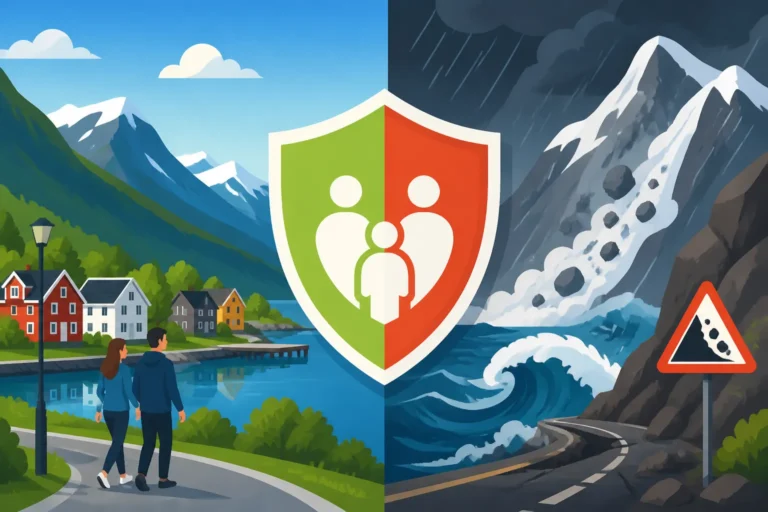
If there's one thing you learn quickly living in Norway, it's that the weather has a mind of its own. It can be gloriously sunny at the trailhead and then switch to rain, fog, and strong winds at higher elevations within minutes. Always, always check the forecast just before you head out, and even then, be prepared for anything. Use reliable local sources like yr.no or storm.no, which offer hyper-local forecasts.
Respect the weather. If the forecast is bad (heavy rain, strong winds, or even snow in shoulder seasons), postpone your hike. Seriously, that iconic photo isn't worth risking your safety. Many rescue operations are a result of people pushing on in unsuitable conditions. If the weather deteriorates while you're on the trail, don't be afraid to turn back. The mountain will always be there another day.
Your mobile phone is a critical safety tool, but reception can be patchy in the mountains. A fully charged phone and a power bank are non-negotiable. Consider an eSIM from Airalo for reliable international connectivity if your primary provider is less robust here, though even that won't guarantee coverage everywhere. If you plan to hike frequently or venture into more remote areas, a personal locator beacon (PLB) or satellite phone might even be worth the investment. Having an offline map downloaded on your phone (like from UT.no or Norgeskart) is also a must, as is knowing how to use it.
On the Trail: Navigation, Etiquette, and Emergency Preparedness
Once you're actually out there, your focus should shift to safe navigation, respecting your fellow hikers and the environment, and knowing what to do if an emergency arises.
Staying on Track: Trail Markers and Digital Helpers
Both Trolltunga and Preikestolen are well-marked trails, but it's still possible to get disoriented, especially in fog or whiteout conditions. The main trails are typically marked with red painted "T"s. Follow them diligently. Do not take shortcuts; they can be dangerous and contribute to erosion.
While physical maps and compasses are always recommended as a backup, digital tools are incredibly useful. Apps like UT.no (from the Norwegian Trekking Association, DNT) and Norgeskart are fantastic resources. Download the maps for your area offline before you go, as relying on mobile data can be unreliable in the mountains. These apps often show your precise location, which is invaluable for navigation and for communicating your position in an emergency. Remember, staying on the marked trail is not just about avoiding getting lost; it's about minimizing your impact on the delicate mountain environment.
Dealing with Crowds and Practicing "Allemannsretten"
Especially during peak season (June to August), both trails, but particularly Preikestolen, can be incredibly busy. You might find yourself in a queue for a photo at Trolltunga or navigating a throng of people on the narrower sections of Preikestolen. Patience is a virtue here. Expect waiting times for photos and be respectful of others. Don't push or rush.
Norway operates under the principle of Allemannsretten: Where Can You Legally Pitch a Tent in Norway?, the "right to roam," which grants extensive access to nature. This freedom comes with a responsibility to treat nature with respect. This means "leave no trace" – pack out everything you pack in, including all your rubbish. Don't pick plants or disturb wildlife. Stay on marked paths to prevent erosion. When passing other hikers, it's customary to offer a polite "Hei!" and give way on narrow sections. It’s part of the unspoken Norwegian Etiquette: Social Rules, Dugnad, and Making Local Friends that helps everyone enjoy the outdoors.
When Things Go Wrong: Emergency Contacts and Actions
Despite all your careful planning, accidents can happen. Twisted ankles, exhaustion, or sudden severe weather changes are real possibilities. It's crucial to know what to do if you find yourself in a difficult situation.
The emergency number in Norway for mountain rescue and ambulance services is 113. If you need to call, try to provide as precise a location as possible. Use your offline map app to pinpoint your coordinates. Stay calm and follow the instructions of the emergency services. If you have an accident, especially a non-life-threatening injury like a sprain, it's often faster and safer to slowly make your way down if possible, rather than waiting for rescue teams to reach you on a long trail like Trolltunga. However, if you are truly stuck, injured, or facing severe weather, do not hesitate to call for help. Remember that you may face long Emergency Room Waiting Times: Triage Rules at Norwegian Hospitals if you need treatment upon returning.
Remember to pack a basic first aid kit with essentials like pain relievers, blister plasters, antiseptic wipes, and bandages. A whistle can be used to signal for help if you're out of phone range. And most importantly, if you're hiking with others, stay together. A group can provide support and assistance if one member struggles.
Logistics: Getting There and Resting Up
Planning your trip to the trailhead and sorting out accommodation is a vital part of the adventure. These aren't urban hikes; they require a bit of logistical finesse.
Transportation to the Trailheads
Getting to these iconic hikes involves a bit of travel, and understanding your options is key.
For Trolltunga: The trailhead is located in Skjeggedal, near Tyssedal, in Vestland county. Most people either drive or take public transport to Odda, the nearest town. From Odda, there are shuttle buses that run to Skjeggedal during the hiking season (usually late May/early June to mid-October). These shuttles also often connect to the two main parking areas: P1 (Skjeggedal) and P2 (Mågelitopp). Starting from P2 cuts off about 400 meters of elevation gain and 4 km (round trip) but costs more for the shuttle or parking. Parking at P1 or P2 is expensive and fills up quickly, so arrive very early if driving. Consider booking shuttle tickets in advance, especially during high season. If you're driving in the shoulder seasons, be aware of mountain road conditions and remember that Winter Tires Piggdekk vs Piggfrie: Legal Dates and Rules might apply, even late into spring or early autumn, depending on the weather.
For Preikestolen: The trailhead is at Preikestolen Mountain Lodge, near Forsand in Rogaland county. This is easily accessible from Stavanger, Norway's fourth-largest city. During the hiking season, there are direct bus services from Stavanger to the trailhead, often including a ferry crossing across the Lysefjord. These services are frequent and reliable. If driving, there's a large paid car park at the trailhead. You can also take a scenic fjord cruise that drops you at Forsand, from where local buses can take you up. For general advice on getting around, check out our guide on Public Transport Nationwide (Vy, Skyss, AtB): Trains and Buses.
Finding Your Base Camp: Accommodation Options
After hours on the trail, you'll be craving a comfortable bed and a warm meal. It's crucial to book your accommodation well in advance, especially during the summer.
For Trolltunga: The nearest major town is Odda, which offers a range of hotels, guesthouses, and campsites. Tyssedal, closer to the trailhead, also has a few options. Booking early is essential as these places fill up fast. Many hikers choose to stay in cabins or rorbuer (traditional fishermen's cabins) in the surrounding area for a more authentic experience.
For Preikestolen: Stavanger offers the widest selection of accommodation, from budget hostels to luxury hotels. It's a great base if you want to explore the city before or after your hike. Closer to the trailhead, you'll find options in Jørpeland and Forsand, including the Preikestolen Mountain Lodge itself, which is literally at the start of the trail. Again, securing your spot well in advance is highly recommended. If you're planning a longer stay in Norway and need accommodation for weeks or months, resources like Spotahome can be useful for finding fully furnished rentals, though for a short hike trip, traditional hotels or guesthouses are usually the go-to.
Remember, these hikes are incredible, but they demand respect and preparation. Enjoy the planning, embrace the challenge, and revel in the breathtaking beauty that awaits you.
Disclaimer
The information provided in this guide is for general informational purposes only and does not constitute professional advice. While we strive to provide accurate and up-to-date information, conditions in the Norwegian mountains can change rapidly. Always consult official sources for the latest trail conditions, weather forecasts, and safety recommendations before embarking on any hike. Hiking in the Norwegian mountains carries inherent risks, and personal safety is your sole responsibility. We recommend obtaining appropriate travel and health insurance before undertaking outdoor activities.