Driving in Norway: Licenses, Winter Driving, and Electric Vehicles (EVs)
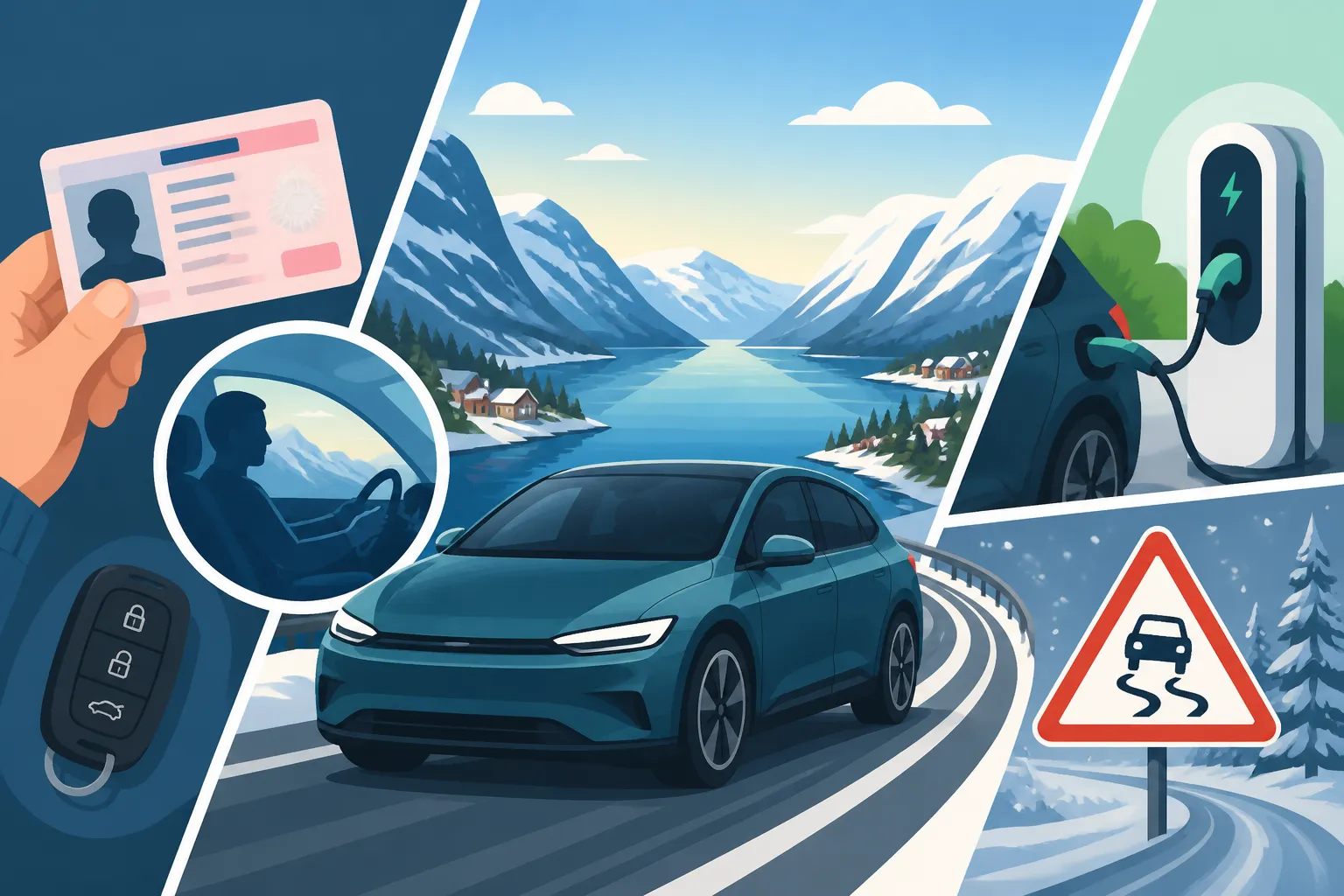
Moving to Norway often feels like a dream until you realize that navigating the country’s dramatic landscapes requires more than just a sturdy pair of hiking boots. For many expats, the transition from relying on world-class public transport in Oslo to realizing a car is essential for exploring the fjords is a major hurdle. This guide solves the confusion surrounding license exchanges, the terrifying reality of winter mountain passes, and the nuances of joining the world’s most advanced electric vehicle market.
Understanding Driver's License Regulations for Foreigners
One of the first administrative brick walls you will hit as an expat is the realization that your home country’s driver’s license might have an expiration date in the eyes of the Norwegian Public Roads Administration (Statens vegvesen). It is a common mistake to assume that because your license is valid back home, it remains valid here indefinitely. Depending on where you are from, you may have a very narrow window to exchange your license before you are forced to undergo the entire Norwegian driver’s education program, which is notoriously one of the most expensive and rigorous in the world.
EU/EEA License Holders: The Easy Route
If you are lucky enough to hold a license from an EU or EEA country, the process is relatively painless. Your license is generally valid in Norway for as long as it is valid in your home country. You can drive on your existing card without any immediate need for exchange, though many expats choose to swap it for a Norwegian one once they become permanent residents to simplify local insurance applications or to have a valid form of local ID.
When you decide to exchange an EU license, you simply submit an application to the Statens vegvesen along with your physical license and a small fee. There are no practical tests or theoretical exams required. This is a massive relief compared to the hurdles faced by those from outside Europe. While you are waiting for your permanent housing through a service like Spotahome, you can use your EU license to rent cars or drive your own vehicle without any legal friction. However, do keep an eye on the expiration date; once it expires, you must renew it in Norway if you are registered in the National Registry.
Non-EU/EEA Licenses: The 12-Month Rule and Exchange Deadlines
For those arriving from the United States, Canada, Australia, or other non-EU countries, the clock starts ticking the moment you register your move to Norway. Generally, you can drive on your foreign license for up to 12 months. However, the catch is the "exchange window." For many "Country Group 2" nations (like the US or South Korea), you must apply for an exchange within one year of moving. If you miss this deadline by even a single day, the Statens vegvesen will typically require you to take the full Norwegian driving course, which can cost upwards of 30,000 NOK.
The exchange process for these countries usually involves a "practical driving test" but skips the extensive mandatory night driving and slippery surface courses required for first-time learners. It is highly recommended to take a few "brush-up" lessons with a local driving school before attempting the practical test. Norwegian examiners are famously strict about "eco-driving" and your ability to scan for cyclists. While you are settling into your new life and potentially using Airalo to keep your phone connected during those first frantic weeks of administration, make the license exchange your top priority.
The Practical Driving Test: What to Expect
If you are required to take the practical test for an exchange, do not underestimate it. This isn't just a spin around the block. You will be expected to demonstrate a deep understanding of the "yield to the right" rule, which is the bane of many foreign drivers' existence. The examiner will watch your eye movements to see if you are checking every side street, even if there is no visible traffic. They want to see that you are proactive, safe, and environmentally conscious in your gear shifts.
Failure rates for expats are surprisingly high, not because they can't drive, but because they carry "bad habits" from home. In Norway, stopping fully at a stop sign means a complete cessation of movement, and failing to do so is an immediate fail. Before you even book the test, ensure you have your First 30 Days Health Checklist: GP, Frikort, and Pharmacies sorted so you aren't dealing with health administrative stress while trying to master Norwegian roundabouts. The test lasts about an hour and includes a safety question before you even start the engine.
Mastering the Norwegian Winter Driving Experience
Nothing humbles a confident driver quite like a Norwegian winter. I remember my first winter in Lillehammer; I thought my experience driving in the rainy UK would suffice. I was wrong. Driving here between November and April is less about "driving" and more about managing friction—or the complete lack thereof. The government does an incredible job of plowing roads, but you will still encounter "black ice," heavy slush, and white-out conditions that require specialized knowledge and equipment.
Winter Tires: Piggdekk vs. Piggfrie
In Norway, you are legally required to have tires that provide "sufficient grip." In practice, this means switching to winter tires. There are two main types: piggfrie (studless) and piggdekk (studded). Studless tires are the standard in cities like Oslo and Bergen because they are quieter and better for the environment. However, if you live in the north or frequently travel to mountain cabins, studded tires provide that extra "bite" into solid ice that studless tires simply cannot match.
Be aware of the local regulations regarding studded tires. In Oslo and Bergen, there is a "studded tire fee" (piggdekkgebyr). If you drive into these cities with studs, you must pay a daily, monthly, or seasonal fee via an app. If you are renting a temporary spot through Spotahome and planning to commute, studless tires are usually the most cost-effective choice. Below is a quick reference for the legal dates regarding tire changes:
| Region | Studded Tire Start Date | Studded Tire End Date |
|---|---|---|
| Southern/Central Norway | November 1st | First Monday after Easter |
| Northern Norway (Nordland, Troms, Finnmark) | October 16th | May 1st |
| All Regions | Any time conditions require it | Any time conditions require it |
Essential Winter Gear and Vehicle Maintenance
Never venture out in winter without a survival kit in your car. This isn't hyperbole; if you get stuck on a mountain pass like Hardangervidda during a storm, help could be hours away. Your car should always contain a sturdy snow shovel, a brush and ice scraper, a tow rope, jump leads, and a reflective vest. More importantly, keep a set of warm blankets and extra wool clothing in the trunk. Norwegians have a saying: "There is no such thing as bad weather, only bad clothing," and this applies to your car’s wardrobe too.
Maintenance is also critical. Ensure your battery is in top condition, as the extreme cold can sap its power overnight. Use a winter-grade windshield washer fluid that won't freeze at -25°C. If you are a new arrival, you might find the Surviving the Norwegian Winter: Clothing, Heating, and Mørketid (Dark Season) guide helpful to understand how the cold affects more than just your car. Also, consider getting a "block heater" or an interior heater if your car is parked outside, which makes those early morning starts much more bearable.
Driving Techniques for Ice and Snow
The golden rule of winter driving in Norway is "smoothness." Every input—steering, braking, and accelerating—must be gentle. If you jerk the wheel, the car will continue straight. If you slam the brakes, you will trigger the ABS and slide. When climbing icy hills, try to maintain a steady momentum without spinning the wheels. If you lose traction, let off the gas slightly rather than flooring it.
Downhill driving is perhaps the most dangerous part. Use your engine to brake by shifting into a lower gear rather than riding the brakes. This prevents the brakes from overheating or locking up. If you are traveling through rural areas, you may encounter TBE and Tick-Borne Encephalitis: Do You Need the Vaccine? warnings at trailheads, but in winter, your primary concern is wildlife. Moose and reindeer are more active at dusk and dawn, and hitting a 500kg moose is a life-altering event. Always scan the treeline for glowing eyes.
The Electric Vehicle (EV) Revolution in Norway
You cannot talk about driving in Norway without talking about electric cars. Thanks to massive government subsidies and a robust charging network, Norway has the highest per-capita ownership of EVs in the world. As an expat, you will quickly realize that the traditional internal combustion engine (ICE) is becoming a rarity in city centers. Buying an EV isn't just an environmental statement here; it’s a pragmatic financial decision.
Why Norway Loves EVs: Incentives and Benefits
For years, EVs were exempt from the 25% VAT and the heavy purchase taxes applied to petrol cars. While the government is slowly phasing some of these out—introducing VAT on the portion of the price above 500,000 NOK—EVs remain significantly cheaper to buy than their fossil-fuel counterparts. Furthermore, EVs enjoy reduced rates on toll roads (bompenger) and ferries, often paying only 50% or 70% of the standard rate.
In many cities, EVs also have access to bus lanes (though usually with a requirement of at least one passenger during rush hour) and cheaper parking. If you have secured a long-term rental through Spotahome that includes a parking spot with a charger, the savings on "fuel" costs alone can be hundreds of dollars a month. This is a key part of Healthcare Budgeting: The Frikort Exemption Card and User Fees and general financial planning in Norway; reducing fixed costs like transport allows you to absorb the high cost of services.
Charging Infrastructure: Apps, Providers, and Home Charging
The biggest shock for new EV owners is the "app chaos." Unlike gas stations where you just swipe a card, charging in Norway often requires a smartphone and an account with the specific provider. Major players include Recharge, Mer, Circle K, and Tesla (which has opened many of its Superchargers to all brands). Before you head out on a long trip, make sure you have downloaded the "Elbilappen" from the Norwegian EV Association, which maps all available chargers.
Using a service like Airalo ensures you have the data needed to start a charging session in a remote fjord where you might not have local Wi-Fi. Most Norwegians install a dedicated "Wallbox" at home for overnight charging, as using a standard 3-pin plug is both slow and a potential fire hazard (and often prohibited by insurance). If you live in an apartment building, the law actually gives you the right to request a charging point be installed, though you will have to cover the costs.
EV Range Anxiety in the Cold: Realistic Expectations
It is a well-documented fact that batteries hate the cold. During a Norwegian winter, you can expect your EV range to drop by 20% to 40%. This is due to the chemical efficiency of the battery decreasing and the high energy demand of the heater. When planning a trip to a mountain cabin, always assume your range is significantly lower than what the dashboard suggests.
Most modern EVs in Norway come with a "battery pre-conditioning" feature. If you set your departure time in the car's app while it's still plugged in, the car will warm the battery and the cabin using grid power rather than your battery. This can save a significant amount of range. If you are worried about the logistics of this while settling in, checking out the First Aid Training Requirements for Norwegian Driving Licenses can give you a sense of the safety standards expected on the road, including how to handle emergencies in an EV.
Road Rules, Speed Limits, and Fines (The Pain Points)
Norway is a rule-abiding society, and the police enforce traffic laws with a severity that often shocks foreigners. There is no such thing as "going with the flow" if the flow is 5 km/h over the limit. The goal here is "Vision Zero"—zero deaths on the road—and the authorities use high fines and pervasive technology to achieve it.
Speed Cameras and the Infamous Ticket Costs
You will notice yellow signs with a camera icon all over the country. These are "ATK" (Automatisk trafikkontroll) stations. Some are single-point cameras, while others are "stretch" cameras that calculate your average speed between two points. If you are caught speeding in Norway, prepare for a heart-stopping bill. A small infraction of 10 km/h over the limit can result in a fine of several thousand kroner, and significant speeding can lead to immediate license suspension and even prison time.
Fines are not based on your income (unlike in Finland), but they are high enough to ruin your monthly budget. If you are still navigating the Banking in Norway: How to Open an Account as a Foreigner process, paying these fines can be even more of a headache. The best advice is to use your cruise control religiously and obey the limits, which are often lower than you’d expect (usually 80 km/h on open roads and 30-50 km/h in urban areas).
Right of Way and the Yield-to-the-Right Rule
This is the single most important rule to master. In the absence of "priority road" signs (the yellow diamond), traffic coming from your right always has the right of way. This applies to T-junctions, cross-streets in residential areas, and even some rural roads. If you are driving on a small street and a car emerges from a side street on your right, you must stop and let them out.
Failing to yield is a leading cause of accidents for expats and can result in your license being revoked on the spot. It feels counter-intuitive to those from the UK or US, where the "main road" usually has priority. In Norway, unless you see that yellow diamond sign, assume you must yield to the right. Always keep your Passport with RFID Chip: Why Norwegian Banks Demand It for BankID and your driver's license with you, as police checks are random and thorough.
Alcohol Limits and Zero Tolerance
Norway has some of the strictest drunk driving laws in the world. The legal limit is 0.02% blood alcohol content—essentially zero. One small beer can put you over the limit. If you are caught, the penalties are draconian: massive fines (usually 1.5 times your monthly gross salary), a minimum one-year license ban, and mandatory jail time for higher levels.
The social stigma against drinking and driving is also immense. If you are at a party, don't even joke about driving home after a glass of wine. People take this very seriously, and they will call the police on you. If you are struggling with the transition, there are Crisis Hotlines in Norway: Mental Health Support in English available, but for road safety, the rule is simple: if you drink, you take a bus, a taxi, or walk.
The Costs of Owning and Operating a Car
Owning a car in Norway is a luxury, even for those with high salaries. Between the initial purchase price, the maintenance, and the constant flow of "user fees," you need to budget carefully. While your Cost of Living in Norway 2026: Budgeting for Singles and Families guide will give you the broad strokes, the specific costs of a vehicle can be a major drain.
Bompenger: Navigating Toll Roads and AutoPass
Norway uses a "polluter pays" principle for its road infrastructure. This means toll stations (bomstasjoner) are everywhere. They are fully automated; there are no booths or barriers. As you drive through, a camera reads your license plate or an "AutoPass" tag in your window. You should absolutely register for an AutoPass tag and link it to a service like "Fremtind Service" or "Flyt."
Having a tag gives you a 20% discount on tolls and is required to get the EV discounts. If you don't have a tag, you will be billed the full rate by mail, which is often a slow and annoying process. For expats moving between temporary rentals found on Spotahome, make sure your AutoPass account is updated with your current address so you don't miss any invoices.
Insurance and Annual EU Inspections (EU-kontroll)
Car insurance (bilforsikring) is mandatory. You must have at least third-party coverage (ansvarsforsikring). Many expats choose "Kasko," which covers damage to your own car as well. Note that your "no-claims bonus" from your home country may not always be recognized by Norwegian insurers, though it is worth bringing a translated letter from your previous insurer to try and negotiate a better rate.
Every two years, your car must undergo an "EU-kontroll" (Periodic Vehicle Inspection). This is a thorough safety and emissions check. If your car fails, you cannot drive it until the faults are fixed and it is re-inspected. This can be a significant expense if you are buying an older car on Finn.no. Make sure to check the Buying Second-Hand on Tise or Finn to Save Money tips to avoid buying a "lemon" that will cost you thousands at the mechanic.
Fuel Prices and Parking Struggles in the Cities
Petrol and diesel prices in Norway are among the highest in the world, despite the country being a major oil producer. This is due to heavy environmental taxes. Prices also fluctuate wildly; they are often significantly cheaper on Sunday evenings or Monday mornings. Parking in cities like Oslo is also a nightmare. Many central streets have been cleared of parking spaces to make room for bike lanes.
If you must park in the city, expect to pay high hourly rates through apps like "Bil i Oslo" or "EasyPark." Many expats find it easier to leave the car at a "Park and Ride" (innfartsparkering) station on the outskirts and take the train into the center. While using Airalo to stay connected, you can easily pay for parking via these apps, which is much more convenient than searching for a meter.
Navigating Norwegian Roads: Tunnels, Ferries, and Mountain Passes
Driving in Norway is a scenic marvel, but it requires a different set of skills than driving on a flat highway. You will encounter world-record-breaking tunnels, ferries that act as floating bridges, and mountain roads that close at the first sign of a blizzard.
Ferry Etiquette: Driving Onto the Fjord Transit
In Western and Northern Norway, ferries are a part of the highway system. When you approach a ferry quay, there are usually lanes marked with the destination. You simply park in the queue and wait. When the ferry arrives, staff will motion you on. Most ferries now use "AutoPass for ferje," which automatically reads your car's tag or plate and bills you. You no longer have to get out of your car to pay a conductor in most cases.
While on the ferry, you must turn off your engine. Most people head up to the lounge for a svele (a thick Norwegian pancake) and a coffee. It’s a great time to check your EHIC and GHIC in Norway: Using European Health Insurance status if you are on a long road trip, just in case. When the ferry nears the dock, return to your vehicle promptly so you don't hold up the line.
Tunnels and Mountain Passes: Seasonal Closures
Norway is the land of tunnels—some are over 24 kilometers long (the Lærdal Tunnel). If you are claustrophobic, be prepared. These tunnels are well-lit and safe, but they require focus. Always keep a safe distance from the car in front, as stopping distances change in the humid tunnel air.
Mountain passes (fjelloverganger) are a different beast. Roads like the E134 over Haukelifjell or the Rv7 over Hardangervidda can close frequently in winter. Sometimes they use "kolonnekjøring" (convoy driving), where a snowplow leads a limited number of cars across the pass. If you miss the convoy, you might be waiting for hours. Always check the "175.no" website (the National Roads Database) before heading over the mountains in winter.
Buying or Renting a Car as an Expat
For many expats, the high cost of new cars makes the second-hand market very appealing. However, there are specific Norwegian quirks to the car-buying process that you need to be aware of to avoid getting scammed or overpaying.
Searching on Finn.no for Used Cars
Finn.no is the undisputed king of the Norwegian marketplace. When searching for a car, look for the "Tilstandsrapport" (condition report) and check the "servicehistorikk." It is very common in Norway to buy cars "som den er" (as is), but you still have rights under the Consumer Purchase Act. Always check if the "omregistreringsavgift" (registration transfer fee) is included in the price.
When you find a car you like, you can use BankID to sign the digital sales contract and the "melding om kjøretøy" (transfer of ownership) on the Statens vegvesen website. If you haven't received your BankID yet, see the Overcoming the BankID Block: Workarounds for D-Number Holders guide for advice on how to handle these digital transactions without it.
Short-term Solutions: Rental and Car-Sharing
If you only need a car occasionally, car-sharing services like "Hyre," "Getaround," or "Bilkollektivet" are fantastic. These apps allow you to rent a car for an hour or a day, often with fuel and insurance included. This is a much more flexible option than traditional rental agencies like Hertz or Avis.
For those who have just arrived and are staying in a Spotahome apartment, these car-sharing services are often located in nearby parking garages. They are a great way to handle "dugnad" days or big grocery trips to Ikea without the permanent expense of car ownership. Just ensure your foreign license is uploaded and verified in the app before you need the car.
Disclaimer
The information provided in this guide is for general informational purposes only and does not constitute legal or professional advice. Driving regulations, tax laws, and visa requirements in Norway are subject to change, and you should always consult the official Statens vegvesen or UDI websites for the most current and accurate information. The author and publisher are not responsible for any fines, legal issues, or accidents resulting from the use of this information. Always drive according to local conditions and prioritize safety above all else.