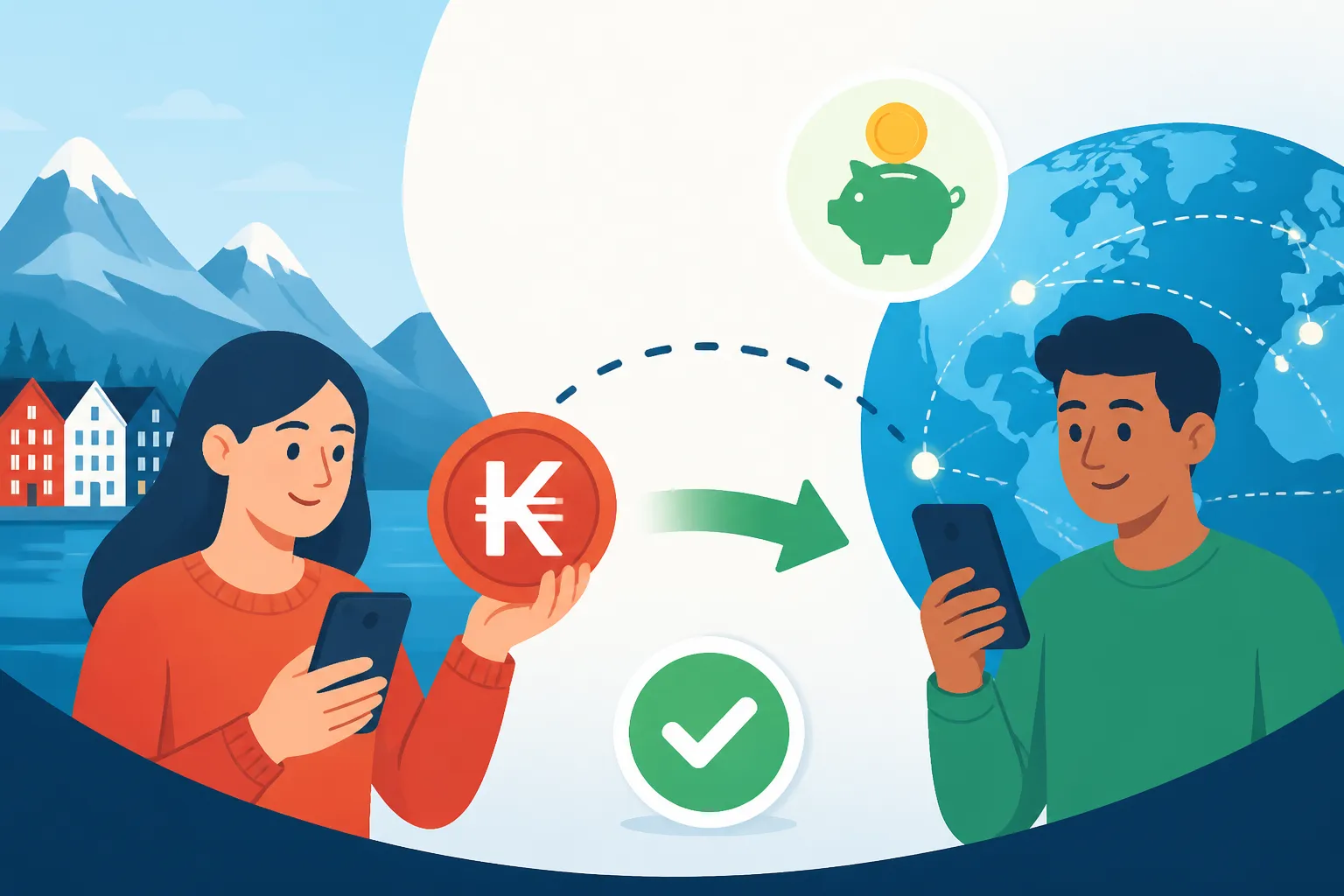
Remittances: Cheapest Ways to Transfer NOK to International Accounts
Sending money from Norway back to your home country can often feel like navigating a complex maze, with hidden fees, unfavorable exchange rates, and slow transfer times eroding your hard-earned NOK. Many expats grapple with finding the most economical and efficient way to support family, pay bills abroad, or move savings without losing a significant chunk in the process. This comprehensive guide is here to demystify international remittances from Norway, helping you understand your options and choose the cheapest, fastest, and most reliable methods available.
Understanding the Landscape of International Money Transfers from Norway
When you first arrive in Norway, everything feels incredibly efficient and digital, from Banking in Norway: How to Open an Account as a Foreigner to setting up your utilities. But when it comes to sending money out of the country, many expats hit a wall of confusion, high costs, and sometimes, unexpected delays. It's a common frustration, and you're certainly not alone in feeling like you're losing money on every transfer.
The Challenges for Expats
As an expat in Norway, you're likely juggling a lot: learning Norwegian, adapting to the culture, and figuring out the intricacies of a new financial system. The last thing you need is a complicated, expensive process for sending money home. Traditional banks, while secure, often come with hefty transfer fees and less-than-ideal exchange rates that aren't always transparent upfront. You might find yourself comparing rates from various sources, trying to understand SWIFT codes, and wondering why a simple transfer takes days to reach its destination. For those sending regular support to family or managing investments back home, these challenges can quickly add up, making a noticeable dent in your budget, especially when you're already budgeting for the Cost of Living in Norway 2026: Budgeting for Singles and Families.
One of the biggest hurdles is often the perception that your local Norwegian bank is the only 'safe' option. While secure, these institutions weren't primarily built for cost-effective international remittances. They often operate on older systems and pricing models that cater more to large corporate transfers than individual expat needs. This means you might pay a flat fee per transaction, plus an unfavorable exchange rate markup, which can significantly reduce the amount received by your loved ones or in your foreign account. The good news is, the financial technology landscape has evolved dramatically, offering many viable and often superior alternatives.
Key Factors to Consider for Cost-Effective Transfers
To truly find the "cheapest" way to transfer NOK, you need to look beyond just the advertised fee. There are several critical factors at play, and understanding them will empower you to make informed decisions and save more of your money. It's like navigating the complex Norwegian Work Culture: Flat Hierarchies and Communication Styles – you need to know the unwritten rules.
Firstly, the exchange rate is paramount. A seemingly low fee can be entirely negated if the service offers a poor exchange rate, marking up the mid-market rate in their favor. Always compare the exchange rate offered to the real-time mid-market rate (what you'd find on Google or Reuters) to see how much of a hidden fee is embedded. Secondly, transfer fees themselves can vary wildly. Some services charge a flat fee, others a percentage of the amount, and some even offer fee-free transfers above a certain threshold. Pay close attention to these, especially for smaller or very large transfers. Thirdly, speed and convenience play a role. While not directly a cost, a transfer that takes days could mean missing a payment deadline, incurring late fees, or simply causing unnecessary stress. Finally, consider security and reliability. You want a service that is regulated, transparent, and has a strong track record, ensuring your money reaches its intended recipient safely.
Traditional Banking vs. Online Money Transfer Services
For years, the go-to method for sending money abroad was always through your bank. You'd fill out a form, wait in line, and trust that your money would eventually get where it needed to go. While this still works, it's increasingly becoming the more expensive and slower option, particularly for individuals making personal transfers. The rise of fintech has ushered in a new era of specialized services designed specifically for international remittances, often at a fraction of the cost.
The Reality of Norwegian Banks for Transfers
Your local Norwegian bank, whether it's DNB, Nordea, or SpareBank 1, is excellent for managing your daily finances, paying bills, and even getting a mortgage in Norway. However, their international transfer services often come with a premium. Typically, you'll encounter a fixed fee for each international transfer, which can range from 50 NOK to several hundred NOK, depending on the bank and the destination country. This fee is charged regardless of the amount you're sending, making smaller transfers particularly expensive on a proportional basis.
Beyond the visible fee, the biggest hidden cost with traditional banks is often their exchange rate. Banks usually add a markup to the interbank exchange rate, which is the rate at which banks trade currencies with each other. This means you're getting a slightly worse rate than the market rate, and that difference directly translates into less money arriving at the destination. While seemingly small on a single transfer, these markups can accumulate significantly over time, especially if you're sending money regularly. Furthermore, transfers can take anywhere from 1 to 5 business days, sometimes even longer, due to the SWIFT network's multi-bank routing system. For a deep dive into how Norwegian banking works, check out our guide on Best Norwegian Banks for Expats: DNB, Nordea, SpareBank 1, and Sbanken.
The Rise of Specialized Online Platforms
In contrast to traditional banks, a new wave of online money transfer services has emerged, specifically designed to offer faster, cheaper, and more transparent international transfers. These platforms leverage modern technology to streamline the process, often bypassing the traditional SWIFT network for a more direct approach. Think of them as the express lane compared to the scenic route.
These online services typically operate with much lower overheads than brick-and-mortar banks, allowing them to offer more competitive rates and fees. Many boast "real exchange rates" or "mid-market rates," meaning they charge a minimal markup, if any, and instead make their money through a clear, upfront fee. This transparency is a huge advantage, as you know exactly how much your recipient will get before you even initiate the transfer. Companies like Wise (formerly TransferWise) have pioneered this model, pushing the entire industry towards greater fairness and efficiency. They often facilitate transfers in a matter of hours, or even minutes, for popular currency corridors, a stark contrast to the multi-day waits often associated with banks.
Top Online Money Transfer Services for Norway
With so many online services popping up, choosing the right one can feel overwhelming. However, a few key players consistently rise to the top for their competitive pricing, transparency, and ease of use when transferring NOK from Norway to international accounts.
Wise (formerly TransferWise) – A Deep Dive
Wise, which you might still know as TransferWise, has revolutionized international money transfers and is arguably the gold standard for many expats. Their core philosophy is built around transparency and fairness. When you send money with Wise, they use the real mid-market exchange rate – the one you see on Google – and charge a small, upfront fee. This fee is calculated based on the amount you're sending and the currencies involved, and it's always clearly displayed before you confirm your transfer.
How do they do it? Wise uses a clever system of local bank accounts. When you send NOK, you transfer it to Wise's local Norwegian bank account. Then, Wise sends the equivalent amount from their local bank account in the recipient's country to your recipient. This means the money rarely crosses borders in a traditional sense, avoiding hefty international SWIFT fees and speeding up the process. This "local payout" model is what makes them so efficient and cost-effective. They also offer a multi-currency account, which is incredibly useful for expats who need to manage funds in different currencies, potentially saving you more on exchange rates if you frequently receive or send money. It's a great tool to minimize currency fluctuations, which can be particularly relevant given how the How to Handle Currency Fluctuations (NOK to EUR/USD) as an Expat can impact your savings.
Other Popular Platforms and Their Offerings
While Wise is a strong contender, several other reputable online services offer competitive options for sending NOK abroad, each with its own strengths.
- Revolut: More than just a money transfer service, Revolut offers a full-fledged digital bank account with multi-currency capabilities, debit cards, and budgeting tools. For premium users, they often provide fee-free transfers and excellent exchange rates up to a certain limit. Their free plan also offers competitive rates, but might have fees for transfers outside certain thresholds or on weekends. Revolut is particularly popular for those looking for an all-in-one financial app for travel and international living.
- Remitly: Remitly focuses on specific corridors, particularly for sending money to developing countries in Asia, Africa, and Latin America. They often offer competitive rates for these routes and have various delivery options, including bank deposits, cash pickup, and mobile money. They frequently offer promotional rates for first-time users, so it's worth checking if your destination country is one of their strong corridors.
- Xoom (a PayPal Service): As part of PayPal, Xoom leverages PayPal's extensive network for international transfers. They offer bank deposits, cash pickup, and even home delivery in some countries. While convenient for PayPal users, their fees and exchange rates can sometimes be higher than dedicated money transfer services, so it's always wise to compare them against others, especially for larger amounts.
- OFX: OFX is geared more towards larger transfers, often appealing to businesses or individuals sending significant sums. They don't charge transfer fees but make their money on a slightly less favorable exchange rate spread. However, for very large amounts, their rates can be highly competitive, and they offer 24/7 phone support and currency hedging options, which might be beneficial if you're concerned about currency fluctuations.
- InstaReM: InstaReM is known for its competitive exchange rates and focus on Asia-Pacific corridors, though they also support other regions. They have a transparent fee structure and often offer loyalty points that can be redeemed for discounts on future transfers.
When considering these services, always do a quick comparison for your specific transfer amount and destination. What's cheapest for 1000 NOK to India might not be the cheapest for 10,000 NOK to the UK.
The Hidden Costs: Exchange Rates, Fees, and Speed
It’s easy to look at an advertised “low fee” and assume you’ve found a great deal. However, in the world of international money transfers, the devil is often in the details, lurking within the exchange rate and the various fee structures. This is where many expats unknowingly lose money. Understanding these elements is crucial to truly identify the cheapest way to send your NOK abroad.
Deconstructing Exchange Rate Markups
The "mid-market rate" is the true exchange rate, the midpoint between the buy and sell prices of two currencies on the global market. It’s the rate you see on Google, Reuters, or Bloomberg. Think of it as the wholesale price of currency. Reputable online services like Wise aim to give you this rate, or very close to it, charging a separate, transparent fee for their service. This is ideal because you can easily verify the fairness of the rate.
Traditional banks and some other money transfer services, however, don't typically offer the mid-market rate to their customers. Instead, they apply a "markup" – essentially adding a percentage to the mid-market rate, which they keep as profit. For example, if the mid-market rate is 1 USD = 10 NOK, a bank might offer you 1 USD = 9.85 NOK, pocketing the difference. This markup can be anywhere from 0.5% to 5% or even more, depending on the currency pair and the institution. While a 1% markup might sound small, on a transfer of 10,000 NOK, that's 100 NOK you've lost before any explicit fees are even applied. Over multiple transfers, these hidden markups quickly become the most significant cost. Always check the actual exchange rate being offered against a reliable, independent source before committing to a transfer.
Understanding Transfer Fees and Their Structures
Beyond the exchange rate, various types of fees can impact the total cost of your transfer. These fees can often be confusing and vary greatly between providers.
- Flat Fees: Many traditional banks and some online services charge a fixed amount for each transfer, regardless of the sum. This is fine for very large transfers where the fixed fee becomes a small percentage of the total, but for smaller amounts, a 50 NOK flat fee on a 500 NOK transfer represents a substantial 10% cost.
- Percentage Fees: Other services charge a percentage of the amount being sent. This can be more equitable for smaller sums but can become expensive for very large transfers. For example, a 0.5% fee on 50,000 NOK is 250 NOK, which might be more than a flat fee offered by another service.
- Hidden Correspondent Bank Fees: This is a sneaky one, especially with traditional bank transfers. When your money moves through the SWIFT network, it might pass through several "correspondent banks" before reaching its destination. Each of these intermediary banks can deduct a small fee for their service, often without your prior knowledge. This means the recipient might receive less than you initially sent, and you might not even realize it until they inform you. Online services designed for direct transfers typically bypass these intermediary banks, avoiding this unpredictable cost.
- Payment Method Fees: How you fund your transfer can also incur fees. Paying with a credit card might come with a surcharge from the transfer service or your credit card provider (e.g., cash advance fees). Bank transfers (bankoverføring) are usually the cheapest way to fund a transfer from your Norwegian account.
It's crucial to look at the total cost, which includes both the exchange rate markup and any explicit fees, to accurately compare services. Always aim for a service that clearly displays the total amount the recipient will receive.
Speed vs. Cost: Finding Your Balance
While the focus is often on cost, the speed of a transfer can sometimes be a critical factor. Do you need the money to arrive within minutes, or can it wait a few days? Generally, faster transfers can sometimes come with a slightly higher cost, but this isn't always the case, especially with modern online platforms.
- Instant/Near-Instant Transfers: Services like Wise and Revolut can often complete transfers to major currencies within minutes or a few hours, especially if both the sender and receiver use the same service or if the currencies are widely supported. This speed often comes with competitive pricing, making it a win-win.
- Same-Day Transfers: Many online providers offer same-day transfers, often for a minimal difference in cost compared to slower options.
- 1-5 Business Day Transfers: This is typical for traditional bank transfers through the SWIFT network. The longer processing time is often a result of manual processing steps and the routing through multiple banks, which also opens the door for those hidden correspondent bank fees mentioned earlier.
Consider your needs: if you're paying a bill with a strict deadline, paying a little extra for a guaranteed faster transfer might be worth it. However, for general savings transfers or supporting family where urgency isn't extreme, waiting an extra day or two for a cheaper rate is often the sensible choice. Ultimately, the best method balances speed, cost, and convenience for your individual situation.
Practical Tips for Maximizing Your Transfer Value
Now that you understand the mechanics of exchange rates and fees, let's talk about some actionable strategies you can employ to ensure you're getting the absolute most out of every NOK you send abroad.
Timing Your Transfers Strategically
Currency exchange rates are constantly fluctuating, much like the weather in Bergen. While you can't predict them perfectly, being aware of general trends and avoiding transfers during peak volatility can save you money. For instance, sometimes currency markets are less active during weekends or public holidays, leading to wider spreads or less favorable rates from some providers. Aim to initiate transfers during weekdays when markets are open and most active, as this often means tighter spreads and better rates.
If you have a large sum to transfer and aren't in a hurry, consider using rate alerts. Many online services, including Wise, allow you to set up notifications that will alert you when the exchange rate between NOK and your desired currency reaches a specific target. This way, you can seize a favorable rate without constantly monitoring the market. For instance, if you're waiting for the NOK to strengthen against the USD, an alert will notify you when your target rate is met, allowing you to initiate the transfer at an optimal time. This can make a substantial difference on significant transfers.
Utilizing Multi-Currency Accounts
For expats who frequently send or receive money in different currencies, or who travel often, a multi-currency account can be a game-changer. Companies like Wise and Revolut offer these accounts, allowing you to hold balances in multiple currencies, including NOK, EUR, USD, GBP, and many others.
The primary benefit is avoiding multiple conversion fees. For example, if you receive payment in EUR and later need to send money in USD, a multi-currency account allows you to convert directly from EUR to USD at excellent rates, rather than converting EUR to NOK, and then NOK to USD (which would involve two sets of conversion fees and potentially less favorable rates). This is particularly useful if you're a freelancer receiving payments from international clients or managing foreign investments. You can effectively "park" money in a foreign currency until you need it, converting it only when the exchange rate is favorable. This flexibility is something traditional Norwegian bank accounts typically don't offer without significant fees.
Staying Informed on Regulations and Tax Implications
Navigating the financial world as an expat in Norway also means understanding your obligations, both in Norway and your home country. This includes knowing about reporting requirements for international transfers and any potential tax implications.
For larger transfers, Norwegian banks and money transfer services have reporting obligations to authorities to combat money laundering and terrorist financing. This typically means transfers above a certain threshold (e.g., 100,000 NOK or similar amounts) might be flagged for additional scrutiny. While this is standard procedure and nothing to worry about for legitimate transfers, it's good to be aware that you might be asked for additional documentation to verify the source of funds or the purpose of the transfer.
Beyond Norwegian regulations, you also need to consider the tax implications in your home country. Many countries have rules about reporting foreign income or large gifts received from abroad. For instance, if you're sending money to family, it might be considered a gift, and there could be gift tax thresholds in your recipient's country. Conversely, if you're moving your own savings back home, you might need to declare it, although it's typically not taxed if it's already taxed income or capital. For specific advice on your situation, it’s always best to consult with a tax professional who specializes in international taxation. Resources like Taxes for Expats or a local accounting firm in your home country can provide tailored guidance to ensure you comply with all relevant tax laws, both in Norway and abroad. This is an important consideration, just like understanding your Filing Your Tax Return (Skattemelding): Deadlines and Common Deductions in Norway.
Comparing Top Money Transfer Services from Norway
To help you make an informed decision, here's a comparative overview of popular options for sending NOK internationally. Remember that rates and fees are subject to change and depend on the specific currency corridor and amount. Always perform a real-time comparison for your specific transfer.
| Service/Method | Exchange Rate | Typical Fees | Speed (NOK to major currencies) | Transparency | Best For |
|---|---|---|---|---|---|
| Norwegian Banks | Marked up from mid-market | High fixed fees (50-250+ NOK) | 1-5 business days | Low | Large, infrequent transfers where security is paramount, but cost is secondary |
| Wise (TransferWise) | Mid-market rate | Low, transparent % or fixed fee | Minutes to a few hours | High (fully transparent) | Most expats, regular transfers, multi-currency needs, all amounts |
| Revolut | Near mid-market rate | Low to zero (with limits) | Minutes to a few hours | High | Frequent travelers, digital banking users, smaller to medium transfers |
| Remitly | Competitive, especially for specific corridors | Variable, often promotional | Minutes to a few days | Moderate | Sending money to developing countries, cash pickup |
| Xoom (PayPal) | Marked up | Variable, can be higher | Minutes to a few days | Moderate | PayPal users, convenience, broad global reach |
| OFX | Slightly marked up (no explicit fee) | No transfer fees | 1-4 business days | High | Large transfers (50,000+ NOK), businesses |
| InstaReM | Very competitive | Low, transparent % or fixed fee | 1-3 business days | High | Asia-Pacific corridors, cost-conscious users |
This table should give you a good starting point for comparing your options. Always double-check the live rates and fees on each provider's website before making a transfer, as they are constantly updated.
Disclaimer
The information provided in this guide is for general informational purposes only and does not constitute financial, legal, or tax advice. While we strive to keep the information up-to-date and accurate, rates, fees, and regulations for international money transfers are subject to change without notice. Always verify the latest terms and conditions directly with the service providers. We recommend consulting with a qualified financial advisor or tax professional for advice tailored to your specific situation.