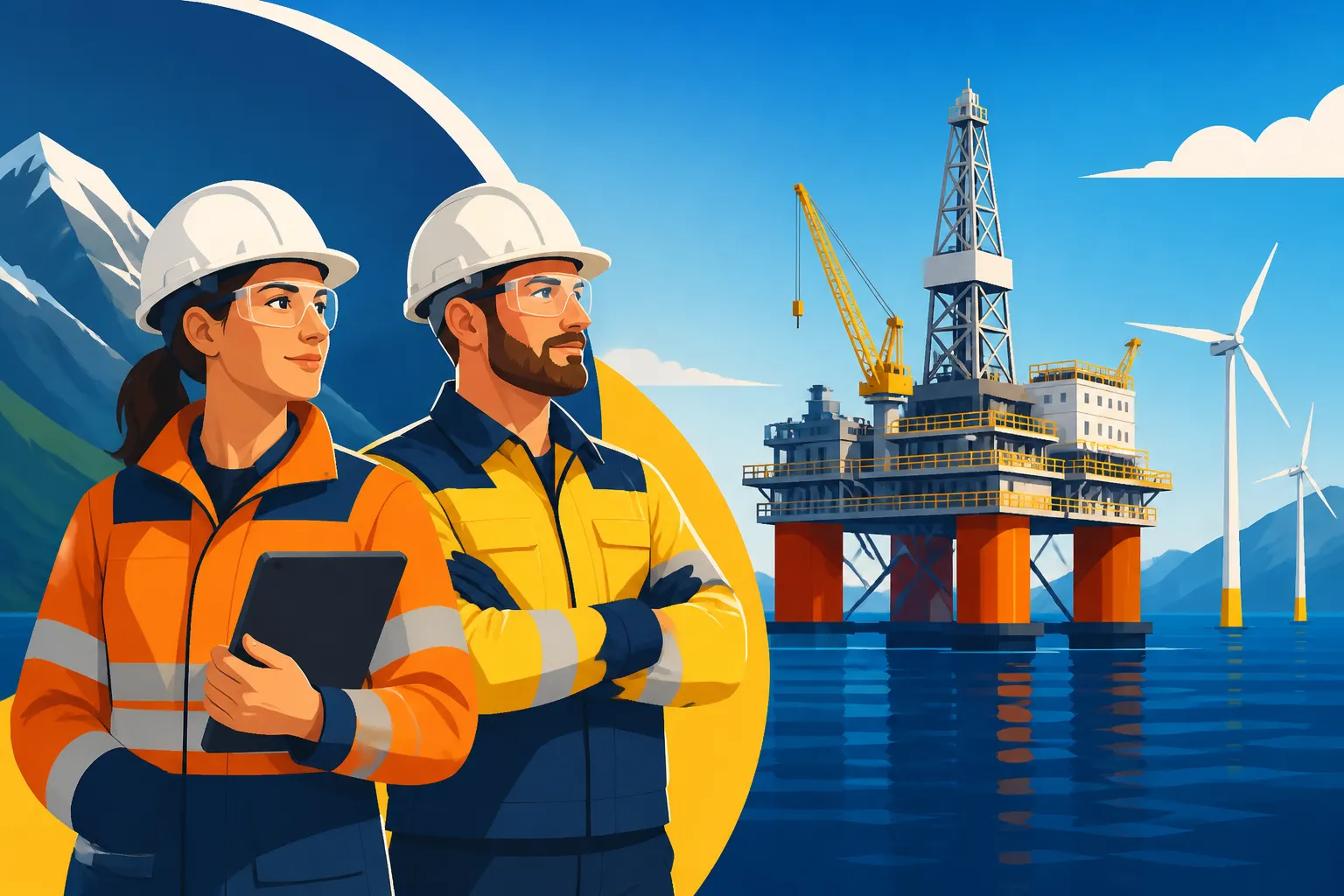
Working in Norway’s Energy and Offshore Sector: Engineering Careers
Breaking into Norway's energy sector feels like trying to crack a safe without the combination, especially when you’re staring at high-tech offshore requirements and a language that sounds like singing. I’ll never forget my first technical interview in Stavanger where I realized "engineering" meant something very different in a flat hierarchy than it did back home. This guide solves the mystery of landing an engineering career in Norway’s energy powerhouse, from offshore rotations to the green transition.
The Evolving Landscape of Norwegian Energy
The Norwegian continental shelf has been the lifeblood of the country’s economy for decades, but the industry is currently in the middle of a massive identity shift. For a foreign engineer, this means you aren't just looking at oil and gas; you are looking at a broader energy portfolio that includes some of the most advanced carbon capture and offshore wind projects on the planet. When you start your journey Working in Norway: The Ultimate Job Hunting Guide for Expats, you need to understand that the "Energy Sector" is an umbrella term that now covers everything from traditional subsea drilling to floating wind turbines.
The Oil and Gas Backbone
While the world talks about the green transition, the reality on the ground in cities like Stavanger and Bergen is that oil and gas remain the dominant employers for engineers. Companies like Equinor, Aker Solutions, and Vår Energi are constantly looking for specialized talent in subsea engineering, reservoir management, and structural integrity. Many expats arrive thinking the industry is shutting down, only to find that the decommissioning of old platforms and the maintenance of existing fields provide decades of high-level engineering work.
If you are coming from a traditional petroleum background, your skills are highly transferable here, but the standards are exceptionally high. Norway prides itself on having the "cleanest" oil production in the world, which translates to a massive amount of engineering hours spent on electrification of the platforms themselves. You aren't just drilling; you are figuring out how to power a massive offshore complex using renewable energy from the mainland.
The Rise of Offshore Wind and Hydrogen
If your heart is set on renewables, Norway is currently a living laboratory for offshore wind. The projects at Utsira Nord and Sørlige Nordsjø II are legendary in the industry for their scale. For engineers, this means a shift toward floating foundations and high-voltage direct current (HVDC) technology. I’ve noticed that many engineers who previously worked in maritime or shipbuilding are finding new life in the offshore wind sector because the structural challenges are remarkably similar.
Hydrogen and Carbon Capture and Storage (CCS) are also moving from the pilot phase to industrial reality. The Northern Lights project, for instance, is a massive undertaking that requires chemical and process engineers who can figure out how to transport and store CO2 under the seabed. When researching Job Searching on Finn.no vs LinkedIn: Where the Norwegian Jobs Are, you will find that these "Green" engineering roles often require a mix of traditional offshore experience and innovative systems thinking.
Navigating the Engineering Recruitment Process
The way you get hired in Norway might feel a bit alien if you are used to the aggressive, fast-paced recruitment cycles of the US or the UK. Here, the process is methodical, consensus-based, and often moves at a pace that can feel frustratingly slow to the uninitiated. I remember waiting six weeks for a follow-up after what I thought was a "urgent" interview, only to find out they were just ensuring every team member had a chance to review my portfolio.
Tailoring Your CV for Norwegian Recruiters
Norwegian recruiters in the energy sector value clarity and honesty over "salesy" language. If you overstate your accomplishments, it will be spotted immediately during the technical round. Your CV needs to be a functional document that highlights your specific technical competencies and certifications. When Writing a Norwegian CV and Cover Letter: Formatting for Success, make sure to include your Norwegian "D-number" or "F-number" if you have one, as it signals to the recruiter that you are already in the system.
In the energy sector, specific software proficiencies (like SESAM, Aveva, or OLGA) should be front and center. It is wise for newcomers to include a section on "Safety Culture." In Norway, HSE (Health, Safety, and Environment) isn't just a department; it is a religion. If you can prove that you’ve worked in environments with a "Zero Harm" mentality, you are already halfway to an offer.
Mastering the Interview and The Coffee Test
The Norwegian interview is a two-way street. They aren't just testing your ability to calculate stress loads; they are testing if you are someone they can sit with in a cramped offshore container for two weeks. This is where Norwegian Work Culture: Flat Hierarchies and Communication Styles becomes critical. You might find yourself being interviewed by someone who will technically be your subordinate, and they will expect you to listen to their input with genuine respect.
One thing that caught me off guard was the "informal" part of the interview. Often, after the technical grilling, you’ll be invited for coffee. This isn't a break; it’s the most important part of the interview. They are looking for "folkeskikk"—good manners and a down-to-earth personality. This is a great time to discuss your interest in the local culture or your plans for Learning Norwegian for Work: Norskprøven and Language Courses. Even if the working language is English, showing that you are using a tool like italki to practice your conversational Norsk goes a long way in proving you aren't just a "rotational mercenary" but a future member of the community.
Essential Certifications and Technical Prerequisites
You cannot simply walk onto an offshore rig or into a high-security onshore terminal just because you have a Master’s degree. The Norwegian energy sector is one of the most regulated in the world. Before you even apply, you need to know which certifications are non-negotiable and which ones the company might pay for once you’re hired.
Safety and Survival Training
If your engineering role requires even a single visit to an offshore installation, you must have the GSK (Grunnleggende Sikkerhetskurs), which is the Norwegian version of the BOSIET. This course involves helicopter underwater escape training (HUET), fire fighting, and basic first aid. It’s an intense few days—I still have vivid memories of being flipped upside down in a pool inside a mock helicopter—but it is your "passport" to the North Sea.
For those working in the maritime engineering side, you might also need STCW certifications. If you are coming from abroad, check if your current safety certificates are recognized by Norsk Olje og Gass. Often, they are, but you might need a "gap" course to cover Norwegian-specific regulations. This is a significant out-of-pocket expense if you don't have a job offer yet, so many engineers wait until they have a contract in hand before booking their training at a center like Falck Nutec.
Degree Recognition and Professional Licensing
Norway doesn't have a "Professional Engineer" (PE) license in the same way the US does, but they do have a strict system for recognizing foreign higher education. This is handled by HK-dir (formerly NOKUT). While many private energy companies will accept your degree at face value if it's from a reputable international university, public sector roles and certain high-responsibility consultancy positions will require a formal recognition document.
| Requirement Type | Description | Necessity |
|---|---|---|
| Master’s Degree | Usually M.Sc. in Mechanical, Civil, or Petroleum Engineering | Mandatory for most "Skilled Worker" roles |
| GSK / BOSIET | Basic Safety and Emergency Preparedness Training | Mandatory for all offshore personnel |
| Health Certificate | A specific medical exam from an approved "Oil Doctor" | Mandatory for offshore travel |
| Security Clearance | Background check by the Norwegian National Security Authority | Required for sensitive infrastructure projects |
| Norwegian Language | Level B2 (Common European Framework) | Often required for onshore management roles |
Salary, Benefits, and the Offshore Lifestyle
One of the biggest draws to the Norwegian energy sector is the compensation. However, you have to look at the "total package," which includes high taxes but also unparalleled social security. When you look at Salaries and Minimum Wage in Norway: Industry Benchmarks, the numbers for engineers look high, but the cost of living can be a shock if you aren't prepared.
Understanding Rotation Schedules
If you land an offshore engineering role, you will likely work a "2-4" rotation. This means you are on the platform for two weeks, followed by four weeks of completely free time. It sounds like a dream, but the two weeks "on" involve 12-hour shifts every single day, no alcohol, and limited privacy. The four weeks "off" are yours to spend however you like—many expats use this time to travel or return to their home countries.
The onshore engineering life is more traditional but still heavily influenced by the 37.5-hour work week. Overtime is strictly regulated under Employment Rights in Norway: The Working Environment Act Explained. If you are asked to work late, you are usually compensated with either 50-100% extra pay or "time-off-in-lieu." This respect for personal time is a core pillar of the industry here; project managers have been scolded for sending emails on a Saturday.
Salary Benchmarks for Engineers
A starting engineer in the energy sector with a Master’s degree can expect to earn between 600,000 NOK and 750,000 NOK. With 10 years of experience, especially in a niche field like subsea umbilical design or renewable integration, that figure can easily climb above 1,100,000 NOK.
However, you must account for the tax man. Norway uses a progressive tax system, and as a high-earning engineer, you will likely be in a higher bracket. For Americans or those with complex global assets, managing this can be a headache. I personally used Taxes for Expats to ensure I wasn't being double-taxed on my investments back home while paying my fair share to the Norwegian Folketrygden. Understanding The Complete Guide to Norwegian Taxes for Expats (Skatteetaten) is essential before you sign that first contract.
Tax and Financial Management for Energy Professionals
The financial side of being an energy expat in Norway is more than just receiving a paycheck. There are specific rules regarding offshore work, residency, and how your income is treated if you live in one country and work in the Norwegian sector.
The Complexity of Offshore Taxation
If you are working on the Norwegian Continental Shelf but living in another EU country, you might fall under specific tax treaties. This is where things get "spicy." The Norwegian tax authorities (Skatteetaten) are very efficient, but they don't always proactively offer you deductions. For example, if you are maintaining a home in your home country while working in Norway, you might qualify as a "Pendler" (commuter), which opens up a world of tax deductions for travel and housing.
Because the stakes are so high—mistakes can lead to "restskatt" (underpaid tax) which comes with heavy interest—getting professional advice is a lifesaver. Using a service like Taxes for Expats helps bridge the gap between Norwegian requirements and your home country's tax obligations. This is especially true if you are on a high-value contract that includes housing allowances or "sign-on" bonuses, which are all taxable benefits in Norway.
Pension and Social Security Contributions
Every engineer working in Norway is part of the National Insurance Scheme. You pay a percentage of your gross income (usually around 7.8%) into this fund. This covers your healthcare and eventually your state pension. Many energy companies also offer a "Tjenestepensjon" (occupational pension) which is an additional 2-7% contributed by the employer.
It is wise to look closely at these pension contributions. In the energy sector, companies like Equinor have some of the most generous pension schemes in the country. Even if you only stay in Norway for five years, that money is yours and can often be moved or drawn upon later in life. It’s part of the long-term wealth building that makes the initial high tax rate much more digestible.
Visa Pathways and Legal Residence
Unless you are an EU/EEA citizen, your entry into the Norwegian energy sector is entirely dependent on the Skilled Worker Visa in Norway: Eligibility, Salary Thresholds, and Process. The good news is that the energy industry is a "priority" sector for the UDI (Directorate of Immigration), and large companies usually have "Fast-Track" status.
The Skilled Worker Permit Requirements
To get this visa, you need a formal job offer first. The job must require your specific qualifications (a degree), and the salary must meet the industry standard. In the energy sector, meeting the salary threshold is rarely an issue for engineers. The challenge is often the paperwork. You will need your original diplomas, transcripts, and often an employment contract that specifically states your duties match your education.
Once you have the permit, you are usually tied to that specific employer for the first few years. If you want to change companies—say, moving from a service company like SLB to an operator like Aker BP—you may need to notify the UDI or apply for a new permit depending on how your initial visa was categorized. It’s a bit of a bureaucratic dance, but the HR departments in these large energy firms are pros at handling this for you.
Bringing Family and Long-Term Stability
One of the best parts of the Norwegian visa system is that if you are a "Skilled Worker" engineer, your spouse and children can come with you immediately. Your spouse will also get a residence permit that allows them to work in any sector, which is a huge advantage compared to some other countries.
If you are moving to the west coast, you’ll find that Healthcare in Stavanger: Expat Guide to Rogaland Medical Facilities is excellent and geared toward the international community. There are international schools and plenty of expat networks to help your family settle in. Many engineers come for a "two-year stint" and still be here ten years later because their kids love the freedom of the Norwegian childhood and the family has fully integrated. To speed up that integration, encouraging your spouse to use a platform like italki to learn the basics of the language can make the transition from "outsider" to "neighbor" much faster.
Specialized Sectors: Oil and Gas vs. Renewables
While I’ve touched on this, it’s worth diving deeper into where the actual engineering hours are being spent today. The "offshore" world is no longer just about pipes and valves; it's about data and electrification.
Digitalization and Data Engineering
There is a massive push for "Digital Twins" of every offshore installation. Companies want to be able to sit in an office in Forus (the business hub of Stavanger) and troubleshoot a turbine 200 kilometers away in the North Sea. This has created a huge demand for engineers who understand both "bricks and clicks"—the physical mechanics of the equipment and the data science required to monitor it.
If you have experience in Python, machine learning, or remote sensing alongside your engineering degree, you are essentially a unicorn in the Norwegian job market. These roles often allow for more flexible working arrangements, avoiding the two-week offshore stints entirely while still paying the high "energy sector" salaries.
Decommissioning and Environmental Engineering
What goes up must come down. The North Sea is full of aging infrastructure that needs to be removed safely and sustainably. Decommissioning is a multi-billion NOK industry. It requires structural engineers who can figure out how to lift a 40,000-ton platform top-side off its jacket and process engineers who can ensure no hazardous chemicals leak into the ocean during the process.
This sector is perfect for engineers who are motivated by environmental protection but still want to work with "heavy metal." It involves a lot of subsea robotics and innovative cutting technologies. When you are looking for roles, don't overlook the "Decom" departments; they are often where the most creative engineering is happening because every platform removal is a unique, one-of-a-kind puzzle.
Important Disclaimer
The information provided in this guide is for informational purposes only and is based on personal experiences and research into the Norwegian energy sector. Immigration laws, tax regulations, and industry standards in Norway are subject to change. Always consult with official sources such as the UDI, Skatteetaten, or a qualified legal professional before making significant career or relocation decisions. The mention of specific brands is based on their relevance to the expat experience and does not constitute a formal legal or financial endorsement.