Eye Exams in Norway: Opticians vs Ophthalmologists Explained
Navigating the Norwegian healthcare system when your vision starts to blur can feel like trying to read a sign in a blizzard. I remember the sheer confusion of my first year in Oslo, standing outside a shop called Brilleland and wondering if I needed a formal referral from a doctor just to get a simple eye test. This guide solves that mystery by explaining the distinct roles of opticians and ophthalmologists in Norway, ensuring you get the right care without wasting time or money.
Understanding the Two Pillars of Vision Care in Norway
The Norwegian approach to eye care is divided into two very distinct categories: the retail-based optician and the clinical-based ophthalmologist. Unlike some countries where these roles might overlap in a single clinic, Norway keeps them quite separate in terms of access, cost, and purpose. When you are an expat just trying to settle in, knowing which door to knock on is the difference between a thirty-minute appointment and a six-month waiting list.
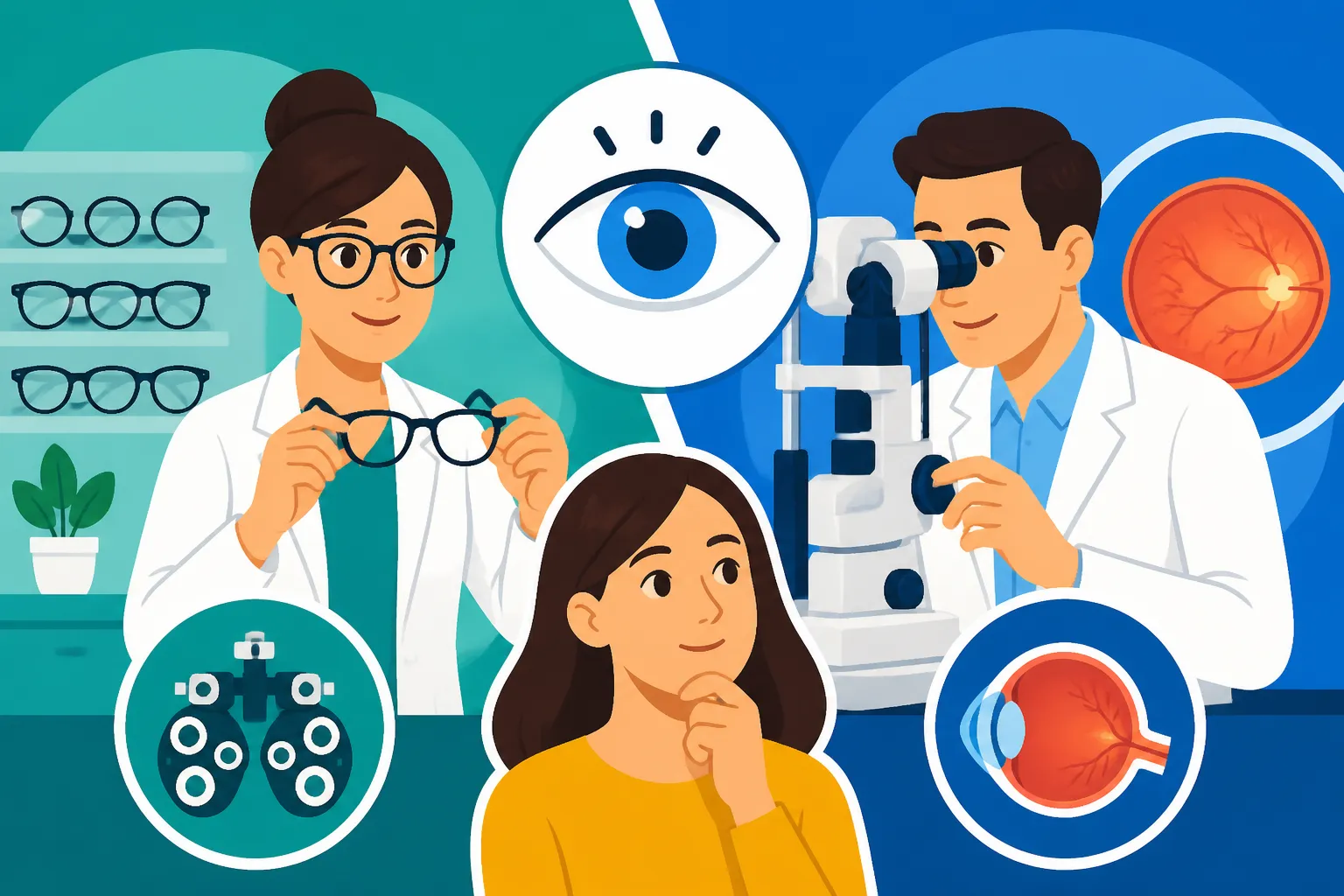
The optician, or optiker, is almost always your first port of call. They are highly trained professionals who handle the vast majority of vision-related needs. In Norway, an optiker isn't just someone who sells frames; they hold a bachelor’s or master’s degree in optometry and are authorized healthcare personnel. They can perform comprehensive eye exams, measure intraocular pressure, and even use diagnostic eye drops. You will find them in high-street shops like Specsavers, Krogh Optikk, or Synsam. You do not need a referral to see an optician; you simply book an appointment online or walk in.
On the other hand, the ophthalmologist, or øyelege, is a medical doctor who has specialized in diseases and surgery of the eye. This is where the bureaucracy of Public vs Private Healthcare in Norway: A Complete Guide begins to matter. If you have a serious infection, a sudden loss of vision, or a chronic condition like glaucoma, you need an øyelege. However, getting to see one within the public system requires a specific path. If you try to book a public øyelege for a simple glasses prescription, you will likely be turned away or told to wait half a year.
The Role of the Optician: More Than Just Glasses
When you book an eye exam at a local optician, you are entering the private retail sector of Norwegian healthcare. For most expats, this is where 90% of eye care happens. During a standard "synsundersøkelse" (eye examination), the optician will check your visual acuity, your ability to focus, and the health of your retina and cornea. Many Norwegian opticians now use advanced imaging technology like OCT (Optical Coherence Tomography) as part of their standard check-up.
One thing that surprised me when I moved here was how proactive Norwegian opticians are. If they spot something suspicious—like signs of macular degeneration or unusual pressure—they are the ones who initiate the referral to a specialist. Because they are the gatekeepers for most eye health issues, it is essential to include an eye check in your First 30 Days Health Checklist: GP, Frikort, and Pharmacies. It establishes a baseline for your health in the Norwegian system.
In terms of cost, opticians are not covered by the national insurance scheme (Folketrygden) for adults. You will pay a fee, usually ranging from 500 NOK to 1,200 NOK, depending on the complexity of the exam and the technology used. However, if you are a freelancer or digital nomad using SafetyWing, you may find that certain emergency eye treatments or complications are handled differently than a routine vision test, which is typically an out-of-pocket lifestyle expense.
| Feature | Optician (Optiker) | Ophthalmologist (Øyelege) |
|---|---|---|
| Primary Goal | Vision correction (Glasses/Lenses) | Medical treatment and surgery |
| Access | Direct booking (No referral) | Referral needed (Public) or Direct (Private) |
| Location | Retail shops and malls | Hospitals or private clinics |
| Cost (Public) | Full price (approx. 600-1200 NOK) | User fee (Egenandel) if referred |
| Cost (Private) | N/A (Retail pricing) | High (approx. 1500-2500 NOK) |
| Prescription | Provides "Brilleseddel" | Focuses on medical scripts |
The Ophthalmologist: Navigating the Specialist Path
If your eye issue goes beyond needing a stronger pair of reading glasses, you need a medical specialist. In Norway, there are two ways to see an øyelege: the public route and the private route. This choice is a classic example of the "time vs. money" trade-off that defines much of the Norwegian experience.
To see an øyelege through the public system, you must first visit your GP. Understanding The Fastlege Scheme: Navigating Norway’s GP System is vital here. Your GP will assess your symptoms and, if necessary, send an electronic referral to a specialist or a hospital. Once that referral is in the system, you fall into the queue. For non-urgent issues, Specialist Referrals in Norway: How the Waiting Times Work can be a frustrating read, as waits can stretch from several weeks to several months depending on your location.
The benefit of the public route is the cost. Once you are referred, you only pay a standardized user fee (egenandel), which counts toward your annual limit. After you hit that limit, you receive an exemption card, and further treatments are free for the rest of the year. You can read more about this in our guide on Healthcare Budgeting: The Frikort Exemption Card and User Fees.
However, many expats choose the private route for speed. Private clinics like Aleris or Volvat have ophthalmologists on staff who can see you within days. You do not need a referral for these, but you will pay the full commercial rate, which is significantly higher than the public user fee. For those with premium international coverage like Cigna Global, these private costs are often reimbursed, making it a much more attractive option for those who cannot afford to wait months for a specialist opinion.
Eye Care for Children and Seniors
Norway is exceptionally generous when it comes to eye care for children. If an optician or a school nurse suspects that a child under the age of 18 needs glasses or has a condition like strabismus (crossed eyes), the path is quite different. Children are usually referred directly to an ophthalmologist to ensure that any underlying developmental issues are caught early.
Furthermore, the Norwegian state provides subsidies for children’s glasses in specific cases, such as when they are needed to treat amblyopia or other functional issues. This is a relief for many expat parents who are already balancing the high cost of living. Much like how Dental Care in Norway: Costs, Subsidies, and Finding a Dentist offers specific protections for the young, the eye care system prioritizes early intervention.
For seniors and those with chronic illnesses like diabetes, the system shifts into a preventative mode. If you are diagnosed with a condition that affects your eyes, your GP or the hospital will often set up a "forløp" (a clinical pathway) that includes regular check-ups with an ophthalmologist. These are treated as essential medical appointments and are heavily subsidized. If you are managing a complex health profile, having comprehensive insurance like Cigna Global can provide peace of mind by allowing you to choose specific specialists who speak your native language, which is a huge comfort during medical procedures.
Practical Tips for Your Eye Appointment
When you finally sit in the chair for your exam, there are a few "Norwegianisms" to be aware of. First, the language. Almost every optician and doctor in Norway speaks excellent English, but the terminology on your "brilleseddel" (prescription) will be in Norwegian. Words like sfære (sphere), sylinder (cylinder), and akse (axis) are luckily quite similar, but it’s always worth asking for a digital copy on Navigating the Helsenorge App in English: A Step-by-Step Translation.
If you are booking a private appointment, I highly recommend using online portals. Many clinics allow you to book using BankID, which is the gold standard for digital life here. If you are still waiting for your permanent ID number, you might find that Using Private Video Consultations (Kry, Dr.Dropin) in Norway can be a useful way to get an initial medical opinion or a referral to an ophthalmologist if you have a visible eye infection or irritation.
For those wearing contact lenses, be aware that Norway has strict regulations. You cannot simply buy lenses online with an expired prescription like you might in some other countries. Opticians generally require a yearly "linsekontroll" to ensure the lenses aren't damaging your corneas. While this feels like a "hidden cost," it is part of the Norwegian philosophy of preventative health.
If you are a frequent traveler or a digital nomad relying on SafetyWing, remember that routine vision checks are rarely covered, but "acute onset" eye issues (like a piece of metal in the eye or a sudden infection) are usually treated as medical emergencies. In those cases, you wouldn't go to an optician; you would head to the Legevakt (emergency room).
Choosing Between Public and Private Insurance
The decision to rely solely on the Norwegian public system or to supplement it with private insurance often comes down to your tolerance for waiting. The Norwegian public system is world-class once you are "inside," but the doorway can be narrow.
Private Health Insurance in Norway: Is It Worth the Extra Cost? is a question every expat asks eventually. If you have a family history of eye disease, or if your career depends on perfect vision (such as in tech or maritime industries), the ability to bypass the GP-to-specialist referral chain is invaluable. Insurance providers like Cigna Global are particularly popular among the expat community because they offer a level of "concierge" access that isn't really a part of the egalitarian Norwegian public model.
On the other hand, if you are a healthy young professional whose only concern is updating a contact lens prescription once a year, the local optician at the mall is perfectly sufficient. Just make sure to save your receipts; some Norwegian employers offer a "brillegodtgjørelse"—a small reimbursement for computer glasses (databriller) if you spend more than a certain number of hours in front of a screen.
Important Disclaimer
This guide is intended for informational purposes only and is based on personal expat experience and general knowledge of the Norwegian healthcare system. Medical regulations and costs in Norway are subject to change by the authorities. Always consult with a qualified medical professional or the Norwegian Health Economics Administration (Helfo) for specific medical advice or coverage confirmations. For the most up-to-date information on your rights, please visit the official Helsenorge website.