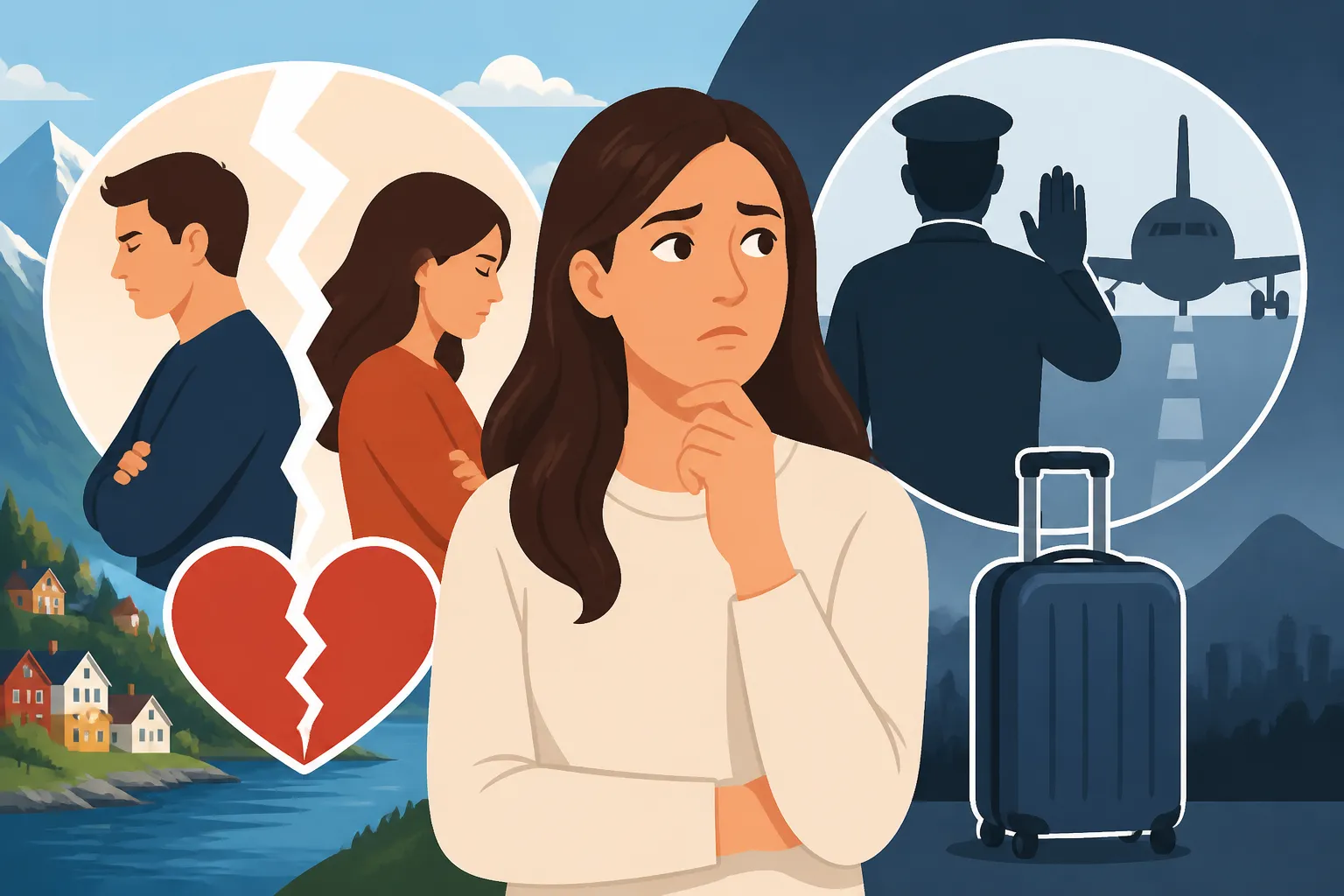
Divorce on a Spouse Visa: Will I Get Deported From Norway?
Going through a divorce is one of the most painful and disorienting experiences a person can face, and as an expat in Norway, it often comes with the added layer of anxiety about your future in a foreign country. The very foundation of your residence permit – your relationship with your Norwegian spouse or partner – suddenly feels unstable, leaving you to wonder: "Will I get deported from Norway?" This guide is here to walk you through the complex immigration landscape that emerges after a spouse visa divorce, helping you understand your rights, your options, and the crucial steps you need to take to protect your ability to stay in Norway.
Understanding Your Spouse Visa in Norway
When you first arrived in Norway on a spouse or family reunification visa, your permit was inherently tied to the validity of your relationship. It’s a bit like building your house on land you don’t fully own – lovely while things are good, but precarious if the ground shifts.
The Basis of Your Residence Permit
Your initial residence permit for family reunification was granted based on the premise that you would live together as spouses, registered partners, or cohabitants in Norway. The Norwegian Directorate of Immigration (UDI) evaluates whether your relationship is "genuine" and that you intend to maintain a household together. This is a crucial distinction: your permit isn't just because you're married; it's because you're married and living together.
For many of us, this permit is typically issued for one year at a time, especially in the beginning. You then apply for renewals, which UDI assesses against the same criteria, often requiring updated documentation of your shared address, finances, and continued cohabitation. It’s a system designed to ensure the integrity of family reunification, but it also means that any fundamental change to that relationship can, and often does, have direct implications for your legal right to reside here. When you apply, you usually state your spouse's fødselsnummer or D-nummer, linking your stay directly to their status. If that link breaks, UDI will take notice.
When Does Your Visa Status Become Independent?
The good news is that your residence permit doesn't remain perpetually tied to your relationship status. Norway has a pathway for family reunification permits to become "independent" after a certain period. This is often referred to as an independent residence permit, and it means your right to stay in Norway no longer depends on your spouse or partner.
Generally, you can apply for an independent residence permit after you have held a family reunification permit for at least three years and have lived together with your spouse or partner in Norway for that entire period. This three-year mark is a significant milestone for many expats, offering a sense of stability that might otherwise feel elusive. However, merely having the permit for three years isn't enough; you must be able to demonstrate that you actually lived together as a couple for those three years. This can include providing documentation such as shared rental contracts, utility bills in both names, bank statements showing joint expenses, and proof of your common address registered with the National Population Register (Folkeregisteret).
If you’ve successfully navigated this three-year period and secured your independent permit, the sting of divorce, while still deeply personal, won’t carry the same immigration threat. Your right to stay is then based on your own merits, rather than your ex-partner's. This independent status is also often a prerequisite for applying for permanent residency in Norway, another critical step towards long-term security. If you’re curious about the full requirements for that, you might want to look into Permanent Residence in Norway: Requirements, Timelines, and Language Tests.
The Immediate Impact of Divorce on Your Visa
Let's cut straight to the chase: A divorce, especially if it happens before you've achieved independent status, can absolutely impact your visa, potentially leading to its revocation. This isn't a scare tactic; it's the reality of the Norwegian immigration system as it stands for family reunification cases.
UDI Notification and Reporting Obligations
One of the most critical, and often overlooked, aspects of any change in your personal life as an expat in Norway is the obligation to inform the authorities. When your marital status changes, especially if it's the basis of your residence permit, you are legally required to notify the UDI. This isn't a suggestion; it's a mandatory step.
The expectation is that you, or your former partner, will inform UDI about the separation and impending divorce. Failing to do so can be viewed negatively and might complicate any future applications or appeals. Transparency is key here, even when it feels emotionally draining. UDI will then assess your case based on the new circumstances. They will want to know the date of separation, whether you are living apart, and the status of your divorce proceedings. It's often best to provide this information proactively rather than waiting for them to discover it, which they likely will through the Folkeregisteret.
Potential for Revocation and Deportation
So, to answer the burning question: Will you be deported? If you are on a spouse visa and divorce before reaching the three-year mark for an independent permit, yes, there is a very real possibility that your residence permit could be revoked, and you could be asked to leave Norway.
UDI's position is clear: if the basis for your permit (the genuine relationship) no longer exists, then your right to stay on that specific permit also ceases. They will send you a letter informing you of their intention to revoke your permit and give you a deadline to provide a response and any mitigating circumstances. This is a critical window to present your case.
It's important to differentiate between being "asked to leave" and "deportation." If your permit is revoked, you will typically be given a period (e.g., a few weeks or months) to arrange your departure from Norway. If you fail to leave within that period, then UDI can initiate forced removal, which is what most people associate with "deportation." A forced removal can also result in a re-entry ban to the Schengen area for a specified period, making it much harder to return later. The process itself can be lengthy, and UDI processing times can be notoriously slow, as highlighted in articles like UDI Processing Times in 2026: Why Are Family Visas So Slow?, but the outcome can still be final.
This is undoubtedly a terrifying prospect, but understanding it allows you to prepare and explore all possible avenues to mitigate the risk.
Pathways to Remaining in Norway Post-Divorce
Even if your spouse visa is at risk, there are scenarios and alternative pathways that might allow you to remain in Norway. It requires careful planning, timely action, and often, compelling evidence.
Acquiring an Independent Residence Permit After Three Years
As mentioned, the golden ticket for many family reunification expats is securing an independent residence permit. If you have been living in Norway with your spouse for at least three years with a valid family reunification permit, you are usually eligible to apply for this permit, regardless of your relationship status at the time of application.
The key here is proving those three years of cohabitation. UDI isn't going to just take your word for it, especially when a divorce is involved. You'll need solid documentation:
- Official Registration: Confirmation from the Folkeregisteret that you and your ex-partner were registered at the same address for at least three years.
- Shared Documents: Joint rental contracts, property deeds, utility bills (electricity, internet) in both names, and shared bank account statements showing joint expenses.
- Other Proof: Letters addressed to both of you, insurance policies, and even correspondence from your children's schools (if applicable) can help establish your shared household.
You should apply for this independent permit as soon as you meet the criteria, ideally before the divorce is finalized, if possible, to simplify the process. If you've been focused on learning Norwegian, this will also be a good time to demonstrate your progress, as language skills and knowledge of Norwegian society are also assessed for permanent residency, which is the logical next step after an independent permit.
Exceptional Circumstances and Strong Ties to Norway
Norway's immigration law also makes provisions for exceptional circumstances, recognizing that life isn't always black and white. Even if you haven't reached the three-year mark, UDI might grant you a new residence permit if there are strong humanitarian reasons or if you have particularly compelling ties to Norway.
These exceptional circumstances often fall into a few categories:
- Abuse or Violence: If you have been subjected to domestic violence or abuse by your Norwegian spouse, UDI can grant you a permit to stay in Norway. This is a crucial protection, and it's essential to document any incidents with police reports, medical records, or support from crisis centers. The system aims to protect vulnerable individuals, not penalize them for leaving an abusive relationship.
- Children in Norway: If you have children with your Norwegian ex-partner who live in Norway, and you have parental responsibility or regular contact rights, this is considered a very strong tie. UDI will assess the "best interests of the child" when making a decision about your permit. They generally don't want to separate a parent from their child unless there are extremely compelling reasons. Documentation of custody agreements, school enrollment, and active participation in your child's life (like helsestasjon visits, which you can learn more about if you read about Family Health in Norway: Pregnancy, Childbirth, and Pediatric Care) will be vital.
- Integration and Other Strong Ties: UDI might also consider your overall integration into Norwegian society. This could include long-term employment, advanced education, significant property ownership, or other factors that demonstrate your life is deeply rooted in Norway beyond your former relationship. However, this is usually a higher bar to clear without children or abuse involved. You'll need to demonstrate why forcing you to leave would be "unreasonable" given your circumstances.
Gathering robust evidence is paramount in these cases. If you're documenting abuse, official reports are critical. For child-related ties, formal custody agreements, school letters, and doctors' notes are essential.
Changing Your Visa Category
Another proactive approach is to explore if you qualify for a different type of residence permit. If you no longer meet the criteria for a spouse visa, can you meet the requirements for, say, a skilled worker visa or a student visa?
- Skilled Worker Visa: If you have an education or professional qualifications that are in demand in Norway and can secure a job offer that meets the salary thresholds, you might be able to apply for a Skilled Worker Visa in Norway: Eligibility, Salary Thresholds, and Process. This requires a new application, and it's often best to have the job offer secured before your current permit is revoked, as it can be challenging to apply from within Norway if your status is already precarious.
- Student Visa: If you meet the academic requirements and can secure admission to a Norwegian educational institution, you could apply for a Study Permits in Norway: Requirements, Financial Proof, and Renewals. Be aware that student visas come with financial proof requirements and restrictions on working hours.
The challenge with changing visa categories is that UDI prefers you to apply from your home country, especially if your current permit is expiring or being revoked. However, if you have a pending application for a new permit before your old one is officially revoked, you might be allowed to remain in Norway while the new application is processed. This is a very complex area, and the timing of these applications is crucial.
Practical Steps and Required Documentation
Navigating divorce and immigration simultaneously is a bureaucratic and emotional marathon. Knowing the practical steps and what documents you'll need can make the process slightly less overwhelming.
The Divorce Process in Norway
First, understand the Norwegian divorce process. It generally involves a mandatory separation period. You typically apply for a separation (separation order, separasjonsbevilgning) through Statsforvalteren (the County Governor). After a minimum of one year of separation, you can then apply for a divorce (skilsmisse). If you have children under 16, you must attend a mandatory mediation session (familievernkontor) before applying for separation.
The crucial point for immigration purposes is usually the date of physical separation, not necessarily the final divorce decree. UDI needs to know when the relationship that formed the basis of your permit officially ended.
Essential Documents for UDI Application
Regardless of which pathway you pursue, documentation is your best friend. For any application or response to UDI, you will likely need:
- Your passport and current residence card.
- Proof of separation/divorce: Official separation agreement (separasjonsbevilgning), divorce decree (skilsmissebevilgning), or a signed declaration of separation if proceedings are ongoing.
- Proof of previous cohabitation: As discussed earlier, this is vital for independent permit applications (rental contracts, utility bills, bank statements).
- Proof of new address: A new rental contract or registration with Folkeregisteret at a different address.
- Income documentation: Payslips, employment contracts, tax assessments if applying for a skilled worker visa or proving financial stability.
- Children's documents: Birth certificates, custody agreements, school enrollment letters, health records.
- Evidence of exceptional circumstances: Police reports, medical certificates, therapist notes, statements from support organizations (for abuse cases).
- Language proficiency and social studies certificates: If you're aiming for permanent residency or an independent permit that requires it.
Any documents not originally in Norwegian or English will need to be officially translated. This is where services like RushTranslate or Translayte can be incredibly helpful for providing certified translations that UDI will accept. Ensure your translations are done by certified translators to avoid issues. Remember, the accuracy of your documents can make or break your case, so don't cut corners here.
Seeking Legal and Immigration Advice
This is not a journey to embark on alone. The Norwegian immigration system is complex, and the stakes are incredibly high. Seeking professional legal and immigration advice is not just recommended, it's essential.
An immigration lawyer specializing in family reunification and asylum cases in Norway can:
- Assess your specific situation: Determine your eligibility for an independent permit or other visa categories.
- Help you gather and present evidence: They know exactly what UDI looks for.
- Draft your responses to UDI letters: A well-articulated, legally sound response can make a huge difference.
- Represent you in appeals: If UDI decides to revoke your permit, a lawyer can help you appeal the decision to UNE (the Immigration Appeals Board).
- Navigate the deadlines: Ensure you submit everything on time.
While UDI offers guidance on their website and through their service centers, their role is not to advise you on your best course of action but to inform you of the rules. A lawyer acts solely in your interest. Even if it feels like an added expense during an already financially strained time, it's an investment in your future in Norway. Resources like Navigating the UDI and Police Portal: Booking Appointments and Tracking can help you with the UDI system, but for complex cases, lawyers are invaluable.
Life After Divorce: Establishing Your New Normal
Beyond the immediate immigration hurdles, divorce in a foreign country brings practical and emotional challenges. Building a new life in Norway after such a significant upheaval requires resilience and strategic planning.
Financial Stability and Housing
One of the most immediate concerns will be finding new housing and establishing financial independence. If you’ve been living in a shared home, you’ll need to navigate Norway’s competitive rental market. This often means securing a new apartment, managing the security deposit (depositumskonto), and understanding tenant rights, as detailed in guides like Renting in Norway: Apartments, Contracts, and Tenant Rights. Being able to demonstrate sufficient income to cover rent and living expenses will be critical, both for landlords and potentially for any future immigration applications.
Norway is an expensive country, and living on a single income, especially after a divorce, can be a stark adjustment. Budgeting meticulously and understanding the Cost of Living in Norway 2026: Budgeting for Singles and Families will be more important than ever. You might need to adjust your lifestyle, seek out more affordable supermarkets (Kiwi, Rema 1000), and be mindful of every krona.
Emotional Support and Community
The emotional toll of divorce is immense, and being an expat can exacerbate feelings of isolation. Your primary support network, often tied to your former partner and their family, may be fractured. It's crucial to actively build and lean on new support systems.
Seek out expat groups, community organizations, or even online forums for support. Many cities have English-speaking therapy services if you need professional mental health support. Engaging with local hobbies, sports clubs, or volunteer work can help you forge new connections. While Norwegians can sometimes appear reserved, opportunities for connection exist if you put yourself out there. Understanding a bit about Norwegian Etiquette: Social Rules, Dugnad, and Making Local Friends can also help in integrating and finding your new community. Rebuilding your social life and finding your feet emotionally is just as important as the bureaucratic and financial steps.
| Scenario | Visa Outlook Post-Divorce (General) | Key Actions & Evidence Needed |
|---|---|---|
| Less than 3 Years on Spouse Visa | High risk of revocation and request to leave. | – Inform UDI immediately. – Explore exceptional circumstances (abuse, children). – Seek legal advice urgently. – Prepare to switch to another visa type (Skilled Worker, Student) if qualified. |
| 3+ Years on Spouse Visa (Cohabitation) | Good chance of independent permit. Basis for stay shifts from relationship to individual. | – Apply for independent permit proving 3+ years of cohabitation. – Gather shared documents (rental, bills, bank). – May need language/social studies for PR. |
| Children with Norwegian Ex-Partner | Strong mitigating factor. UDI considers child's best interest. | – Formal custody/visitation agreement. – Proof of active parental role. – Children's school/health documents. |
| Documented Abuse/Violence | Basis for new permit. Protection for victim. | – Police reports. – Medical records. – Support statements from crisis centers. |
| Job Offer Meeting Skilled Worker Criteria | Possible transition to Skilled Worker Visa. Requires new application. | – Secure job offer. – Meet salary/education thresholds. – Apply for new visa before current one is revoked if possible. |
| Admission to Norwegian Educational Program | Possible transition to Student Visa. Requires new application. | – Secure university admission. – Provide financial proof. – Apply for new visa. |
Disclaimer
Please remember, I am a blogger and not a legal professional. The information provided in this article is for general guidance only and reflects my understanding as an expat living in Norway. Immigration laws and regulations can be complex and are subject to change. It is absolutely crucial to seek professional legal advice from an immigration lawyer or directly consult with the Norwegian Directorate of Immigration (UDI) for personalized guidance regarding your specific situation. This guide should not be considered a substitute for professional legal counsel.