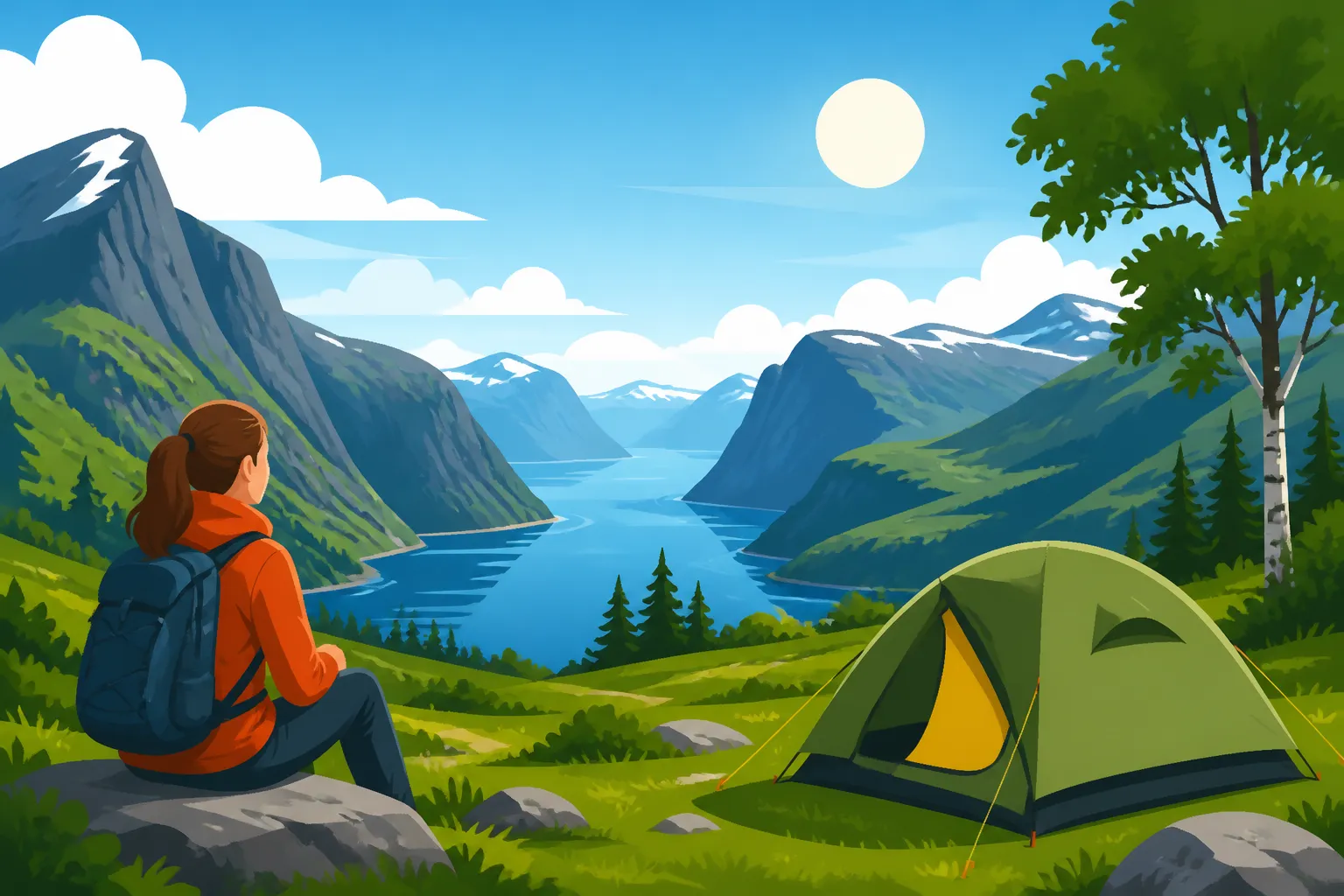
Allemannsretten: Where Can You Legally Pitch a Tent in Norway?
Stepping into Norway often feels like stepping into a postcard, a vast wilderness just waiting to be explored. But for many expats and tourists, the idea of truly living the Norwegian outdoor dream – think pitching a tent by a crystal-clear fjord or nestled amongst ancient pine trees – brings a flurry of questions. It's not always clear where you can legally set up camp without upsetting anyone or, worse, breaking the law. This guide will meticulously unpack the legendary concept of Allemannsretten, or "every man's right," giving you the detailed knowledge to confidently and respectfully wild camp across this stunning country.
What Exactly is Allemannsretten?
When you first hear about Allemannsretten, it sounds almost too good to be true: the right to roam freely across private land. And in many ways, it is, but like most things in Norway, it comes with a deeply ingrained sense of responsibility and unwritten rules. This isn't a free-for-all; it's a centuries-old tradition that balances public access with private property rights and, crucially, respect for nature. It’s part of the very fabric of Norwegian society, influencing everything from how children learn about nature to how families spend their weekends.
Understanding the Foundation of "Every Man's Right"
Allemannsretten isn't just a law; it's a cultural pillar, a foundational principle that acknowledges everyone's right to experience and enjoy nature. It's rooted in the idea that the Norwegian landscape is a shared national treasure, accessible to all, regardless of who owns the physical land. This right allows people to walk, ski, cycle, row, and swim freely in utmark (uncultivated land) and, with certain restrictions, to stay overnight. It’s a remarkable concept, especially for those coming from countries where access to private land is strictly prohibited, often met with "No Trespassing" signs and high fences. Here, the fences are usually to keep livestock in, not people out.
However, this isn't a carte blanche to do whatever you please. The accompanying phrase often taught to Norwegian children is "ikke skade, ikke forstyrre" – do not harm, do not disturb. This ethos is central to exercising Allemannsretten. It means acting responsibly, showing consideration for landowners, other users, and, perhaps most importantly, the fragile Norwegian environment. This deep respect is why the system works and why it’s so cherished. If you’re planning on truly embracing Friluftsliv: Embracing the Norwegian Outdoors and "Right to Roam", understanding this reciprocal relationship is non-negotiable.
Differentiating Innmark and Utmark
This distinction is the absolute cornerstone of understanding where you can and cannot pitch a tent in Norway. Get this wrong, and you could accidentally trespass or cause a nuisance.
Innmark literally translates to "in-field" or "cultivated land." This refers to land that is cultivated, like fields, gardens, pastures, and also includes the immediate area around houses and cabins. Think of it as land that is actively used for agriculture, living, or other private purposes. This is where the landowner's rights take precedence. You generally cannot pitch a tent on innmark without explicit permission from the landowner. It’s their private space, their livelihood, or their immediate outdoor living area.
- Examples of Innmark:
- Fenced-off gardens (even if the house is empty).
- Tilled fields (even if nothing is growing).
- Farmyards and pastures with grazing animals.
- The immediate surroundings of private homes, cottages, and cabins.
Utmark on the other hand, is "out-field" or "uncultivated land." This is the vast majority of Norway's wild landscapes. It includes mountains, forests, bogs, heathlands, most lakes, rivers, and coastal areas. This is where Allemannsretten truly applies, giving you the freedom to roam and, yes, pitch your tent. The key here is "uncultivated" and generally not immediately adjacent to someone's private dwelling.
- Examples of Utmark:
- Forests (unless they are part of a private garden or tree farm with restricted access).
- Mountains and plateaus.
- Coastal beaches and rocky shores outside of populated areas.
- Lakes, rivers, and streams.
For an expat, distinguishing between innmark and utmark can sometimes feel a bit ambiguous, especially in transitional areas. A good rule of thumb is to look for signs of active cultivation or immediate private use. If you see a lawn, a fence enclosing livestock, or a cultivated field, you're likely in innmark. If it's wild, unmanaged nature, it's probably utmark. When in doubt, it's always better to err on the side of caution or seek local advice.
Where Can You Legally Pitch Your Tent? The Rules for Utmark
Okay, so you've found your glorious utmark. Now, even within this realm of freedom, there are specific, crucial rules you must follow to ensure you're camping legally and responsibly. These aren't suggestions; they are part of the Outdoor Recreation Act (Friluftsloven) and form the bedrock of respectful outdoor enjoyment.
The 150-Meter Rule and Distance from Dwellings
This is perhaps the most fundamental rule for wild camping. When you pitch your tent in utmark, it must be at least 150 meters (approximately 500 feet) away from any inhabited house or cabin.
- What counts as "inhabited"? This means any building that someone uses as a dwelling, whether it's their permanent home or a holiday cabin. The spirit of the rule is to protect the landowner's privacy and peace. So, even if a cabin appears empty, but you know it's used seasonally (and most are in Norway!), you should maintain the 150-meter distance. Imagine how you'd feel if someone set up camp right outside your bedroom window! This rule applies even if you're on a remote fjord and there's a tiny hytte barely visible in the distance. Its presence signals innmark around it, and privacy is paramount.
- Why 150 meters? It's considered a reasonable distance to ensure privacy for those in the dwelling. It allows you to enjoy nature without feeling like you're encroaching on someone's personal space.
- What if I have permission? If you receive explicit permission from the landowner, then the 150-meter rule doesn't apply. But this requires you to seek out and talk to the landowner, which isn't always practical in remote areas. Generally, for spontaneous wild camping, stick to the rule.
Duration of Stay: The Two-Night Limit
Another critical aspect of Allemannsretten for campers is the duration of your stay. In utmark, you are generally permitted to stay in the same spot for a maximum of two consecutive nights.
- Why the limit? This rule is in place to prevent long-term settlements or excessive impact on one particular area. It encourages a transient, low-impact form of camping, ensuring that many different people can enjoy the same spots without them becoming overused or damaged.
- Exceptions to the rule: There are, however, important exceptions. If you are in a very remote area, far from other people and development, you can usually stay for longer than two nights without asking permission. What constitutes "very remote" isn't precisely defined, but it generally means areas where there's little to no impact on others or the environment by staying longer. Additionally, if you ask and receive explicit permission from the landowner, you can stay as long as agreed.
- Multi-day hikes: For those undertaking longer treks, like Hiking Trolltunga and Preikestolen Safely as a New Resident, this means you move your camp every couple of days. You don't need to move miles away; simply relocating to a new spot, even a short distance, can be enough to adhere to the spirit of the rule.
Here’s a quick summary of the key camping rules under Allemannsretten:
| Rule Category | Specifics | Important Notes |
|---|---|---|
| Land Type | Only in Utmark (uncultivated land). | Innmark (cultivated land, immediate vicinity of buildings) is generally off-limits without permission. Always check for signs of cultivation. |
| Distance from Dwellings | At least 150 meters (approx. 500 feet) from any inhabited house or cabin. | Applies even if the dwelling seems empty but is used seasonally. Protects privacy. Permission from landowner overrides this. |
| Duration of Stay | Maximum two consecutive nights in the same spot. | Exception: Longer stays permitted in very remote areas, far from other people, or with landowner's explicit permission. Encourages low-impact use. |
| Environmental Impact | Leave no trace (pakke søppel, "pack out what you pack in"). Be mindful of fires, flora, and fauna. | Fire bans are common, especially in summer. Do not damage trees or plants. Respect wildlife. Ensure proper disposal of human waste. You can find excellent advice on this from organisations like DNT (Den Norske Turistforening). |
| Respect for Others | Show consideration for landowners, other hikers, and local communities. | Avoid excessive noise, respect signage, close gates you open. If you have to relieve yourself, do so far from water sources and trails, and bury human waste. |
Respecting the Environment and Leaving No Trace
This isn't just a polite request; it's a moral imperative when enjoying Norway's wilderness. The concept of "leave no trace" is deeply embedded in the Norwegian outdoor culture, and for good reason – these pristine landscapes are easily damaged and slow to recover, especially in the north.
- Waste Disposal: This is non-negotiable. Whatever you pack in, you pack out. This includes all your trash – food scraps, packaging, even fruit peels (which take a surprisingly long time to decompose and can attract wildlife). If you come across litter left by others, consider taking it with you if possible. Every little bit helps. The Panting System: How to Return Bottles for Cash in Norway is a great initiative to encourage recycling, and you should always participate by taking your plastic bottles and aluminium cans back to a store.
- Fire Safety: Open fires are generally prohibited in forests and other uncultivated land from April 15th to September 15th. This period is often extended or shortened based on local conditions and drought risk, so always check local fire restrictions (usually via the local municipality website or national news). Even outside this period, you should only light fires in designated spots or on bare ground (rock, gravel, sand) where there's no risk of the fire spreading. Never leave a fire unattended, and ensure it's completely out and cold before leaving. Better yet, consider a small, portable stove for cooking.
- Protecting Flora and Fauna: Don't pick or damage plants, trees, or flowers unnecessarily. Enjoy them, photograph them, but leave them for others. Respect wildlife by keeping a safe distance and not disturbing their natural habitats. This means keeping dogs on a leash in areas where livestock or wild animals are present, particularly during nesting seasons or when young animals are around. Speaking of animals, securing your phone with a reliable data plan from a provider like Airalo can be a lifesaver if you encounter an unexpected animal or need to report an emergency from a remote area. While Norwegian tap water is generally safe to drink, knowing Is Tap Water Safe to Drink Everywhere in Norway? is key, but always consider filtering or treating water from natural sources to be safe, especially if you're unsure about upstream contamination.
Restrictions and What to Avoid
While Allemannsretten is incredibly generous, it's not without its limits. Being aware of these restrictions is just as important as knowing your rights. Ignorance is rarely an excuse in a country that values its nature so highly.
Camping on Cultivated Land (Innmark) and Other Restrictions
As we’ve covered, pitching a tent on innmark is a no-go without explicit permission. This extends beyond just fields and gardens to areas that are clearly private and actively managed. If you see signs like "Privat Område," "Adgang Forbudt," or "Ingen Parkering," take them seriously. These are often in place for very valid reasons, from protecting fragile ecosystems to ensuring privacy for residents.
Beyond innmark, there are other areas where Allemannsretten is restricted or completely off-limits:
- Protected Areas: National parks, nature reserves, and landscape protection areas often have stricter rules about camping. While you can usually hike through them, pitching a tent might be restricted to specific designated areas or prohibited altogether to protect sensitive flora and fauna. Always check the regulations for the specific protected area you plan to visit. For example, popular hiking destinations like those around Hiking Trolltunga and Preikestolen Safely as a New Resident may have explicit rules due to high visitor numbers and fragile environments.
- Military Zones: Certain military areas are off-limits for public access for obvious security reasons. These are usually clearly marked.
- Specific Municipal Bylaws: Occasionally, local municipalities might have specific bylaws that further restrict camping in certain areas, particularly popular spots that have suffered from overuse. Always check with the local tourist information center or municipality website if you're planning to camp in a well-known area.
- Disturbing Livestock: While you can walk through pastures in utmark, camping among grazing animals is generally not permitted or advisable. It can disturb the animals and their owners, and in some cases, can even be dangerous. Always close gates behind you when crossing pastures!
Fires, Litter, and Other Environmental Considerations
We've touched on this, but it bears repeating with emphasis: your behavior when camping directly impacts the environment and the continued generosity of Allemannsretten.
- Fire Bans (Again): The April 15th to September 15th ban is a big one. It's often dry during Norwegian summers, and wildfires are a serious concern. Violating this ban can lead to hefty fines and, of course, devastating environmental consequences. If you absolutely need a fire for warmth or cooking, carry a small camping stove.
- Picking Berries and Mushrooms: This is generally allowed under Allemannsretten, even on private land, as long as it's utmark. This right to forage for wild berries and mushrooms is a beloved pastime. However, cloudberries (molter) have a special rule in Northern Norway: they are often protected, and picking them before they are ripe or picking them for commercial purposes might be restricted. Always be aware of local rules.
- Human Waste: This is an unpleasant but necessary topic. When nature calls, ensure you are at least 50 meters away from water sources (lakes, rivers, streams) and trails. Dig a small hole, do your business, and cover it back up, packing out any toilet paper. This prevents contamination and unsightly messes.
- Noise and Respect: The Norwegian wilderness is a place of peace. Keep noise levels down, especially at night. Respect the solitude of other campers and the tranquility of nature itself. Remember the "ikke skade, ikke forstyrre" motto.
Practical Tips for a Successful Wild Camping Trip
Now that you know the rules, let's talk about making your wild camping experience in Norway truly memorable and safe. Planning is key, especially when venturing into the rugged and often unpredictable Norwegian wilderness.
Planning and Preparation
A well-planned trip is a safe and enjoyable trip. The Norwegian mountains and forests are stunning but can be unforgiving if you're unprepared.
- Maps and Navigation: Always carry a physical map and compass, and know how to use them. While GPS devices and phone apps are great, batteries die, and signals can drop in remote areas. Consider downloading offline maps to your phone. The Norgeskart app is an excellent free resource.
- Weather Conditions: Norwegian weather is famously fickle. A sunny morning can turn into a cold, rainy, or even snowy afternoon, even in summer, especially in the mountains. Always check the forecast (yr.no and met.no are excellent resources), and be prepared for all four seasons in one day. Pack layers, including good waterproof and windproof outer shells. You might want to invest in Where to Buy Affordable Winter Clothing in Norway as many items are useful year-round for layering.
- Appropriate Equipment: Beyond your tent, sleeping bag (rated for colder temperatures than you expect!), and sleeping mat, consider:
- Cooking: A reliable camping stove, fuel, and cookware.
- First-Aid Kit: Comprehensive and easily accessible.
- Headlamp/Flashlight: Even in summer, evenings get dark, especially in forested areas.
- Water filter/purification tablets: While many sources are clean, it's always safer to treat water, especially from smaller streams.
- Proper hiking boots: Sturdy, waterproof, and broken in.
- Food and Water: Plan your meals carefully. Dehydrated meals are lightweight and convenient. Pack enough snacks for energy. As mentioned, filter or treat water from natural sources. You can find a wide range of camping-friendly foods, and even some international options, in Supermarkets in Norway: Finding International Ingredients.
- Communication: Tell someone your itinerary and expected return time. Carry a fully charged phone, perhaps with a portable power bank. For reliable data and connectivity, especially when you might be in spots with limited coverage, considering an eSIM from a provider like Airalo can be a smart move. This ensures you can access maps, check weather updates, or call for help if needed. Remember, if it's a true emergency, you dial 113 for an ambulance. Knowing how to access Emergency Medical Care in Norway: 113, Legevakten, and Hospitals is vital for any serious accident in the wild.
Being a Respectful Camper
Allemannsretten thrives on mutual respect. By embodying this, you not only ensure your own positive experience but also contribute to the preservation of this unique right for future generations.
- Interact with Locals: If you encounter a farmer, landowner, or other hikers, a friendly "Hei!" goes a long way. If you have questions about specific local rules or conditions, don't be afraid to ask politely. Norwegians are generally helpful and appreciative of those who show respect for their land and culture. For more on local customs, refer to Norwegian Etiquette: Social Rules, Dugnad, and Making Local Friends.
- Leave Gates as You Found Them: This applies especially in farming areas. If a gate is closed, close it behind you. If it's open, leave it open. This is crucial for managing livestock.
- Quiet Hours: While not explicitly codified for wild camping, the general courtesy in Norway is to be quiet and respectful, especially during evening and nighttime hours. Avoid loud music or shouting.
- Privacy: Be mindful of other campers. Give them space and respect their privacy. Don't pitch your tent directly next to another camp if there's plenty of other suitable space.
Alternatives to Wild Camping
Perhaps wild camping isn't quite your style, or you're looking for something more comfortable for a portion of your trip. Norway offers plenty of fantastic alternatives:
- Designated Campsites: Across Norway, you'll find numerous organized campsites (campingplasser). These offer amenities like toilets, showers, cooking facilities, and often small shops. They are a great option for families or those who prefer more comfort and security. You can pitch your tent, park your campervan, or often rent small cabins (hytter).
- DNT Huts: The Norwegian Trekking Association (DNT) maintains a vast network of cabins throughout the country's trekking routes. These range from serviced lodges with staff and meals to self-service and unserviced huts that require you to bring your own food and sleeping bag. They are a fantastic way to experience the wilderness with a roof over your head. Membership is recommended for access and discounts.
- Private Cabins/Apartments: For longer stays, or if you simply prefer a bed and indoor plumbing, renting a private cabin or apartment is always an option. Websites like Finn.no, Airbnb, or even dedicated expat rental platforms like Spotahome can help you find suitable accommodation, whether you're looking for Finding Short-Term Rentals for the First Month in Norway or a longer-term base. This allows you to explore the local area extensively during the day and return to comfort in the evening, rather than carrying all your gear.
No matter how you choose to experience it, Norway’s nature is a truly special place. By understanding and respecting Allemannsretten, you're not just adhering to laws; you're participating in a cherished cultural tradition that ensures these magnificent landscapes remain accessible and pristine for everyone.
Disclaimer
The information provided in this guide is intended for general informational purposes only and does not constitute legal advice. While we strive to keep the information up-to-date and accurate, laws and regulations regarding Allemannsretten and outdoor activities in Norway can change and may vary by municipality or specific protected area. Always consult official sources, local authorities, or legal professionals for the most current and specific information relevant to your situation before making any decisions or taking any action. The author and publisher are not liable for any actions taken or not taken based on the content of this guide.