Healthcare Careers in Norway: Licensing for Foreign Nurses and Doctors
Trying to get your medical degree recognized in Norway often feels like shouting into a deep fjord and waiting for an echo that never seems to come. I remember sitting in my tiny Oslo flat three years ago, surrounded by stacks of translated transcripts and feeling like my years of medical training had simply vanished at the border. This guide solves the labyrinthine mystery of the Norwegian healthcare licensing process by providing a step-by-step roadmap for foreign doctors and nurses.
The Gateway to Practice: Understanding the Helsedirektoratet
The Norwegian Directorate of Health (Helsedirektoratet) is the gatekeeper of all healthcare professions in the country. Whether you are a specialized surgeon or a newly graduated nurse, you cannot touch a patient until you hold a "papiere" (paper) confirming your authorization or license. This isn't just a formality; it is a rigorous vetting process that ensures every practitioner meets the high standards of Healthcare in Norway for Expats: How the System Works (2027).
For many of us, the first hurdle is simply knowing which category we fall into. The Directorate distinguishes heavily between those who were educated within the EU/EEA and those from "third countries" like the USA, India, or the UK. If you are from the EEA, the process is often referred to as "automatic recognition" due to the Professional Qualifications Directive. However, if you are from a third country, prepare for a "full assessment," which can take anywhere from seven to twelve months just for the initial paperwork review.
The Authorization vs. License Distinction
One of the most confusing parts for newcomers is the difference between an "Autorisasjon" and a "Lisens." An authorization is a full, permanent right to practice your profession independently. A license, on the other hand, is a limited permit. It might be granted if you are missing a specific clinical rotation or if you are in the final stages of your Specialist Referrals in Norway: How the Waiting Times Work training but need to work under supervision.
In my experience, many foreign doctors are initially granted a license to complete their LIS1 (the first part of specialist training, formerly known as Turnus). This is a crucial distinction because your salary and your level of responsibility will vary depending on which one you hold. Do not be discouraged if you only receive a license initially; it is a standard stepping stone for most of us who didn't graduate from a Norwegian university like UiO or UiB.
Document Translation and the Apostille Requirement
The paperwork is where most dreams go to die in a pile of bureaucracy. You cannot just hand over your diploma and expect a "velkommen." Every document must be translated into Norwegian or English by an authorized translator. I spent a small fortune on this, and I cannot stress enough the importance of getting it right the first time. If the Directorate finds even a minor discrepancy in your transcript, they will send a "mangelbrev" (letter of missing items), which resets your waiting time.
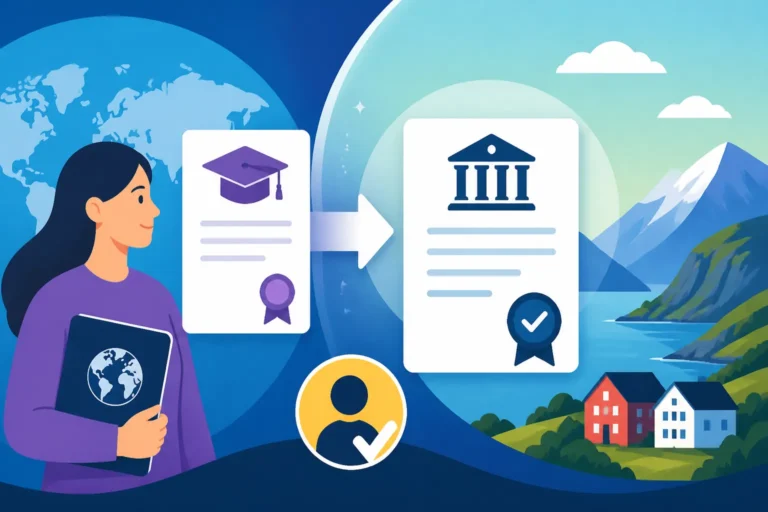
You must also ensure your documents are properly authenticated. For many, this means obtaining an Apostille stamp or a legalization from your home country’s Ministry of Foreign Affairs. To understand the specifics of how this interacts with your residency application, you should read Document Translation for UDI: Do I Need an Apostille Stamp? to avoid the common mistakes that lead to months of delays.
Bridging the Language Gap: The Norsk Challenge
Let’s be honest: you can be the most brilliant neurosurgeon in the world, but if you cannot understand a patient’s subtle description of "murrende smerte" (gnawing pain), you are a liability. The language requirement is the most significant barrier for most expats. For nurses, the requirement is generally a B2 level on the Norskprøven. For doctors, while B2 is the legal minimum for the license, almost every hospital in Norway effectively requires a C1 level for employment.
I remember the frustration of passing B2 and thinking I was ready, only to realize I couldn't understand the rapid-fire dialects at a hospital in Rogaland. The medical language is one thing, but the social nuances of Norwegian Work Culture: Flat Hierarchies and Communication Styles require a much deeper level of fluency. You need to be able to communicate complex risks to patients in a way that is empathetic and clear, which is why many of us spend years in language schools before even applying for our first job.
Choosing the Right Language Path
There are two main routes for the language exam: the Norskprøven and the now-phased-out Bergenstest (which has been replaced by the more modern C1 exam). Most healthcare professionals now take the Norskprøven, focusing on achieving the highest possible scores in speaking and listening. If you are starting from zero, don’t rush. Take the time to build a solid foundation.
To supplement your learning, I highly recommend using platforms like italki to find tutors who specifically specialize in medical Norwegian. I found a tutor on italki who was a retired nurse from Bergen, and she spent hours helping me practice patient intake interviews in various dialects. This kind of targeted practice is much more effective than a generic classroom setting when you are preparing for a high-stakes medical environment. You can find more structured advice on this in our guide on Learning Norwegian for Work: Norskprøven and Language Courses.
The Medical Proficiency Test for Non-EEA Graduates
If you were educated outside the EEA, you must also pass a "Fagprøve" or medical proficiency test. This is an OSCE-style (Objective Structured Clinical Examination) test conducted at the University of Oslo for doctors. It tests your clinical skills, your ability to write prescriptions in Norwegian, and your understanding of local medical protocols.
The failure rate for the first attempt is notoriously high, not necessarily because the medicine is different, but because the Norwegian approach to patient-centered care is very specific. You are expected to be collaborative rather than paternalistic. If you are preparing for this, spending time on italki with a Norwegian-speaking medical professional to practice "pasientkommunikasjon" (patient communication) can be the difference between a pass and a fail.
Clinical Training and the National Subjects Course
Even after you prove your medical knowledge and language skills, you aren't done. Every foreign-trained healthcare professional must complete the "Kurs i nasjonale fag" (Course in National Subjects). This course covers the legal framework of the Norwegian healthcare system, including the Health Personnel Act, patient rights, and the social security system.
It’s during this course that you’ll learn about the intricacies of The Fastlege Scheme: Navigating Norway’s GP System and how the state handles everything from mandatory reporting to the ethics of end-of-life care. I found this part of the process surprisingly fascinating because it explains why the Norwegian system works the way it does. It’s about more than just medicine; it’s about the "samfunnsoppdrag" (social mission) of being a healthcare worker in a Nordic welfare state.
The LIS1 Internship Process
For doctors, the LIS1 (Lege i spesialisering del 1) is a 18-month internship divided into 12 months in a hospital and 6 months in primary care (the kommune). Getting a LIS1 spot is incredibly competitive. There are two application rounds per year, and thousands of applicants vie for a few hundred spots. As a foreign doctor, your CV needs to be impeccable.
Many of us take "overlege" (assistant doctor) positions in rural areas or work as "helsefagarbeider" (healthcare assistants) while waiting for an LIS1 spot to open up. It’s a humbling experience, but it’s the best way to get your foot in the door and prove your worth to a Norwegian employer. If you are looking for work in specific regions, check out our resource on Healthcare in Bergen: Clinics, Hospitals, and Local Expat Resources for local tips.
Comparison of Licensing Requirements
| Requirement | EU/EEA Graduates | Non-EEA Graduates |
|---|---|---|
| Initial Assessment | Automatic (approx. 3 months) | Individual (7-12+ months) |
| Language Level | B2 (Minimum) | B2 / C1 (Recommended) |
| Medical Exam | Not Required | Mandatory (Fagprøve) |
| National Subjects | Mandatory (Online/Short) | Mandatory (Full Course) |
| Clinical Practice | Recognized from home country | Often requires LIS1 or supervised practice |
Financial Planning and Taxation for Medical Professionals
Let's talk about the money. Healthcare professionals in Norway earn a comfortable living, but you won't become a millionaire overnight. The salaries are governed by strict collective agreements between the unions (like Den norske legeforening or Norsk Sykepleierforbund) and the regional health authorities. To get a baseline of what to expect, read Salaries and Minimum Wage in Norway: Industry Benchmarks.
When you start working, you will notice that a significant chunk of your paycheck goes toward taxes. However, this tax pays for your own social safety net, including Feriepenger: How Norwegian Holiday Pay is Calculated and Disbursed. As a foreign professional, you might also have tax obligations in your home country.
Managing International Tax Obligations
If you are a US citizen or a resident of another country with global tax laws, the Norwegian tax system can be a headache. You’ll be dealing with "trygdeavgift" (social security contributions) and "trinnskatt" (bracket tax) on top of your base income tax. It is essential to ensure you aren't being double-taxed on your Norwegian income.
I personally used Taxes for Expats to handle my filings during my first few years here. Since Norwegian salaries for doctors and specialized nurses can be quite high, you quickly move into higher tax brackets. Taxes for Expats was helpful in navigating the Foreign Earned Income Exclusion and ensuring my "skattemelding" (tax return) was consistent with my home country's requirements. It’s one less thing to worry about when you are already stressed about clinical rotations.
Understanding the Skilled Worker Visa
To even begin this journey, you need a legal right to stay in the country. Most healthcare professionals come on a Skilled Worker Visa in Norway: Eligibility, Salary Thresholds, and Process. For this, you must have a concrete job offer that meets The 2026 Skilled Worker Salary Requirements (Bachelor's vs Master's).
One small "hack" I discovered: if you are waiting for your full authorization, you can sometimes apply for a job-seeker visa specifically for healthcare workers. This allows you to stay in Norway while you take your language exams and the Kurs i nasjonale fag. It’s a bit of a gamble, but being physically present in Norway makes it much easier to network and find those elusive supervised practice spots.
Life on the Ward: The Norwegian Hospital Culture
Once you finally get your ID card and step onto the ward at a hospital like St. Olavs in Trondheim or Haukeland in Bergen, you’ll notice a distinct culture. The hierarchy is incredibly flat. It’s perfectly normal for a nurse to disagree with a senior consultant if they believe a mistake is being made. In fact, it's expected.
If you come from a culture where the doctor's word is law, this can be a massive adjustment. You will be expected to participate in "tverrfaglig samarbeid" (multidisciplinary collaboration). If you want to dive deeper into these social dynamics, read about Healthcare in Trondheim: Navigating Medical Services in Trøndelag to see how regional hospitals operate.
Work-Life Balance and Family Rights
Norway is famous for its work-life balance, and this extends even to the medical field. While doctors still work long hours and "vakt" (on-call) shifts, there is a much higher respect for family time. If you have children, you have a legal right to "omsorgsdager" (days off to care for a sick child), and your employer cannot penalize you for using them.
The transition to this system is often a relief for those coming from high-pressure systems in the UK or the US. However, you must be prepared for the "dugnad" spirit and the expectation that you will contribute to the social well-being of your department. To streamline your entry into the system, try to use SUA Service Centers: Who Can Use Them for Quick Processing once you have your job offer in hand.
Regional Opportunities: Where the Jobs Are
While everyone wants to live in Oslo, the real opportunities for foreign healthcare workers are in the north and the rural west. Municipalities in Finnmark and Nordland are often so desperate for doctors and nurses that they offer significant bonuses, help with housing, and even accelerated paths to permanent positions.
Working in a remote clinic in Tromsø or a small island in Helgeland provides a clinical experience unlike any other. You have to be more self-reliant, as the nearest specialist might be a helicopter flight away. For those interested in the northern route, our guide on Healthcare in Tromsø: Medical Access in Northern Norway offers a realistic look at life in the Arctic medical system.
Final Steps to Your Authorization
The journey from "foreign applicant" to "authorized Norwegian healthcare professional" is a marathon, not a sprint. It took me nearly two years to feel fully integrated. You will face rejections, language frustrations, and bureaucratic delays. But the moment you receive that digital confirmation on Helsenorge, it all becomes worth it.
Don't try to do it all at once. Focus on the language first, then the paperwork, then the clinical tests. Use resources like italki for your Norwegian and Taxes for Expats for your finances. Surround yourself with other expats who are on the same path, and remember that the system is designed to be tough to protect the high quality of care that Norway is proud of. Once you’re in, you’re part of one of the most stable and rewarding healthcare systems in the world.
Disclaimer
This guide is for informational purposes only and does not constitute legal or professional medical career advice. Licensing requirements and UDI regulations in Norway change frequently. Always consult the official websites of the Norwegian Directorate of Health (Helsedirektoratet) and the Norwegian Directorate of Immigration (UDI) for the most current information regarding your specific situation.