Supermarkets in Norway: Finding International Ingredients
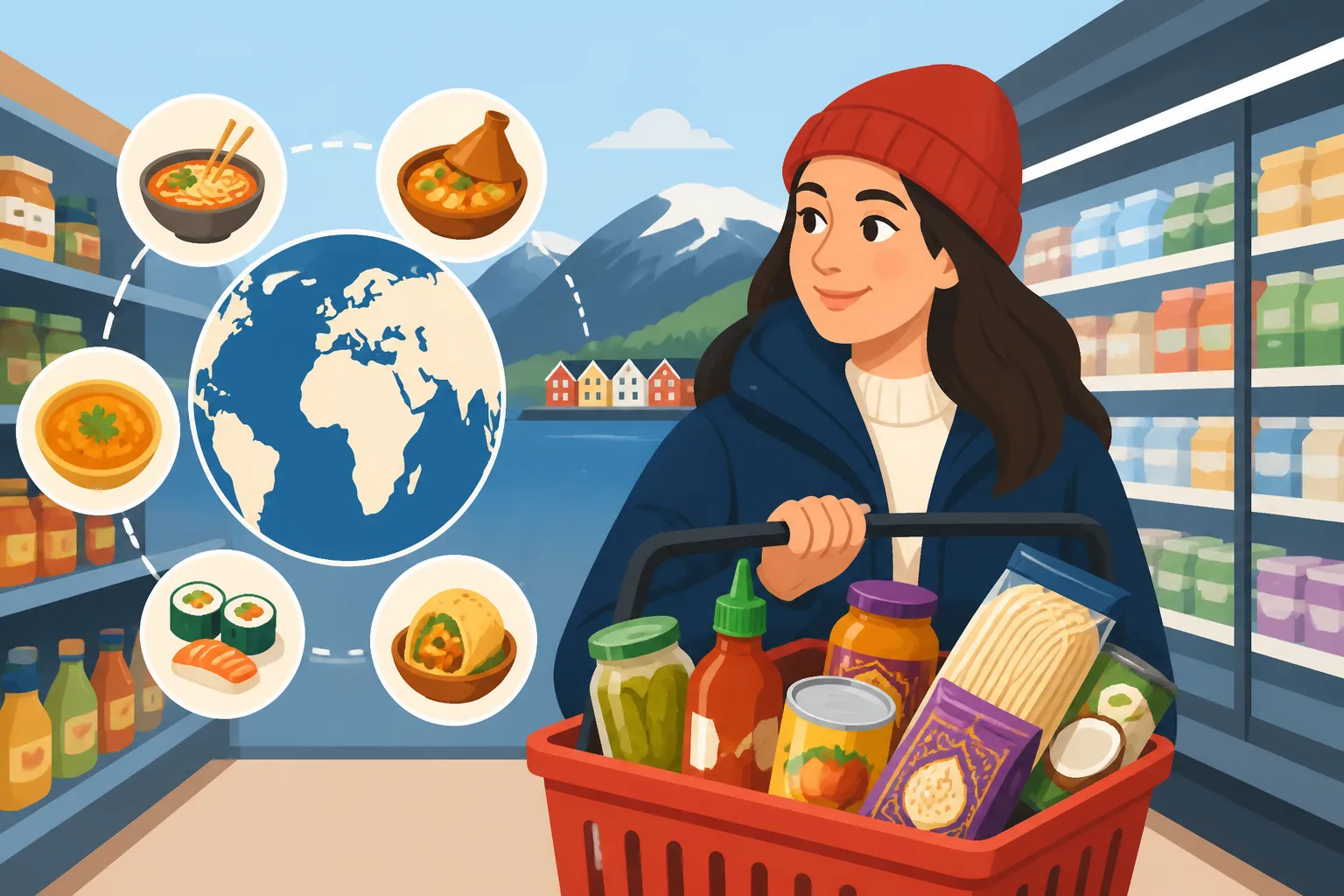
Moving to Norway often involves a romanticized vision of mountain hikes and cozy cabins, but reality hits hard the first time you try to cook an authentic meal from back home. You quickly realize that the local selection is notoriously limited and heavily focused on domestic staples. This guide provides a strategic roadmap for sourcing those elusive international ingredients and navigating the unique Norwegian grocery landscape.
Understanding the Norwegian Supermarket Hierarchy
When you first arrive, the lack of variety can feel like a personal affront. You will likely find three versions of the same brown cheese but struggle to find a single fresh habanero. This isn't an accident; the Norwegian market is dominated by a few massive players who focus on volume and efficiency. To survive, you need to know which store serves which purpose.
The Low-Price Leaders: Kiwi and Rema 1000
Kiwi and Rema 1000 are the twin titans of the Norwegian grocery world. For the average expat, these will be your daily stops for milk, eggs, and basic produce. They operate on a high-volume, low-margin model, which means their "international" section is usually restricted to a single shelf of soy sauce, coconut milk, and taco kits.
Rema 1000 often carries their own brand of affordable basics, while Kiwi is famous for its "Green is Skjønt" loyalty program that gives discounts on fresh produce. While these stores are essential for Cost of Living in Norway 2026: Budgeting for Singles and Families, they are rarely where you will find specialized spices or authentic jasmine rice. If you are staying in a temporary apartment sourced through Spotahome while you hunt for a long-term rental, these stores will be your best friend for stocking up on essentials without breaking the bank.
The Mid-Range and Premium Options: Coop and Meny
If you are looking for a slightly better selection, Coop Extra and Coop Mega offer a wider variety of cheeses, meats, and imported dry goods. However, the true "king" of variety in the mainstream sector is Meny. Meny is significantly more expensive, but they pride themselves on having a "fresh counter" (ferskvaremdisk) where you can actually find specific cuts of meat or fresh fish.
Meny is also the most likely mainstream store to carry niche items like liquid smoke, specific gluten-free brands, or higher-quality olive oils. When you are looking for Vegan Grocery Shopping: Best Supermarkets for Plant-Based Options, Meny often has a dedicated section that outshines the discount stores. Just be prepared for the bill; shopping at Meny regularly can significantly alter your monthly food budget compared to the discount chains.
The Struggle for International Variety
The core frustration for most foreigners is the "assortment wall." Due to strict import regulations designed to protect Norwegian farmers, many foreign food products are either heavily taxed or simply not imported. This is why a head of cauliflower can suddenly double in price during the winter when the Norwegian harvest ends and imports begin.
Import Duties and Seasonal Limitations
Norway is not a member of the EU, though it is part of the EEA. This means that while many goods flow freely, agricultural products do not. The Norwegian government applies high tariffs to items that compete with local production, such as meat and dairy. As a result, finding authentic Italian Pecorino or Mexican chorizo in a standard supermarket is nearly impossible.
The seasonality of produce also dictates what you can cook. During the summer, you will be flooded with Norwegian strawberries and potatoes, but during the "dark season," the selection of fresh herbs and leafy greens in Rema 1000 can become quite dismal. Understanding these cycles is a key part of your First 30 Days Health Checklist: GP, Frikort, and Pharmacies as you adjust your diet to the local availability.
The "Taco Friday" Phenomenon
You will quickly notice that every supermarket has a massive "Taco" section. Do not be fooled; this is "Norwegian Taco," which consists of mild ground beef, iceberg lettuce, and store-bought flour tortillas. If you are looking for dried ancho chilies, tomatillos, or corn masa, the mainstream supermarkets will let you down. This cultural obsession with a very specific, localized version of Mexican food is a classic example of how Norway adopts international trends while stripping away the complex ingredients that make them authentic.
Where to Find Authentic International Ingredients
To find the "real" stuff, you have to step outside the big chains. Every major city in Norway has a thriving scene of independent grocers, often referred to locals as "grønnsaksbutikker" (vegetable shops) or "importbutikker."
The Independent "Gronnsaksbutikk"
In Oslo, the neighborhood of Grønland is the undisputed mecca for international food. Shops like A-Market or Global Food carry everything from fresh okra and galangal to 10kg bags of high-quality basmati rice. These shops are usually family-owned and source their products through different channels than the big three chains.
In Bergen, you should look around the areas near the bus station, and in Stavanger, the streets behind the city center hold hidden gems. These stores are not just for vegetables; they are where you find authentic feta cheese in brine, halal meat counters, and spices that actually have a scent. If you are still navigating the city and haven't memorized the backstreets yet, using Airalo for a local data plan ensures you can use Google Maps to find these tucked-away shops without racking up roaming fees.
Specialized Asian and Middle Eastern Markets
For those cooking East Asian, South Asian, or Middle Eastern cuisines, specialized markets are a lifesaver. These stores often stock frozen items that you can't find elsewhere, such as lemongrass, kaffir lime leaves, and various types of tofu. They also carry a vastly superior selection of soy sauces, miso pastes, and chili oils.
When Finding Halal and Kosher Food in Major Norwegian Cities, these independent markets are often your only reliable source. The butchers in these shops usually offer custom cuts of meat—like lamb shoulder or goat—that a standard Coop or Kiwi wouldn't dream of stocking. Prices in these shops are also frequently lower for produce than in the big supermarkets, making them a secret weapon for those trying to maintain a budget.
Online Grocery Solutions and Digital Shopping
If you live outside the major urban hubs like Oslo or Bergen, your access to physical international shops might be limited. Fortunately, the digital landscape in Norway is highly developed, and online grocery shopping has become a staple of expat life.
Oda and Large-Scale Delivery
Oda is the dominant player in the online grocery space in Norway. They have a much larger warehouse-based inventory than a typical neighborhood Rema 1000. While they are still a Norwegian company, their "international" and "world kitchen" sections are surprisingly robust. You can often find specialty flours, specific Asian sauces, and a wider range of organic products on Oda than you can in person.
The convenience of Oda is hard to overstate, especially when you are first Moving In: Standard Unfurnished Rentals vs Fully Furnished Options and don't have a car to haul heavy bags of rice and flour. Their app is intuitive, though having a reliable internet connection is vital. Many expats find that using Airalo to stay connected during their first few weeks allows them to manage these deliveries seamlessly before their home fiber-optic line is installed.
Specialized Online Retailers
For truly niche items, there are several specialized online shops that ship nationwide. Websites like Sunkost or various "Kinasjakk" (Asian grocery) sites allow you to order dried goods, spices, and specialty snacks that are otherwise unavailable. This is particularly useful for those living in more remote areas who still want to cook authentic meals.
| Store Type | Best For | Price Range | International Variety |
|---|---|---|---|
| Kiwi / Rema 1000 | Basics, dairy, Norwegian staples | Low | Very Low |
| Meny | High-quality meat, fresh fish, niche imports | High | Moderate |
| Independent (Grønland) | Spices, bulk rice, authentic produce, Halal | Low to Mid | Very High |
| Oda (Online) | Convenience, heavy items, decent variety | Mid | Moderate |
| Specialized Asian Markets | Frozen herbs, tofu, soy sauces, specialty snacks | Low to Mid | High |
Strategies for Seasonal and Regional Challenges
Living in Norway requires a shift in how you plan your meals. You cannot always expect to find what you need on a whim. Success in the kitchen depends on seasonal awareness and, occasionally, a trip across the border.
The "Sverige-tur" (Sweden Trip)
One of the most Norwegian traditions you will encounter is the "Harry-tur"—a shopping trip to Sweden. Because Sweden is part of the EU and has lower taxes on food, the selection in Swedish border supermarkets like Nordby or Charlottenberg is astronomical compared to Norway.
Expats often head to Sweden once every few months to stock up on meat, canned goods, and international ingredients that are either too expensive or unavailable in Norway. Just be sure to check the customs quotas; there are strict limits on how much meat and alcohol you can bring back. If you are struggling with Supermarket Prices (Kiwi, Rema 1000, Meny), a well-planned Sweden trip can save you thousands of kroner over a year.
Cooking in the North vs. the South
If you are located in Tromsø or further north, the logistical challenges increase. Fresh produce takes longer to arrive and is often more expensive. In these regions, you will rely more heavily on frozen vegetables and dried legumes. However, the North often has a fantastic selection of local seafood and game meat like reindeer, which can be an interesting (if not exactly "international") substitute in many recipes.
Regardless of where you live, make sure your Registering Your Address on Your Mailbox Properly is sorted so that your online spice and dry-good orders actually reach you. There is nothing more frustrating than an order of authentic garam masala being returned to the sender because the postman couldn't find your name.
Cost-Saving Tips for International Cooks
Cooking international food in Norway can be an expensive hobby if you aren't careful. Between the high price of imports and the general cost of living, you need a strategy to keep your kitchen costs down.
Bulk Buying and "Invandrerbutikk" Perks
The independent international shops almost always offer better deals on bulk items. A 5kg bag of lentils or chickpeas will cost a fraction of what you’d pay for tiny 400g bags in a mainstream supermarket. Similarly, spices in large bags are far more economical than the tiny glass jars sold in Meny.
If you are a student or on a tight budget, these stores are essential. You might even find yourself Buying Second-Hand on Tise or Finn to Save Money for kitchen appliances like rice cookers or stone mortars to make the most of these bulk ingredients. These shops also frequently have "sales" on produce that is nearing its peak ripeness—perfect for making large batches of curry or salsa to freeze.
Loyalty Programs and Apps
While they won't help with authentic fish sauce, the mainstream apps like "Trumf" (for Kiwi and Meny) and "Æ" (for Rema 1000) are worth downloading. Trumf allows you to collect "points" which are essentially cash back that you can use to pay for future groceries. For someone just Opening a Blocked Bank Account for Norwegian Student Visas, every krone saved on the basics is a krone that can be spent on that expensive bottle of imported sriracha.
Disclaimer
This guide is intended for informational purposes and reflects the personal experiences of expats living in Norway. Market conditions, store availability, and import regulations can change. While we strive for accuracy, always check local store listings and current Norwegian customs regulations before making significant purchases or traveling for shopping.