Navigating TV License Fees: Are They Still Billed Separately in Norway?
Arriving in Norway often feels like a never-ending cycle of hidden fees and administrative surprises, particularly when it comes to media consumption. For years, newcomers were haunted by a separate, hefty invoice for the national broadcaster. This guide clarifies the current state of media funding in Norway, explaining how the old TV license has been replaced by a modern tax system.
The Death of the NRK Lisens and the Move to Income Tax
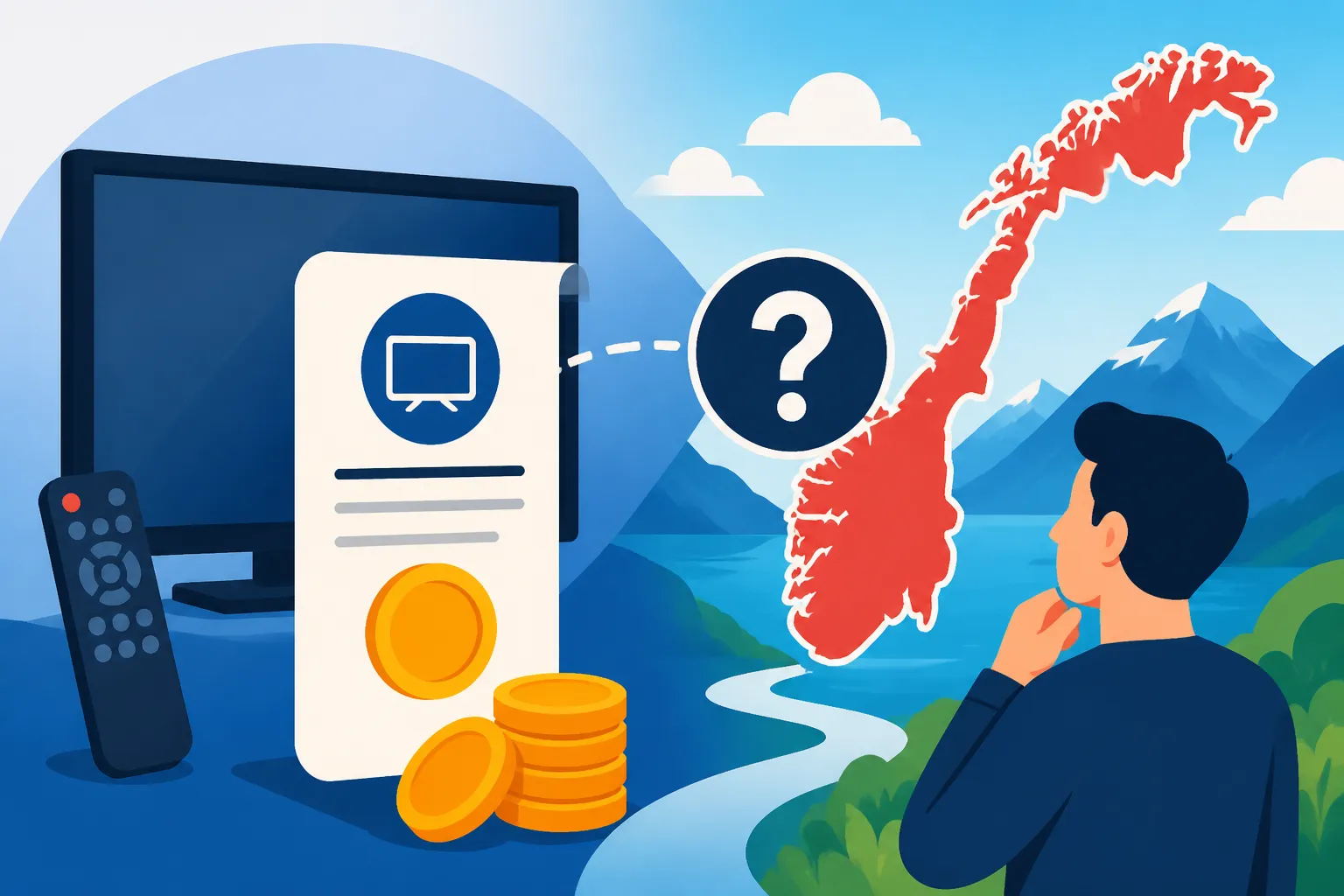
For decades, one of the most distinctive and often frustrating aspects of the Norwegian household budget was the "kringkastingsavgift," or the TV license fee. If you owned a television—even if you only used it for gaming or watching DVDs—you were legally obligated to pay a flat fee twice a year to fund NRK, Norway’s public broadcasting company. The "license man" was a legendary figure who would occasionally patrol neighborhoods looking for the tell-tale glow of a screen through a window to ensure everyone was paying their share.
However, as of January 1, 2020, this system was completely abolished. The Norwegian government recognized that the old model was increasingly outdated in an era of streaming and mobile devices. It was also regressive, meaning a student living on a tight budget paid the exact same amount as a millionaire. Today, you will no longer receive a separate bill in the mail for your TV. Instead, the funding for public broadcasting is integrated directly into the national budget, which is funded through your personal income tax.
This change was a massive relief for many, but it also created confusion for expats who were used to checking their mail for these specific invoices. Now, the cost is essentially invisible, hidden within the deductions on your monthly payslip. If you are trying to map out your Cost of Living in Norway 2026: Budgeting for Singles and Families, you should stop looking for a "TV" category and instead focus on how your overall tax burden is calculated. This shift means that everyone who earns an income in Norway contributes to public media, regardless of whether they own a physical television set or not.
The transition to a tax-based model also means that the "license man" has officially retired. You no longer need to "de-register" your TV if you sell it or hide your screen when the doorbell rings. However, understanding how this tax is calculated is vital for your financial planning. Since the funding is now part of your personal tax, services like Taxes for Expats can be incredibly helpful in ensuring you are not overpaying or failing to claim relevant deductions that might offset your total tax liability.
How the Public Broadcasting Tax Works in Practice
The current funding model is based on a progressive scale, which is a core tenet of the Norwegian social welfare state. Instead of a flat fee of roughly 3,000 NOK per year, the amount you contribute depends on your individual income level. This makes the system significantly fairer for low-income earners, students, and retirees. For those managing their finances through The Complete Guide to Norwegian Taxes for Expats (Skatteetaten), it is important to realize that this is not a "new" tax on top of what you already pay, but rather a reallocation of the taxes you are already contributing.
The tax is calculated based on your personal income and is capped at a certain amount. For most workers, this amount is automatically deducted along with your standard income tax and Social Security in Norway: Understanding National Insurance Contributions. Because the fee is per person rather than per household, a couple living together might technically pay more than they did under the old system if both are high earners. Conversely, a single person living alone often pays significantly less than the old flat-rate license fee.
Here is a breakdown of how the old system compared to the new tax-based system:
| Feature | Old TV License (Pre-2020) | New Tax Model (Post-2020) |
|---|---|---|
| Payment Method | Separate bill sent twice a year | Deducted automatically via income tax |
| Cost Structure | Flat fee (Approx. 3,000 NOK per year) | Progressive (Based on income level) |
| Requirement | Based on owning a TV receiver | Based on being a tax resident in Norway |
| Household Impact | One fee per household | Individually assessed per person |
| Administration | Managed by NRK License Department | Managed by Skatteetaten (Tax Office) |
When you are reviewing your Understanding Your Skattekort (Tax Deduction Card) and How to Change It, you won't see a line item specifically labeled "NRK Fee." Instead, it is bundled into the general tax percentage. This is why it is so crucial to keep your tax card updated. If you experience a sudden drop in income, your tax burden—including the portion that funds public media—should decrease accordingly. For expats who receive income from abroad, using a service like Wise to transfer funds into a Norwegian account can help you stay liquid while you wait for your final tax assessment from the previous year.
Why This Matters for Expat Budgeting and Financial Planning
One of the biggest hurdles for foreigners moving to Norway is the sheer volume of "automatic" systems. Between the tax office, the national registry, and the healthcare system, it can feel like you have lost control over your monthly outgoings. While the disappearance of the separate TV license invoice is one less bill to worry about, it is a reminder of how integrated the Norwegian financial system is. You are expected to be a contributor to the society from the moment you receive your D-number or Fødselsnummer.
For many expats, the realization that they are paying for NRK through their taxes regardless of their language skills can be a point of minor frustration. You might find yourself asking, "Why am I paying for Norwegian television when I only watch Netflix or international news?" In the Norwegian mindset, public broadcasting is viewed as a pillar of democracy and a vital tool for social cohesion. It provides news, culture, and educational content that is free from commercial influence. Even if you don't watch the evening news, the system ensures that high-quality journalism is available to everyone, which is seen as a collective benefit.
If you are working as a freelancer or have a complex income situation, you need to be particularly diligent during the tax season. When Filing Your Tax Return (Skattemelding): Deadlines and Common Deductions, you should ensure that all your income is reported correctly so that your contribution to public services is accurate. If you are sending money home regularly, Wise offers a transparent way to see exactly how much you are losing in exchange rates, which helps you better calculate what you have left for your local Norwegian tax obligations.
Furthermore, if you are a student, the move to a tax-based system is a massive win. Under the old rules, many students struggled to pay the flat license fee while also balancing Student Budgeting: Surviving on NOK 15,488 a Month in Norway. Now, if your income is below the tax-free threshold (frikort limit), you effectively pay zero for public broadcasting. This allows students to allocate those few thousand kroner toward more pressing needs like housing or high-quality winter gear.
Navigating Digital IDs and Tax Compliance
The removal of the physical TV license invoice is part of a larger trend in Norway: the total digitalization of the economy. Almost everything that used to arrive as a paper bill is now handled through your digital mailbox (like Digipost) or your online banking portal via BankID Explained: Norway's Digital Identity System and Expat Challenges. The fact that the TV license is now a tax means you spend less time logging into your bank to pay individual bills and more time managing your overall tax profile.
However, this "set it and forget it" mentality can lead to surprises during the spring tax season. Every April, Norwegians receive their preliminary tax assessment. This is the moment when you find out if you have paid too much tax (resulting in a refund) or too little (resulting in a bill). Since the media tax is bundled in, any errors in your reported income can affect your final balance. For those with US tax obligations, consulting with Taxes for Expats during this period is highly recommended, as they specialize in the intersection of Norwegian and American tax laws, ensuring you aren't being double-taxed on the funds you contribute to the Norwegian state.
If you are new to the country and haven't yet mastered the language, navigating the Skatteetaten website can be daunting. While they offer excellent English support, the nuances of "taxable income" versus "deductible expenses" are where many expats trip up. Remember that while the TV license is gone as a separate entity, your role as a taxpayer is more important than ever. Being proactive about your tax card and using tools like Wise for Remittances: Cheapest Ways to Transfer NOK to International Accounts will give you a much clearer picture of your actual take-home pay once all the social contributions and media taxes are settled.
In summary, you can stop looking for a way to pay your "NRK lisens." It is already being taken care of. Your focus should instead be on the broader health of your finances in Norway. Whether you are Opening a Blocked Bank Account for Norwegian Student Visas or simply trying to survive your first winter without breaking the bank, understanding that the TV license is now just another small cog in the great Norwegian tax machine will help you feel more at home in this highly organized, digital society.
Public Service Funding in the Financial Landscape
As we look toward the financial year, the funding of public services in Norway remains a hot topic of political debate. While there are occasionally calls to reduce the NRK's budget or move back to a subscription-based model, the current tax-funded system appears stable. It is integrated into the "National Budget" (Statsbudsjettet) which is debated and passed by the Storting (Parliament) every autumn. This means the exact "price" of public broadcasting for the individual can fluctuate slightly year to year based on the current government's priorities.
For the expat community, this stability is generally a positive thing. It removes the risk of getting fined for an unpaid license bill you didn't know existed. It also means that as long as you are complying with your basic tax requirements, you are fully "legal" in the eyes of the media authorities. You can stream NRK content for free on their web player (NRK TV) without needing a login or a subscription, which is a fantastic resource for those who are Learning Norwegian for Work: Norskprøven and Language Courses. Watching local news with Norwegian subtitles is one of the most effective—and now, essentially pre-paid—ways to integrate into the culture.
Ultimately, the disappearance of the TV license invoice is a symbol of Norway’s move toward a more equitable and streamlined bureaucracy. It acknowledges that media is a public good, much like roads or healthcare. By understanding that your contribution is handled through the tax system, you can stop worrying about the "license man" and start focusing on more important things—like how to spend those extra couple of thousand kroner you might be saving if you’re in a lower income bracket. Just make sure to use a reliable service like Wise to manage your international transfers, and keep an eye on your Skattemelding to ensure everything is in order.
Disclaimer
The information provided in this guide is for informational purposes only and does not constitute professional financial, legal, or tax advice. While every effort has been made to ensure the accuracy of the details regarding Norwegian tax laws and the NRK license as of 2026, regulations are subject to change by the Norwegian government and Skatteetaten. We recommend consulting with a certified tax professional or the Norwegian Tax Administration directly before making significant financial decisions or filing your tax return. Usage of third-party services like Wise or Taxes for Expats should be done according to their own terms of service and after individual research into your specific financial situation.