Credit Checks (Kredittsjekk) in Norway: How Bisnode Rates You
Ah, the dreaded "kredittsjekk" – a term that probably sends shivers down the spine of many an expat trying to set up their life in Norway. You've landed in this beautiful country, navigated the UDI, found a place, and now you're hit with another hurdle: your financial past (or lack thereof) is suddenly under intense scrutiny. This guide will meticulously break down what a Norwegian credit check entails, specifically how companies like Bisnode assess your financial standing, and most importantly, how you can successfully navigate this often-frustrating system as a foreigner.
Understanding the Kredittsjekk: Norway's Credit Check System
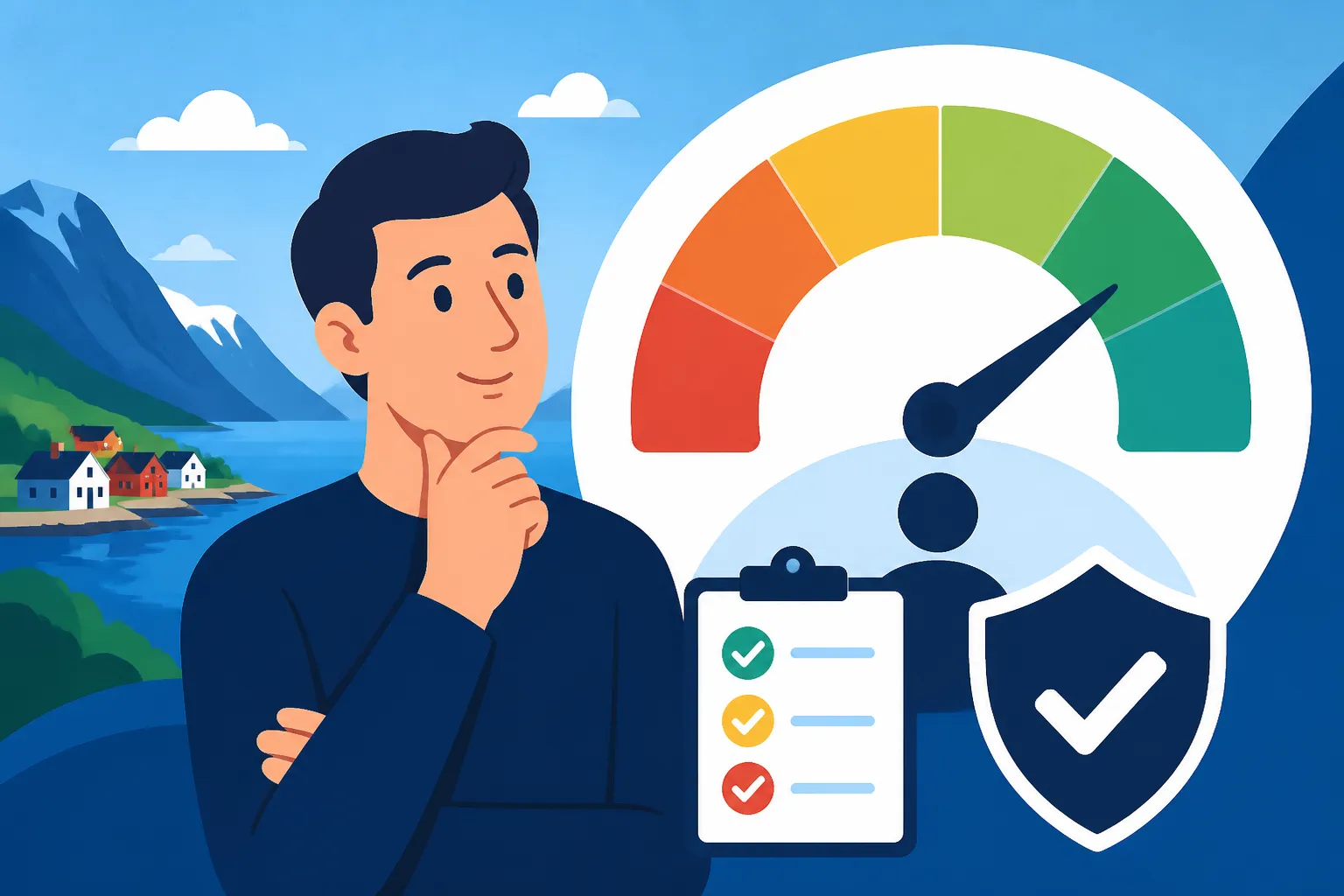
When you hear "kredittsjekk" (credit check) in Norway, it's essentially a comprehensive peek into your financial trustworthiness. Unlike some countries where your credit score might feel like an abstract number, here it’s a very tangible barrier or gateway to many essential aspects of life. From renting an apartment to securing a mobile phone contract, applying for a mortgage, or even getting electricity set up, virtually any agreement that involves future payments will trigger one of these checks. It’s a lender or service provider's way of assessing the risk of doing business with you.
Why You're Being Checked
Imagine you're a landlord, a bank, or a phone company. You're about to commit to a long-term relationship with someone where they promise to pay you regularly. How do you know they'll keep that promise? In Norway, the answer is often through a kredittsjekk. These checks are a standard risk management tool. They're not meant to be punitive but rather to protect businesses from financial losses and, indirectly, to ensure the stability of the financial system. For expats, this can feel incredibly unfair because your entire financial history from your home country often doesn't transfer over. You might have impeccable credit in the UK or US, but in Norway, you're a blank slate.
The necessity for these checks stems from Norway’s robust social safety net and its low-trust, high-trust society paradox. While society is built on trust, financial transactions still require formal vetting. Providers want to see a history of stable income, responsible debt management, and reliable payment behavior within the Norwegian system. Without this, even with a good job, you might find yourself in a frustrating loop of rejections.
The Norwegian Context
The Norwegian credit system operates a little differently from what many expats are used to. There isn't one single, universally recognized "credit score" like a FICO score in the US. Instead, credit reporting agencies like Bisnode (which we'll delve into shortly) compile data and provide a risk assessment or score to requesting parties. This assessment is often a numerical value or a risk category, indicating the probability of default. The information used is primarily public record, supplemented by data from financial institutions.
This system is deeply integrated into the fabric of Norwegian financial life. It's less about building up a perfect "score" to brag about, and more about not having anything negative on your record. A clean slate is good, but a history of on-time payments is even better. It also intertwines with your official registration status. Whether you have a D-number or a fødselsnummer significantly impacts your access to various financial services, and thus, your ability to build a credit history. Understanding the nuances of D-Number vs Fødselsnummer: How It Affects Your Banking Options is crucial here, as your identity document underpins your financial identity.
Bisnode and Your Norwegian Financial Footprint
When a company performs a "kredittsjekk" on you in Norway, chances are they're using services provided by one of the major credit information agencies. Bisnode is arguably the most prominent of these. They specialize in collecting and analyzing data to provide businesses with insights into the financial health and payment behavior of individuals and companies. Think of them as the gatekeepers to much of Norway's financial landscape.
How Bisnode Collects Information
Bisnode and similar agencies like Experian or Evry (now part of Tietoevry) don't just pull a number out of thin air. They meticulously gather data from various public and private sources. This data typically includes:
- Income and Tax Information: Your registered income from Skatteetaten (the Norwegian Tax Administration) is a significant factor. This is often the first thing they look at to determine your repayment capacity. The more consistent and higher your declared income, the better.
- Registered Debts: This is crucial. Any loans, credit card debts, mortgages, or even outstanding payment plans are reported. The total amount of debt you have relative to your income is a key indicator of your financial strain.
- Payment History: This includes records of late payments, payment defaults, and particularly, any cases that have gone to "inkasso" (debt collection). A single inkasso case can severely damage your creditworthiness for years. We'll talk more about Dealing with Debt Collection (Inkasso): Strict Norwegian Late Fees later, but suffice to say, avoid it at all costs.
- Registered Address History: Stability is a good sign. Frequent changes of address might, in some cases, be seen as a minor risk factor, though it's less impactful than debt.
- Civil Status: In some cases, information about your marital status can be included, as it might influence shared financial responsibilities, though individual creditworthiness remains the primary focus.
- Company Affiliations: If you own a company (like an ENK, a sole proprietorship), its financial health might indirectly influence your personal credit rating, especially for smaller businesses where personal and business finances are closely linked.
It's important to remember that this is largely objective data. Bisnode doesn't care about your personality; they care about the numbers and patterns that predict financial risk.
Scoring Mechanisms: What Influences Your Rating
Once Bisnode has gathered all this data, they use proprietary algorithms to generate a credit score or risk assessment. While the exact formulas are confidential, the factors that weigh heavily are quite transparent:
- Income Stability and Level: This is paramount. A steady job with a good income demonstrates your ability to meet financial obligations. Expats who struggle to find permanent employment or have fluctuating incomes often face challenges here. Your Understanding Your Skattekort (Tax Deduction Card) and How to Change It is a key document that reflects your tax-assessed income, which credit agencies will consider.
- Debt-to-Income Ratio: How much debt do you have compared to how much you earn? A high ratio signals higher risk. This includes all forms of credit, from student loans to car loans.
- Payment Discipline: Consistently paying bills on time is perhaps the most straightforward way to build a positive history. Late payments are red flags, and debt collection cases are financial scarlet letters.
- Age of Credit History in Norway: This is where many expats hit a wall. If you've only been in Norway for a short period, you simply won't have much of a history. This doesn't necessarily mean a bad score, but it often means an insufficient score, which can lead to rejections for higher-risk products like mortgages or even basic credit cards.
- Number of Credit Inquiries: While not as impactful as in some other countries, a sudden flurry of credit applications can sometimes be viewed with caution, indicating potential financial distress or desperation for credit.
- Asset Ownership: While not directly contributing to a "score," owning property can indirectly improve your financial standing in the eyes of lenders as it indicates stability and collateral.
Essentially, Bisnode is trying to answer one question: How likely are you to pay back what you owe? The more evidence of stability, responsibility, and capacity to pay, the better your rating will be.
Building and Maintaining a Strong Credit Score as an Expat
The journey to establishing a robust credit score in Norway as an expat can feel like a marathon with an uphill start. Many foreigners find themselves in a "chicken and egg" situation: you need credit history to get credit, but you can't get credit without a history. It's a frustrating but not insurmountable challenge.
The "Chicken and Egg" Problem
You've arrived, perhaps with a great job offer, a solid savings account, and years of perfect credit history from back home. Yet, when you try to get a simple mobile phone contract or even rent an apartment, you're met with polite rejections because you lack a "Norwegian credit history." This is incredibly common. The Norwegian system prioritizes local financial data, and your stellar international record simply isn't visible to their credit reporting agencies. This can lead to a sense of helplessness, where you feel financially capable but officially unrecognized.
One of the biggest hurdles is often getting a traditional Norwegian bank account fully functional with BankID, which often requires a fødselsnummer and some time in the system. While you can initially open an account with a D-number, full functionality and access to more complex financial products can take time. Our guide on Banking in Norway: How to Open an Account as a Foreigner provides practical steps for getting started.
Strategies for Building a Positive History
Building a credit history in Norway is a gradual process that requires patience and deliberate steps. Here's how you can start laying the groundwork for a solid financial reputation:
- Get Your Fødselsnummer (National ID Number): This is foundational. While you can start some things with a D-number, a fødselsnummer unlocks full access to public services like Helsenorge and makes you a fully registered resident, which significantly eases financial processes.
- Establish a Stable Income: Secure a permanent job contract. Temporary or freelance work can make it harder for lenders to assess your stability, although it's not impossible, especially if you can demonstrate consistent income over time.
- Open a Primary Bank Account: Use a major Norwegian bank like DNB, Nordea, or SpareBank 1. Ensure your salary is paid into this account consistently.
- Pay All Bills on Time, Every Time: This might sound obvious, but it's the most critical step. From your electricity bill to your mobile phone bill, rent, and any small loans, ensure they are paid before the due date. Set up "AvtaleGiro" or "eFaktura" through your online banking to automate payments and avoid missing deadlines.
- Get a Mobile Phone Contract: While some providers might initially require a larger deposit or only offer prepaid options without a strong credit history, getting a post-paid contract with a reputable provider like Telenor or Telia and consistently paying it on time can contribute positively.
- Consider a Secured Credit Card (if available): In some countries, secured credit cards (where you deposit money as collateral) are an option to build credit. While less common in Norway, it's worth inquiring with your bank if they offer any such products that report to credit agencies. More often, the path to a credit card involves patience; our article on Getting a Credit Card in Norway: Why the First Year is Difficult elaborates on this.
- Avoid Debt Collection (Inkasso): As mentioned, this is a financial black mark. If you ever receive an invoice you can't pay immediately, contact the company before it goes to inkasso to arrange a payment plan. Communication is key.
- Register Your Address Correctly: Ensure your address is always up-to-date with Folkeregisteret (the National Population Register). Stability in residence is viewed positively.
It’s worth noting that accurately managing your taxes is also crucial for your financial standing. Services like Taxes for Expats can help ensure your income and deductions are correctly reported to Skatteetaten, which in turn feeds into the data credit agencies use. Proper tax reporting demonstrates financial responsibility.
Beyond Loans: How Kredittsjekk Impacts Your Life in Norway
The "kredittsjekk" isn't just about whether you can get a mortgage or a personal loan. Its reach extends far into your daily life in Norway, affecting fundamental aspects of settling in. Many expats are surprised to learn how many routine transactions hinge on a positive credit assessment.
Renting Apartments
One of the most immediate and impactful areas where a kredittsjekk comes into play for expats is when Renting in Norway: Apartments, Contracts, and Tenant Rights. Landlords, or more commonly, the real estate agencies managing rentals, will almost always run a credit check on prospective tenants. They want assurance that you can consistently pay your rent, which is often a significant monthly expense. A poor or non-existent credit history can make it incredibly challenging to secure a rental, even if you have a substantial savings account or a high-paying job.
In this scenario, a landlord might request a higher security deposit (though there are legal limits on this, usually up to six months' rent, stored in a separate deposit account), or insist on a guarantor. This can be a significant barrier for newcomers who don't have local family or friends to vouch for them. It creates a stressful situation where finding suitable housing becomes a race against time and a test of your unproven financial reliability in the Norwegian system.
Utility Contracts
Beyond housing, even setting up basic utilities can trigger a credit check. Think about your mobile phone, internet, and electricity contracts. Companies providing these services are committing to delivering a service before receiving payment, thus incurring a risk. Our guide on Setting Up Utilities: Electricity, Heating, Internet, and Mobile Plans touches upon these aspects.
For instance, when signing up for a post-paid mobile phone plan, if your credit history is thin or negative, the provider might:
- Require a large upfront deposit: This is held by the company and returned after a period of on-time payments.
- Offer only prepaid options: Limiting your flexibility and potentially costing more in the long run.
- Flat-out deny the contract: Forcing you to seek alternatives or wait until your credit improves.
The same can apply to internet providers, especially for fiber optic connections that involve installation costs, and even electricity companies, although these are often less stringent for basic services due to the essential nature of electricity.
Alternative Financial Pathways for Expats
Facing repeated rejections due to a lack of Norwegian credit history can be disheartening, but it doesn't mean you're entirely without options. There are alternative strategies and services that can help you navigate the financial landscape while you're steadily building your local creditworthiness.
Guarantors and Co-Signers
If you're struggling to get approved for a rental agreement or a loan, having a guarantor (kausjonist) or a co-signer (medlåntaker) can be a viable solution. This person, usually someone with an established Norwegian credit history, legally agrees to be responsible for your debt or payments if you default.
- For Rentals: A guarantor would step in to pay your rent if you fail to. Landlords often accept this, especially if the guarantor has a strong financial standing.
- For Loans/Mortgages: A co-signer shares the responsibility for the loan with you. This can significantly increase your chances of approval, as the bank can assess the combined financial strength of both parties.
The challenge, of course, is finding someone willing to take on this significant financial responsibility for you. This is often limited to close family members or very trusted friends who understand the implications.
Using International Services
While international services don't directly contribute to your Norwegian credit score, they can be invaluable for managing your finances effectively and affordably, especially when you're still establishing yourself. For instance, companies like Wise (formerly TransferWise) offer excellent exchange rates and low fees for international money transfers, making it easier to send money back home or receive funds from abroad. This is particularly useful if you're dealing with finances that span multiple countries, or if you need to transfer a large sum from your previous bank account to your new Norwegian one without losing a significant chunk to unfavorable bank exchange rates. Efficient money management with tools like Wise can help you maintain financial stability, which indirectly supports your overall financial health even if it doesn't build local credit.
The Importance of a Stable Income and "Skattekort"
Ultimately, the most powerful tool in your financial arsenal is a stable, declared income. When you secure employment in Norway, you'll receive a "Skattekort" (tax deduction card) from Skatteetaten. This document dictates how much tax your employer should deduct from your salary. Ensuring your Skattekort is correctly set up and reflects your actual income and deductions is vital. Not only does it prevent nasty surprises at tax time (read more about this in The Complete Guide to Norwegian Taxes for Expats (Skatteetaten)), but it also ensures that the income reported to credit agencies like Bisnode is accurate and robust. A consistent, verifiable income is the bedrock upon which all other credit-building efforts stand.
Table: Key Factors Influencing Your Norwegian Credit Score as an Expat
| Factor | Positive Impact | Negative Impact | Expat-Specific Challenge |
|---|---|---|---|
| Income Stability | Permanent contract, consistent high income. | Temporary work, fluctuating income, unemployment. | Proving long-term stability without a long work history in Norway. |
| Debt Level | Low debt-to-income ratio, no unsecured loans. | High debt burden, multiple credit cards/loans. | Inherited debt from home country might not be visible, but new Norwegian debt adds up quickly. |
| Payment History | All bills paid on time (rent, utilities, phone). | Late payments, "Inkasso" (debt collection) cases. | Easy to miss due dates when new to Norwegian billing systems; critical to avoid inkasso. |
| Registered Address | Stable, long-term residence with up-to-date registration. | Frequent moves, discrepancies in registered address. | Frequent moves due to initial temporary housing; ensure Folkeregisteret is updated. |
| ID Type (Fødselsnummer) | Having a permanent fødselsnummer. | Only having a D-number for an extended period. | Limited access to certain services without a fødselsnummer, slowing credit building. |
| Age of Credit History | Years of established payment records within Norway. | New to Norway, no established financial footprint. | Starting from scratch; international history is generally not recognized. |
| Number of Credit Inquiries | Few, spaced-out applications. | Frequent, multiple applications in a short period. | Desperation for credit can lead to multiple applications and perceived risk. |
Disclaimer
The information provided in this guide is intended for general informational purposes only and does not constitute financial or legal advice. While we strive to ensure accuracy, financial regulations and practices in Norway can change. Always consult with a qualified financial advisor, bank representative, or legal professional for advice tailored to your specific situation.