What to Do if You Get Locked Out of BankID While Abroad
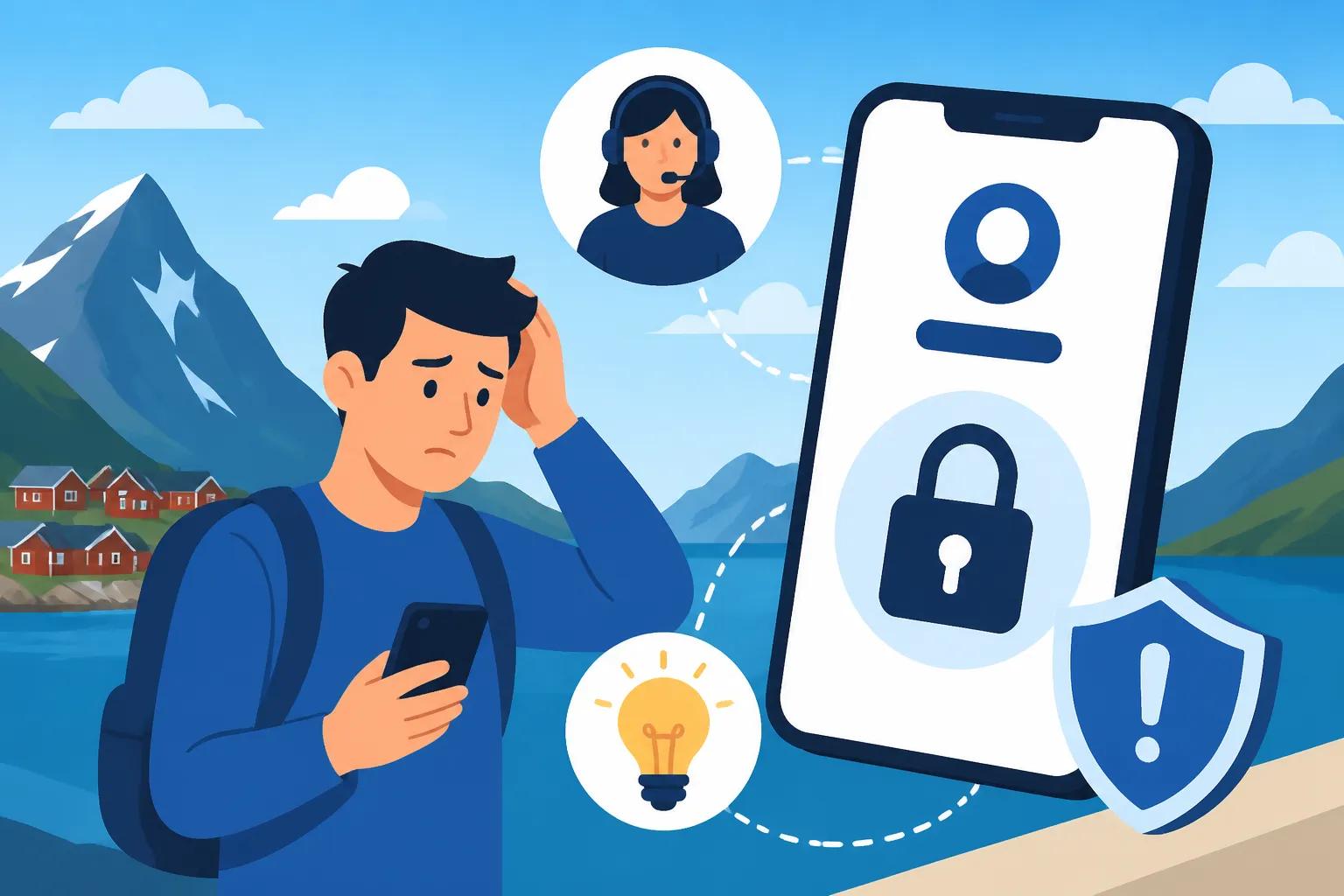
There's nothing quite like the cold dread that washes over you when you're trying to access an essential Norwegian service from abroad, only to be met with a "BankID lockout" message. Suddenly, you're disconnected from everything from paying bills to checking your tax situation, and it feels like the digital rug has been pulled right out from under your feet. This guide is here to walk you through the frustrating reality of BankID lockouts when you're outside Norway and offer practical advice on how to navigate this common expat nightmare.
The Panic of Being Locked Out: Why BankID is So Crucial in Norway
Let's be honest, living in Norway means embracing a certain level of digital dependency. And at the heart of nearly all of it is BankID. When you’re living far from the physical branches and the familiar safety net, a BankID lockout isn’t just an inconvenience; it can be a full-blown crisis.
More Than Just Banking: The Digital Key to Norwegian Life
BankID in Norway isn't just for logging into your online bank account, though that's certainly a primary use. Oh no, it's so much more ingrained in daily life here. Think of it as your digital passport, signature, and key rolled into one. You use it to sign digital documents, apply for permits, communicate securely with the government, and even complete certain online purchases.
For instance, you'll need BankID to log into Helsenorge, Norway's public health portal, where you can check your medical records, book doctor's appointments, and renew prescriptions. Trying to book a doctor’s appointment online using BankID becomes impossible if you're locked out. It's also your gateway to Skatteetaten (the tax authority) to check your tax deductions, submit your tax return, or make changes to your tax card. Imagine needing to confirm details for your annual tax return (Skattemelding) during the spring deadlines, only to find yourself unable to log in because you're halfway across the world. The implications extend to so many critical areas, from managing your healthcare to ensuring your financial and legal obligations are met. Without it, you're essentially locked out of modern Norwegian society, a truly isolating feeling. You can't even manage basic services like checking your Frikort status on the Helsenorge app or knowing if you've hit your healthcare exemption limit.
Common Reasons for BankID Lockouts When Outside Norway
It's infuriating when your BankID stops working, especially when you're trying to manage things remotely. The reasons for a lockout can sometimes feel arbitrary, but often, there's a logic behind them, even if it's a pain for us expats.
One of the most frequent culprits is expired identification. Many people don't realize that their BankID is directly linked to the passport or national ID they used when they first activated it. If that ID has expired since you last visited Norway, your BankID might be flagged as invalid for security reasons. The banks are incredibly strict about this, often requiring a passport with an RFID chip when setting up or reactivating BankID.
Then there's the classic forgotten password or security code. We all use so many passwords these days, and the BankID one, often a separate, six-digit code, can easily slip your mind, especially if you only use it sporadically. Punching in too many incorrect attempts, whether for your password or the unique code from your BankID app or SMS, will inevitably lead to a temporary, or sometimes even permanent, lockout.
Another common issue, particularly for those of us living abroad, involves security measures triggered by foreign IP addresses or unusual login patterns. Banks are on high alert for fraud, and logging in from an IP address in, say, Thailand, after having always logged in from Bergen, might flag your account for suspicious activity. It's a double-edged sword: you appreciate the security, but it’s a massive headache when it’s genuinely you. Lastly, any issues with your registered phone number, such as changing your number without updating your bank, or problems receiving SMS codes if you're reliant on BankID på mobil (which is being phased out in favor of the app), can also lead to access problems.
Your First Steps When BankID Fails You Abroad
When you're staring at that "access denied" message while abroad, the initial wave of panic is unavoidable. But take a deep breath; there are initial steps you can take.
Don't Panic, But Act Fast: Initial Troubleshooting
Before you launch into a full-blown meltdown or make an expensive international call, it's worth trying some basic troubleshooting. Sometimes, the simplest solutions are the most effective. First, double-check every single digit and letter of your credentials. Seriously, squint at the screen, type slowly, and ensure there are no typos. Is Caps Lock on? Is your keyboard layout correct? It sounds silly, but it happens.
Next, ensure your internet connection is stable. A flaky Wi-Fi signal can cause timeout errors or prevent the BankID app from communicating properly with your bank's servers. Try switching from Wi-Fi to mobile data, or vice-versa, if available. It’s also a good idea to restart your device entirely. A fresh start can often clear up minor glitches that prevent apps from working correctly. If you're using a web browser for BankID (less common now but still possible for some services), clear your browser cache and cookies – old data can sometimes interfere.
Finally, consider the method you’re trying to use. If you're still using BankID på mobil (the SMS-based version) and encountering issues, remember that the trend is heavily towards the BankID app. If you haven't switched to the app yet, or if you have both, try the alternative method. The app is generally more reliable for international use as it doesn't depend on SMS roaming agreements.
Contacting Your Bank (and the Challenges)
Once you've exhausted the basic troubleshooting, your bank becomes your primary, and often only, point of contact for resolving a BankID lockout. This is where things can get tricky, especially from abroad.
First, identify which bank issued your BankID. Most expats in Norway will have BankID from one of the major banks like DNB, Nordea, or SpareBank 1. You'll need to call their customer service line. Be prepared for international calling fees and potential time zone differences. What might be a convenient time for you could be the middle of the night for them, or vice versa. Always check their operating hours for international callers.
When you do get through, be ready to verify your identity thoroughly. They will ask you a series of personal questions – your full name, date of birth, fødselsnummer or D-number, your registered address, possibly details about recent transactions, or even specific information from your original ID documentation. They are extremely careful about security, which, again, is good for you but can feel like an interrogation when you're stressed. The absolute biggest hurdle for expats is that some banks, despite your pleas, will insist on a physical visit to a branch in Norway for re-activation or re-issuance of BankID. This is particularly true if your linked ID has expired or if they suspect high-level fraud. This is an incredible source of frustration for anyone not planning a trip back to Norway anytime soon, essentially cutting you off entirely. In some rare cases, a video call identification might be offered, but this is not universally available and often depends on the bank and the specific circumstances of your lockout.
The Helsenorge and Skatteetaten Angle
A locked BankID doesn't just block you from your banking; it can create a real mess with critical public services like Helsenorge and Skatteetaten. These platforms are gateways to some of the most important aspects of your life in Norway, and losing access can be incredibly stressful.
With Helsenorge, you manage everything from your doctor's appointments and prescriptions to your health records and communication with your Fastlege. If your BankID is locked, you won't be able to log in to renew a prescription on Helsenorge, which can be critical if you rely on regular medication. Similarly, managing your healthcare costs and tracking your Frikort status on the Helsenorge app becomes impossible. This means you might not know when you’ve reached your annual out-of-pocket limit, potentially leading to unexpected expenses. While there are some limited alternatives for general health information, like calling your doctor's office directly, anything requiring secure personal data access will demand BankID. This highlights the digital barrier many expats face if they don't have a fødselsnummer or a robust digital ID like BankID. For D-number holders, while some basic services might be accessible through other means, true comprehensive access often hinges on BankID.
Similarly, Skatteetaten requires BankID for nearly everything beyond simply viewing basic public tax information. Filing your tax return (Skattemelding) is usually a straightforward process online with BankID, but without it, you're looking at a much more manual, and often delayed, process. Trying to make changes to your tax card or checking your tax deductions becomes a bureaucratic nightmare. While there might be options to submit paper forms or communicate via mail, these are slow, cumbersome, and frankly, a huge step backward in the digital age. This is where services like Taxes for Expats can highlight the benefits of staying on top of your BankID to avoid significant headaches when dealing with Norwegian tax authorities.
Solutions and Workarounds: Getting Back Online
So, your BankID is locked, you're abroad, and you've tried all the initial troubleshooting. Now what? Let's talk about what might actually be possible to regain access, and some temporary workarounds.
Re-activation from Afar: What's Possible?
The harsh truth here is that re-activating BankID from outside Norway can be incredibly challenging, and for some, impossible without a return trip. Some progressive banks might, and I stress might, offer a video identification service. This usually involves a scheduled video call where you hold up your passport to the camera, answer security questions, and essentially prove you are who you say you are. It’s a bit like a virtual trip to the bank branch. However, this service isn't universal, and it often depends on the reason for your lockout and your bank's internal policies. You need to explicitly ask your bank if this is an option for your specific situation.
The more common, and unfortunate, reality is that many banks still require a physical visit to a branch in Norway. This is especially true if your passport has expired since your last BankID activation, or if there are significant security concerns. For those of us living abroad, this often means booking a flight just to get your digital life back in order, which is a massive imposition and expense.
If you had the foresight to set up a power of attorney (fullmakt) with someone you trust in Norway before you left, they might be able to assist with some aspects of your banking, but they absolutely cannot use your BankID on your behalf. BankID is strictly personal. A fullmakt would generally only allow them to handle specific banking transactions or collect physical mail on your behalf. It’s a partial solution at best, and certainly not a substitute for your own digital identity.
Temporary Digital IDs and Alternatives (Limited Use)
While BankID is the gold standard for secure digital identification in Norway, there are other, albeit less powerful, alternatives that might offer some limited access to certain services. These are generally not replacements for BankID, but they can be lifelines in a pinch.
MinID is a lower-security digital ID that primarily gives you access to public services like NAV (the Norwegian Labour and Welfare Administration) and some basic functions on Skatteetaten. It’s often used by those who don’t have BankID or need a secondary option. The downside is that many critical services require the higher security level of BankID, so MinID won't get you everywhere. Activating MinID can also be tricky if you're abroad, as it often involves receiving a letter by post with activation codes, sent to your registered address in Norway.
Buypass ID is another option, similar in functionality to BankID but issued by a different provider. Like MinID, it grants access to various public services. However, setting up Buypass ID often requires either a physical visit to a postal office (Posten) in Norway or, ironically, already having a BankID to verify your identity initially. So, if your BankID is locked, Buypass might not be a viable immediate solution for initial setup from abroad.
It's important to understand the hierarchy of these digital IDs. BankID is top-tier. MinID and Buypass ID are secondary. While they offer some utility, they won't open all the digital doors that BankID does. For many crucial interactions, especially those requiring a digital signature or access to highly sensitive personal data, BankID is king. This highlights the challenge for those with only a D-number, as their access options are already more limited compared to those with a fødselsnummer.
Managing Finances While BankID is Down
A BankID lockout can completely derail your financial management from abroad. This is where proactive planning and knowing your alternatives become crucial.
First and foremost, if you know you’ll be traveling for an extended period, try to pre-pay any known bills before you leave. This might include rent, utilities, or loan payments that can’t be automated. This gives you a buffer. Even better, if you have recurring bills, set up automatic payments like AvtaleGiro or eFaktura before your BankID goes haywire. These systems allow companies to debit your account directly, or present bills directly to your online bank, which you can approve with minimal fuss (often just a click, not a full BankID login, after initial setup). Understanding what eFaktura and AvtaleGiro are, and how to set them up, is essential for smooth financial operations in Norway.
For urgent payments or transferring money internationally, if you still have access to another bank account (e.g., in your home country), you might need to rely on international money transfer services. Platforms like Wise are excellent for sending funds between different currencies and countries quickly and with competitive exchange rates. While you can't use Wise as your primary bank in Norway, it's invaluable for moving money around when your local Norwegian banking access is compromised. Keep in mind that for inbound payments to your Norwegian account, you’ll still need the account number, but outbound transfers might be manageable via other means if you have another bank account.
Remember that while these options help manage the immediate financial fallout, they don't solve the core BankID issue. They are coping mechanisms, not solutions.
Preventing Future Lockouts: Proactive Measures for Expats
It is worth remembering that an ounce of prevention is worth a kilo of cure when it comes to BankID. The frustration of being locked out, especially from far away, is immense. Here's how you can reduce your risk.
Keeping Your Details Up-to-Date
This might sound like common sense, but it’s often overlooked: ensure your identification linked to BankID is current. Your BankID is typically tied to the passport or national ID you used when you first activated it. If that ID expires, your BankID will eventually become invalid for many transactions. Make it a habit to check the expiration date of the ID used for your BankID, and update it with your bank before it becomes an issue. This often means visiting a bank branch in Norway with your new, valid passport. Be aware that Norwegian banks often demand a passport with an RFID chip for secure identification, so ensure yours is up to scratch.
Equally important, keep your contact information (phone number, email address) updated with your bank. If your bank needs to contact you regarding suspicious activity or for a password reset, they need current details. If you change your Norwegian mobile number or move to an international number, inform your bank immediately. Many BankID services, especially older "BankID på mobil" systems, rely on SMS codes, so having an active and correctly registered phone number is paramount.
Finally, while BankID itself doesn't expire in the traditional sense, the agreement with your bank might need renewal, or certain features might require periodic re-verification. Pay attention to any communication from your bank regarding your BankID status.
Backup Plans for Digital Access
Relying solely on one digital ID, especially when you're an expat, is a risky game. It's smart to have some backup plans.
While it's generally not possible to have a primary BankID from two different Norwegian banks for the same person, you should at least familiarize yourself with MinID and Buypass ID. Understand what services they do allow you to access. For example, if your BankID fails, MinID might still get you into NAV to check unemployment benefits or some basic tax information. Knowing the limitations of these alternative IDs is crucial, as they won't cover everything.
Another consideration, particularly for long-term expats, is having a trusted contact in Norway. While this person can never use your BankID, they can be invaluable for receiving physical mail (like activation letters for MinID, or new bank cards) or even making inquiries on your behalf if you grant them appropriate power of attorney for specific tasks. This isn't a digital solution, but it can help manage the logistical fallout when digital access fails. For example, they might be able to pick up physical tax documents that Skatteetaten sends out, which could be vital if you can't access your digital mailbox.
Always think about the consequences if your BankID goes down. Will you be able to access your vital services, like your healthcare portal or even critical tax information needed for services like Taxes for Expats? Having a multi-pronged approach to your digital identity will save you massive headaches.
Practical Tips for Traveling Expats
Before you even step foot on that plane, take some preventative measures to save yourself future grief. These might seem small, but they can make a world of difference.
First, if you haven't already, download the official BankID app and ensure it's fully linked and working before you leave Norway. The app is far more reliable for international use than BankID på mobil, which relies on SMS messages that can be unreliable when roaming. Make sure you can log into your bank using the app, and try a test login on Helsenorge or Skatteetaten as well.
If you’re planning an extended trip, especially outside the EU/EEA, consider a local Norwegian SIM card or an e-SIM service that maintains a Norwegian number. Even if you use it only for receiving SMS, it ensures you’re reachable for any authentication codes or bank alerts. This is crucial as many services still default to SMS for two-factor authentication.
Finally, and this might seem obvious, but always have alternative payment methods ready. Keep an international credit card from your home country, or even a travel card like Wise, as a backup. While it won't replace BankID for secure logins, it will allow you to make essential purchases and handle emergencies if your Norwegian bank card (also tied to your BankID for many online transactions) becomes unusable. Having a robust travel insurance plan is also wise, as it can cover medical emergencies that might arise while your access to Helsenorge is blocked, or even travel interruptions if you need to fly back to Norway unexpectedly to resolve BankID issues. Even simple things like checking your eligibility for the European Health Insurance Card (EHIC) for medical care in other EU/EEA countries can become a hurdle without BankID access to Helsenorge.
BankID Lockout: Scenarios and Solutions
| Scenario | Common Cause | Immediate Action | Potential Long-Term Solution (if abroad) |
|---|---|---|---|
| Forgot Password/Security Code | Infrequent use, multiple incorrect attempts | Re-enter slowly, ensure correct password/code. | Contact bank for reset (may require verification call/video). |
| Expired Passport/ID | BankID linked to an outdated ID document | Contact bank to verify current ID status. | Most likely requires a physical visit to a Norwegian branch with new passport for re-verification. |
| Foreign IP Address/Unusual Activity | Logging in from an unexpected country | Confirm it's you via SMS/email if prompted. | Contact bank to unflag activity; ensure bank has current travel info (if possible). |
| SMS Codes Not Arriving (BankID på Mobil) | Roaming issues, phone number change, app reliance | Check network, restart phone. Try BankID app instead. | Ensure bank has updated phone number; switch to BankID app (requires initial setup in Norway). |
| Technical Glitch (App/Browser) | Software bug, cache issues, connectivity problems | Clear cache, restart device, try different browser/app. | Update BankID app to latest version; ensure strong internet connection. |
| "BankID Invalid" (Generic Error) | Underlying system issue, expired agreement, etc. | Contact bank immediately for specific error details. | Highly dependent on bank's diagnosis; may require physical presence for re-activation. |
Disclaimer
Please note that the information provided in this guide is for general informational purposes only and does not constitute legal, financial, or immigration advice. While we strive to keep the content up-to-date and accurate, regulations and procedures in Norway, particularly concerning banking and digital identification, can change rapidly. Always consult with your specific bank, UDI (the Norwegian Directorate of Immigration), Skatteetaten (the Norwegian Tax Administration), or other relevant authorities for the most current and personalized information regarding your individual situation. We are not responsible for any actions taken based on the information in this article.