Setting Up Vipps: The Requirements for Norway’s Leading Mobile Payment
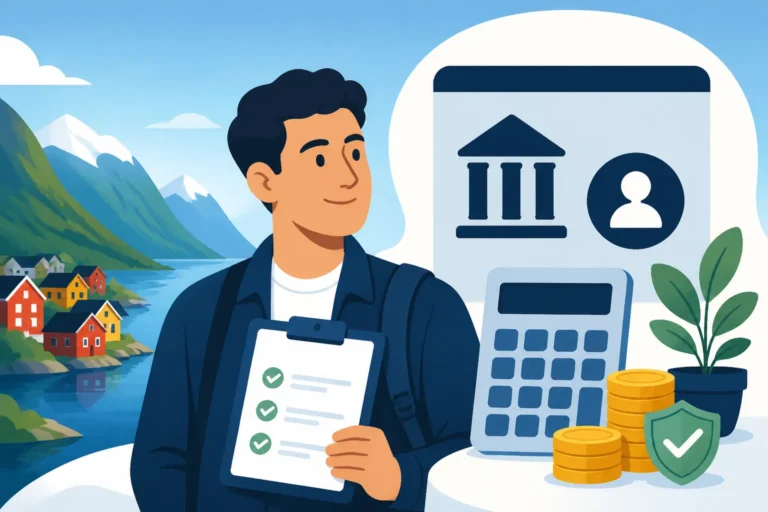
Ah, Vipps. If you've been in Norway for more than five minutes, you've probably heard this word, seen the distinctive purple logo, and likely felt a pang of frustration if you haven't managed to get it working yet. In a country that runs on digital payments, not having Vipps can feel like trying to navigate without a compass, making everything from splitting a bill with friends to paying for a second-hand sofa an unnecessarily complex ordeal. This guide is here to cut through the confusion and walk you through every requirement and step to finally get your Vipps account up and running.
What Exactly is Vipps and Why is it Essential in Norway?
Picture this: you've just finished a lovely dinner with some new Norwegian friends, the bill arrives, and everyone whips out their phones. "Just Vipps me," someone says, and suddenly, you're the one fumbling for cash or trying to figure out an international bank transfer. That's the reality without Vipps. It's Norway's ubiquitous mobile payment solution, so integrated into daily life that it's practically a national institution. It's more than just a payment app; it's a social glue and an absolute necessity for anyone living here.
Vipps in Daily Norwegian Life
From buying a coffee at a small independent cafe to paying your share of the hytte (cabin) rental, Vipps is everywhere. It's the primary way Norwegians send money to each other, a simple peer-to-peer transfer that's instant and effortless. Forget asking for bank account numbers; you just need a phone number. Beyond personal transfers, you'll find Vipps as a payment option when shopping online, paying for parking, donating to charities, or even paying school fees. It streamlines so many transactions that once you have it, you'll wonder how you ever managed without it. It truly embodies the Norwegian drive for efficiency and convenience, making everyday financial interactions almost invisible.
Many smaller businesses, especially market stalls, food trucks, or even local sports clubs selling raffle tickets, rely solely on Vipps. If you're out and about, especially outside the major city centers, you might encounter situations where cash isn't accepted, and card terminals aren't available, leaving Vipps as your only option. It’s also incredibly common in social settings – splitting restaurant bills, chipping in for a shared gift, or covering someone's share of groceries is almost exclusively done via Vipps. Without it, you're often left offering cash, which can feel awkward and out of sync with the local customs.
The Cashless Society Phenomenon
Norway has been at the forefront of the global movement towards a cashless society for years. Cash is increasingly viewed as an inconvenience, rarely carried, and sometimes even refused by businesses. The widespread adoption of digital payment methods like Vipps is a testament to this cultural shift. This isn't just about convenience; it's also about security and efficiency. Fewer cash transactions mean less risk of theft for businesses and individuals, and faster, more traceable payments. For expats, understanding this isn't just a fun fact; it's a crucial adaptation to living here. Relying on your home country's bank card or carrying cash will inevitably lead to frustrating moments.
This shift impacts virtually every aspect of financial life. Even minor transactions, which in many other countries would involve a few coins, are handled digitally here. This includes things like small donations at bake sales, buying a single piece of fruit from a roadside stand, or paying a small fee for a community event. If you're moving to Norway, embracing this digital-first approach to money, with Vipps at its core, isn't optional; it's essential for a smooth integration into daily life and avoiding those awkward moments of being unable to pay or participate.
The Absolute Must-Haves: Core Requirements for Vipps
Alright, let's get down to brass tacks. Setting up Vipps isn't a walk in the park for everyone, especially if you're fresh off the plane. There are a few fundamental requirements that act as gatekeepers, and if you don't have them in place, you'll hit a wall. Trust me, I've been there, and it can be maddening.
Norwegian Bank Account: The Foundation
This might seem obvious, but it's the absolute first hurdle. To use Vipps, you must have a personal bank account with a Norwegian bank. Vipps links directly to this account, enabling instant transfers. You can't connect it to an international bank account, a Wise account (as handy as Wise is for international transfers, it won't cut it for Vipps), or any other non-Norwegian financial institution. This means that before you even think about Vipps, you need to sort out your banking in Norway.
Opening a bank account in Norway as a foreigner can be surprisingly complicated, often requiring a fødselsnummer (11-digit national identity number) or at least a D-nummer (a temporary identification number). While some banks might allow you to open an account with just a D-nummer initially, getting a BankID, which Vipps then requires, is often contingent on having a fødselsnummer. This creates a frustrating chicken-and-egg scenario for many newcomers. For a deeper dive into this, you might find our guide on Banking in Norway: How to Open an Account as a Foreigner incredibly useful, as it breaks down the often-confusing process.
Fødselsnummer or D-nummer: Your Digital Identity
This is perhaps the most significant point of friction for many expats. Vipps requires a valid Norwegian identification number to verify your identity. Ideally, this would be your fødselsnummer, which is your permanent, 11-digit national identity number. However, if you're a new arrival, especially someone on a D-nummer (a temporary ID number used for administrative purposes), getting Vipps can be tricky. Historically, Vipps did allow registration with a D-nummer, but eligibility has tightened significantly. As of my last check, most major Norwegian banks will only issue BankID to those with a fødselsnummer.
The D-nummer is typically issued to those staying in Norway for less than six months or those who don't meet the criteria for a fødselsnummer right away, such as certain short-term workers or those who haven't yet registered their move to Norway officially with the National Registry (Folkeregisteret). While essential for things like tax payments or opening a basic bank account, its temporary nature often limits access to full digital services like BankID and, consequently, Vipps. Understanding the nuances between these two numbers is critical, and our article on D-Number vs Fødselsnummer: How It Affects Your Banking Options can provide much-needed clarity.
BankID: The Digital Key to Everything
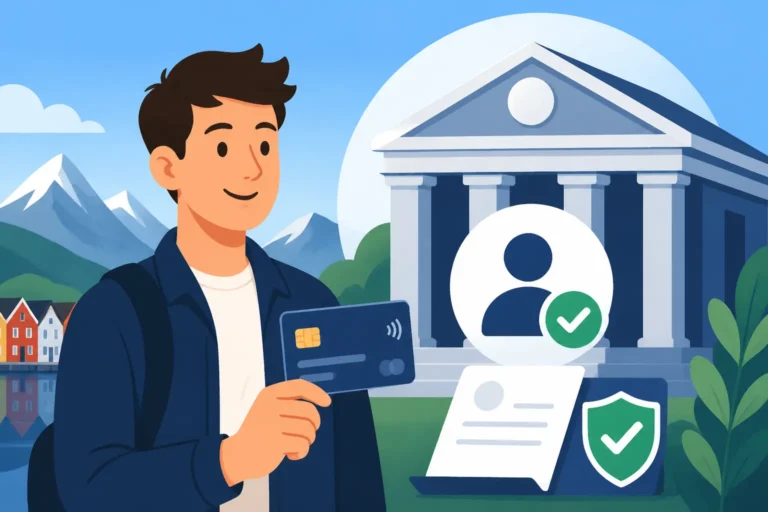
This is the big one. Vipps requires you to authenticate your account setup using BankID, Norway's national electronic identification system. Think of BankID as your digital signature, driver's license, and passport all rolled into one secure package. You use it to log into government services like Helsenorge or Skatteetaten, sign contracts, and, crucially, activate services like Vipps. Without BankID, Vipps simply isn't an option.
Getting BankID is often the biggest hurdle for expats. It is issued by your Norwegian bank, and as mentioned, most banks require you to have a fødselsnummer to obtain it. Even if you have a D-nummer and a Norwegian bank account, many banks will tell you that a fødselsnummer is a prerequisite for BankID. This can be incredibly frustrating, especially when you feel stuck in a loop: you need Vipps for daily life, but you need BankID for Vipps, and you need a fødselsnummer for BankID, which can take time to get. This brings us neatly to the next section…
Navigating the BankID Hurdle: Especially for New Arrivals
I can't stress this enough: BankID is the key. And for many expats, it feels like it's locked behind several impenetrable doors. The frustration of trying to set up essential services in Norway without this digital golden ticket is a rite of passage for many of us. You're told you need it for everything, but actually getting it is another story entirely.
Why BankID is Such a Sticking Point for Expats
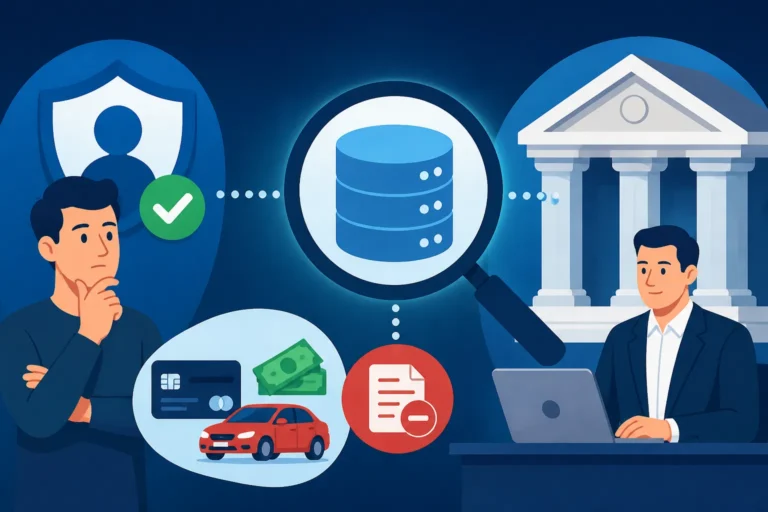
The main reason BankID is such a headache for expats, particularly those on a D-nummer, is related to the banks' identification and security protocols. For a bank to issue you a BankID, they need to be absolutely certain of your identity, and they need a permanent record of you in the Norwegian system. A fødselsnummer provides that permanent, unique identifier, linking you directly to the National Registry. A D-nummer, being temporary, doesn't quite offer the same level of long-term certainty from a bank's perspective. It's a bureaucratic bottleneck that often leaves perfectly legitimate residents without access to crucial digital services.
This policy isn't meant to be discriminatory, but it certainly feels like it when you're caught in the trap. You have a job, a place to live, a bank account, and you're paying your Taxes for Expats diligently, but you're still locked out of the digital infrastructure. It's a prime example of how Norway's otherwise efficient digital systems can create significant friction for those who don't fit the standard fødselsnummer mold from day one. Many expats recount countless calls to banks, UDI, and Skatteetaten, trying to find a loophole, only to be met with the same unhelpful answers.
The D-nummer to Fødselsnummer Transition and BankID Access
For most long-term expats, the path to BankID and thus Vipps involves transitioning from a D-nummer to a fødselsnummer. This transition usually happens when you officially register your move to Norway with the National Registry (Folkeregisteret) after receiving a residence permit for more than six months. Once you have your fødselsnummer, you can then present it to your Norwegian bank. At this point, getting BankID becomes much more straightforward. The bank will typically require an in-person visit to verify your identity with your passport and then activate your BankID.
This process can take weeks or even months after arriving, depending on UDI processing times for your residence permit and then the Folkeregisteret appointment. It's a waiting game, and during this waiting period, you'll be feeling the pinch of not having Vipps. Patience is absolutely key here, frustrating as it may be. While you're waiting for your fødselsnummer to arrive, read our guide on Overcoming the BankID Block: Workarounds for D-Number Holders to see if any temporary solutions might ease your digital burden.
Temporary Workarounds (and why they're not a replacement)
While you're in that frustrating limbo between arrival and fødselsnummer acquisition, there are a few very limited workarounds, but it's important to understand they are not a replacement for Vipps and BankID.
- Using your bank card for everything: For in-store purchases and many online transactions, your regular Norwegian debit card will work just fine. You can pay with card almost everywhere.
- International payment apps: Some people try to use international money transfer services like Wise or Revolut for splitting bills. While useful for transferring money to and from Norway, these services cannot directly integrate with the Norwegian digital payment ecosystem in the same way Vipps does. Your friends will still have to send money to your Norwegian bank account number, not your phone number, and it won't be instant like Vipps.
- Asking a trusted friend: In a pinch, you can ask a Norwegian friend to "Vipps" on your behalf and then pay them back via bank transfer or cash. This is far from ideal for independence and only works in situations where you are with someone you trust implicitly.
- Cash: In very rare instances, cash might be your only alternative, but as discussed, Norway is largely cashless, and many places prefer not to deal with it.
These workarounds are exactly that – temporary fixes. They highlight just how deeply embedded Vipps and BankID are in the Norwegian system and underscore the urgency of getting your fødselsnummer and subsequently BankID as soon as possible.
Step-by-Step: How to Actually Set Up Vipps
So, you've got your Norwegian bank account, you've successfully navigated the fødselsnummer and BankID maze, and you're ready to join the purple revolution. Congratulations! The actual setup process for Vipps itself is remarkably straightforward once those initial requirements are met. It’s designed to be intuitive, reflecting Norway’s overall commitment to digital ease, once you’re in the system.
Downloading the App and Initial Registration
The first thing you’ll need to do is download the Vipps app. It’s available for both iOS and Android devices, just search for "Vipps" in your app store. Once downloaded, open the app, and you'll be prompted to start the registration process.
You'll need to enter your Norwegian phone number. This is crucial as your phone number acts as your unique identifier within the Vipps system. It’s how people will find you and send you money. You’ll then receive a verification code via SMS to confirm that you own the number. This is a standard security measure. After entering the code, you'll be asked to create a personal four-digit PIN code. Remember this code; you'll use it to log into Vipps and confirm payments, much like a traditional bank PIN. It's important to choose a unique PIN that you don't use for other services to maintain security.
Linking Your Norwegian Bank Account and Card
Once your phone number is verified and you've set up your PIN, the app will guide you to link your Norwegian bank account. This is where your BankID comes into play. You’ll be redirected to your bank’s secure BankID login page (it usually pops up within the Vipps app or opens in a browser). Here, you'll log in using your BankID credentials, just as you would for your online banking. This secure login authorizes Vipps to access necessary information from your bank account to facilitate payments.
After successful BankID authentication, you'll be prompted to select which Norwegian bank account you want to link to Vipps. Most people link their primary checking account. You'll also need to register a payment card – typically your Norwegian debit card associated with that bank account. This card will be used as the default for payments you make through Vipps. The app will usually autofill much of this information once you've authenticated with BankID, making the process relatively seamless. Double-check that all details are correct before proceeding to avoid any future payment issues.
Verification and Getting Started
After linking your bank account and card, Vipps usually performs some final verification steps. This might involve a small, temporary transaction to ensure the card is valid, or simply an internal check with your bank. Once everything is verified, your Vipps account will be active!
You'll often get a confirmation message within the app, and you can then navigate to the main screen. Here, you'll see options to send money, receive money, pay bills, and explore other features. To send money to someone, you just need their phone number. For example, if you're splitting the cost of groceries with a friend after a trip to Rema 1000 or Kiwi, you just type in their number, the amount, and a brief message. It's truly that simple once you're past the initial hurdles. Don't hesitate to poke around the app and familiarize yourself with all its functions. You'll be a Vipps pro in no time.
Beyond Basic Payments: Other Handy Vipps Features for Expats
Vipps is far more than just a person-to-person payment app. Once you're properly set up, you'll discover a whole ecosystem of features that simplify various aspects of life in Norway, from online shopping to managing subscriptions. It’s designed to be a central hub for many of your digital financial interactions.
Paying Bills (Regninger) and Subscriptions
One of the most underrated features of Vipps for expats is its bill payment functionality, often called "Vipps Faktura" or "Betal regning i Vipps." Instead of manually entering long KID numbers and account details into your online bank, many companies in Norway now offer the option to send their bills directly to your Vipps app. When you receive a bill this way, you get a notification, and with a few taps and your Vipps PIN, you can approve the payment. It’s incredibly convenient and significantly reduces the risk of making errors when transferring money.
This extends to managing various subscriptions and recurring payments too. Many services, from public transport passes with Ruter to gym memberships or streaming services, allow you to set up recurring payments directly through Vipps. This means you can keep track of your regular outflows directly within one app, rather than logging into multiple portals. It offers a transparent and efficient way to handle your monthly finances, especially helpful when trying to keep track of your overall Cost of Living in Norway 2026: Budgeting for Singles and Families.
Shopping Online and In-Store with Vipps
Just as it dominates peer-to-peer payments, Vipps has a significant presence in retail. When shopping online in Norway, you'll often see "Pay with Vipps" as an option alongside traditional card payments. Clicking this usually opens the Vipps app on your phone, where you confirm the payment with your PIN. This removes the need to constantly type in card numbers and expiry dates, making online transactions faster and more secure.
In physical stores, while card payments are still dominant, some smaller shops, pop-up markets, or even vending machines might offer "Vipps" as a payment method. This usually involves scanning a QR code or entering a short "Vipps nummer" associated with the business. It’s part of the wider trend towards a Cashless Norway: Vipps, Debit Cards, and the Disappearance of Cash. Moreover, the app sometimes features local deals and loyalty programs, allowing you to save a few kroner here and there at participating retailers.
Vipps for Businesses and Organizations (Vipps Go, Vipps Fiks Ferdig)
Vipps isn't just for individuals; it's a vital tool for businesses and organizations across Norway, from small entrepreneurs to large corporations.
- Vipps Go: This feature is popular for smaller businesses, clubs, or events. It allows customers to order and pay for goods or services directly through the Vipps app, often for things like takeaway food, event tickets, or merchandise. You simply find the business in the app, select your items, and pay. No separate ordering system or payment terminal needed.
- Vipps Fiks Ferdig: For those who buy and sell second-hand goods on platforms like Finn.no, "Vipps Fiks Ferdig" offers an integrated solution for both payment and shipping. It handles secure payment and simplifies the logistics of sending and receiving items, providing peace of mind for both buyer and seller. This is particularly useful in Norway, where buying second-hand is very popular for everything from furniture to clothing.
These features make Vipps an integral part of the Norwegian commercial landscape, offering convenience and security for both consumers and providers. Understanding these applications enhances your ability to participate fully in the local economy.
Common Issues and Troubleshooting for Expats
Let's be real, even with the best intentions, technology can throw curveballs, and Vipps is no exception. For expats, these issues can be compounded by language barriers or a lack of familiarity with Norwegian administrative processes. Don't worry, many of us have faced similar frustrations.
"Why Can't I Get BankID with My D-nummer?"
This is the perennial question, and it's perhaps the most common source of despair for new arrivals. As we've discussed, the core of the issue is that most Norwegian banks are increasingly strict about requiring a fødselsnummer to issue BankID. If you've tried to get BankID with a D-nummer and been rejected, you are not alone. The simple (and frustrating) answer is: you likely can't, at least not with the major banks.
Your best course of action is to focus on obtaining your fødselsnummer as quickly as possible. This involves having a valid residence permit for more than six months and registering with the National Registry (Folkeregisteret). Once you have your fødselsnummer, revisit your bank. Be prepared to go in person with your passport, as they'll need to verify your new identity number. If you've been working, your employer might also be able to assist in ensuring your fødselsnummer registration is prioritized, as it's crucial for things like your Filing Your Tax Return (Skattemelding): Deadlines and Common Deductions. Remember, some smaller, regional banks might have slightly different policies or be more flexible, but this is increasingly rare.
Dealing with Account Freezes or Suspicious Activity
Like any financial app, Vipps has robust security measures in place. Occasionally, this can lead to an account being temporarily frozen or flagged for suspicious activity. This might happen if:
- You make a very large payment that's unusual for your typical transaction history.
- You try to log in from a new or unrecognized device multiple times.
- There's an attempt to link a new bank account or card.
- You use Vipps too frequently in a short period, especially for commercial-like transactions if you don't have a business Vipps account.
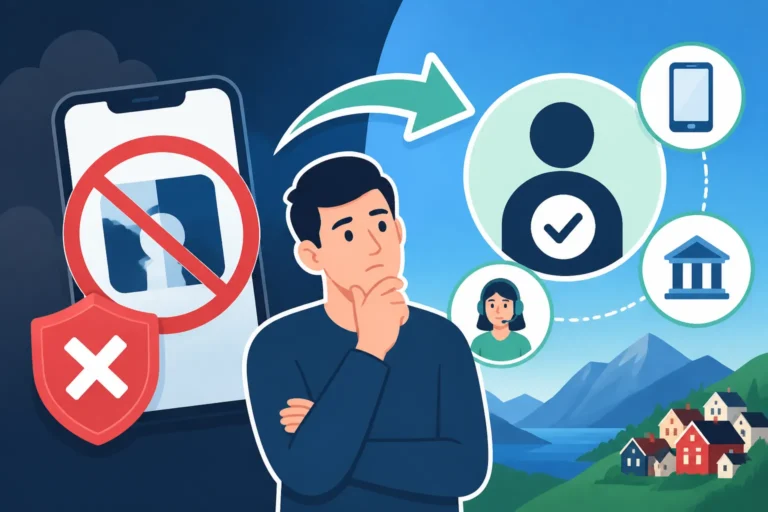
If your account is frozen, you'll usually receive an in-app notification or an SMS/email from Vipps customer service. Always be cautious of scam messages! Never click on suspicious links. The best approach is to contact Vipps customer service directly through their official channels (their website or the phone number listed on the app). They will guide you through the process of verifying your identity, which might involve using BankID again, to unblock your account. It's an inconvenience, but a sign that their security systems are working.
What to Do If You Change Banks or Phone Numbers
Life in Norway involves changes, and that includes your financial setup. If you change your Norwegian bank or get a new phone number, you'll need to update your Vipps account.
- Changing Banks: If you switch banks, you'll need to update the linked bank account and card in your Vipps app. This typically involves going into the app's settings, selecting "Banker og kort" (Banks and cards), and adding your new bank account using your BankID from your new bank. You might need to delete the old bank connection first. It’s a straightforward process, but remember, if your new bank doesn't issue you BankID (perhaps due to your D-nummer status), you'll be stuck.
- Changing Phone Numbers: Your phone number is your primary identifier for Vipps. If you get a new Norwegian phone number, you'll need to update this in your Vipps profile. Go to the settings in the app, find the option to change your phone number, and follow the prompts. You'll likely need to verify the new number via SMS and potentially re-authenticate with BankID. Ensure you do this promptly, otherwise, people will be sending money to your old number!
Staying on top of these administrative updates ensures your Vipps account remains functional and secure, integrating seamlessly with your financial life in Norway.
Essential Requirements for Vipps
| Requirement | Description | Why it's Important |
|---|---|---|
| Norwegian Phone Number | A registered phone number with a Norwegian mobile operator. | Your primary identifier for sending/receiving money, and crucial for SMS verification during setup. |
| Norwegian Bank Account | A personal bank account with a bank based in Norway. | Vipps links directly to this account for all transactions; international accounts are not supported. Refer to Best Norwegian Banks for Expats: DNB, Nordea, SpareBank 1, and Sbanken. |
| Fødselsnummer (preferred) or D-nummer | Your 11-digit national identity number (Fødselsnummer) or temporary D-nummer. | Required for identity verification and linking to BankID. Fødselsnummer is almost always necessary for BankID. |
| BankID | Norway's digital identification system, issued by your Norwegian bank. | Essential for authenticating and activating your Vipps account securely. The biggest hurdle for D-nummer holders. |
| Payment Card (Debit) | A Norwegian debit card linked to your Norwegian bank account. | Used as the default payment method within Vipps. |
| Valid ID (Passport) | For in-person bank visits to obtain BankID or verify identity. | Banks require official identification to issue BankID and set up accounts securely. |
This table simplifies the main requirements, but as you can see, the path through them, especially the BankID bit, can feel like a labyrinth. But trust me, once you're through it, the convenience of Vipps will make all the struggle worthwhile.
Disclaimer
Please remember that I'm a blogger offering advice based on my experience and publicly available information. While I strive for accuracy, banking regulations and app requirements in Norway can change. Always check the official Vipps website, your bank's terms, or contact Vipps customer service directly for the most current and authoritative information. This guide should not be taken as legal or financial advice.