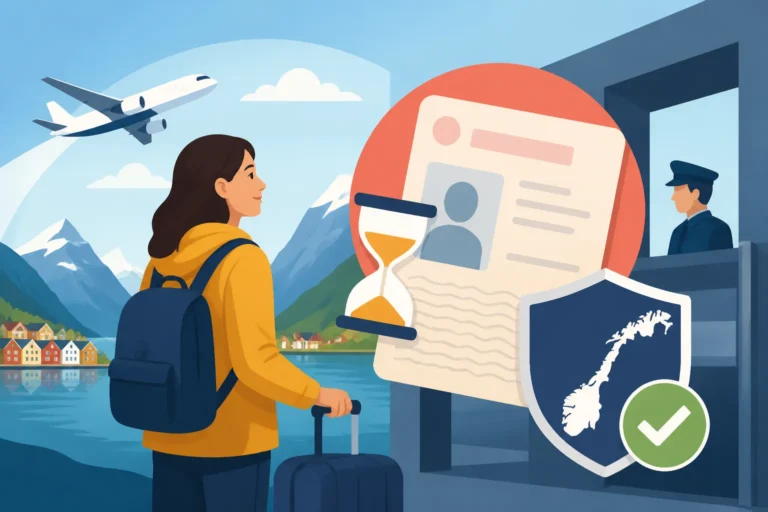
Remote Work from a Norwegian Cabin: Am I Breaking Visa Rules?
Ah, the siren song of the Norwegian cabin! This is often heard from fellow expats and would-be residents. Imagine: a cozy little hytte nestled by a fjord or tucked away in the mountains, a warm cup of coffee, and your laptop humming, connecting you to clients or your company back home. It sounds absolutely idyllic, a perfect blend of Norwegian nature and modern flexibility. But before you pack your bags and dream of logging into your Monday morning meeting with a view of snow-capped peaks, we need to have a serious chat about Norwegian visa rules. The reality, I'm afraid, isn't quite as flexible as the mountains are grand. This guide will clarify the thorny issue of remote work in Norway, cutting through the myths to give you the unvarnished truth about what's legally allowed.
The Dream of a Norwegian Cabin Office vs. Visa Realities
The vision of working remotely from a rustic Norwegian cabin, perhaps during a long vacation, is deeply appealing. Many envision a simple scenario: you're still employed by your company abroad, so you're not taking a job from a Norwegian citizen, and your income isn't even touching the local economy directly (or so it seems). What could possibly be the problem? You're just a tourist enjoying the scenery, right? Well, the Norwegian Directorate of Immigration (UDI) and local authorities see things quite differently, and misunderstanding this distinction can lead to some rather unpleasant surprises.
What "Remote Work" Means to Immigration Authorities
When immigration authorities, particularly in a country with stringent labor and social welfare laws like Norway, define "work," they cast a very wide net. It's not just about drawing a salary from a Norwegian employer or actively seeking local employment. For UDI, "work" generally encompasses any activity that generates income or is performed in a professional capacity, regardless of where the employer is located or where the money originates. This means that if you are performing tasks for which you are paid, whether it's coding, writing, consulting, or managing projects, you are considered to be working.
Consider a hypothetical: Maria, an American marketing consultant, decides to spend three months in Norway on a tourist visa. She plans to continue working for her US-based clients, believing that since her income isn't Norwegian, it won't be an issue. However, from Norway's perspective, Maria is engaging in gainful activity on Norwegian soil. She is using local infrastructure, potentially benefiting from local services (like internet providers), and performing duties that, if discovered, would be seen as unauthorized work. The intent here is crucial: if the primary purpose of your stay, even partly, is to perform your professional duties and earn money, it likely falls under "work" in the eyes of immigration officials.
The Tourist Visa Trap for Digital Nomads
This broad definition of "work" is precisely why the standard tourist visa, including the Schengen visa for most non-EU/EEA nationals, is a veritable trap for aspiring digital nomads. A tourist visa is explicitly granted for leisure, sightseeing, visiting family, or short-term business meetings – not for engaging in employment, even if it's remote. The terms and conditions are clear: you are not permitted to work. Many people mistakenly believe that as long as they aren't working for a Norwegian company, they are in the clear. This is simply not true in Norway, nor in many other Schengen countries.
Think of it this way: if you were to stand at the border, customs and immigration officers might ask about the purpose of your visit. If you truthfully state you're here to sightsee but also to continue your remote job, you could be denied entry immediately. They might ask for proof of sufficient funds for your stay without working, a return ticket, and accommodation details. Any indication that your primary or even secondary intention is to generate income while residing in Norway, even from a cabin, will raise red flags. Trying to skirt these rules is not worth the risk. It’s far better to understand Remote Work on a Tourist Visa: Why UDI Strictly Prohibits It before you embark on your journey.
Navigating Norway's Official Visa Categories for Work
So, if a tourist visa is out, what are your options for legitimately working remotely from a cozy Norwegian cabin or anywhere else in Norway? The truth is, securing a proper work visa or residence permit is almost always the required pathway. Norway offers specific categories designed for individuals who intend to work, and understanding these is your first step towards legal remote work.
The Skilled Worker Visa: Your Primary Route
The most common and straightforward path for non-EU/EEA citizens seeking to work in Norway, whether remotely or in an office, is the Skilled Worker Visa. This visa is designed for individuals who have a specific job offer from a Norwegian employer. While it might seem counterintuitive for remote work from a non-Norwegian employer, if your "remote work" involves being employed by a Norwegian company that allows you to work from home (or a cabin), this is your route.
To qualify, you typically need to meet several criteria:
- A Solid Job Offer: You must have a concrete job offer from a Norwegian company. This isn't just a casual agreement; it needs to be a signed employment contract.
- Qualified Skills: Your education and professional experience must match the requirements of the job, usually at a university degree level or with a vocational qualification.
- Salary Threshold: The salary offered must meet or exceed a specific threshold set by UDI, which is updated regularly. This ensures you can support yourself and aren't undercutting local wages. For more detailed information, definitely check out our guide on the Skilled Worker Visa in Norway: Eligibility, Salary Thresholds, and Process.
- Work Agreement: Your employment contract with the Norwegian company should clearly outline your remote work arrangement, including where you will be working from within Norway.
If you secure such a position, then yes, you could technically work remotely from a Norwegian cabin – provided that cabin is your registered address or a legitimate temporary workspace as agreed with your Norwegian employer. This is not "working for a foreign company," but rather "working for a Norwegian company with a remote setup." It’s a crucial distinction.
Considering the Independent Contractor Visa
Norway also has a specific permit for independent contractors or self-employed individuals, often referred to as the Independent Contractor Visa. This is distinct from the general skilled worker visa and often comes up in discussions about remote work. However, the catch here is that this permit is primarily designed for individuals who are self-employed and provide services to Norwegian clients.
The UDI requires that you have at least one significant contract with a Norwegian client. You can't just arrive in Norway and continue working for your international clientele and call yourself an independent contractor under this visa. You need to demonstrate a substantial and ongoing connection to the Norwegian market. This often means providing:
- Norwegian Client Contracts: Proof of legitimate contracts for work with Norwegian companies or individuals.
- Business Plan: A detailed plan outlining your business activities, financial projections, and how you will market your services within Norway.
- Financial Viability: Evidence that your business is financially sound and will generate enough income to support yourself in Norway.
If your "remote work" primarily involves services for foreign clients, this visa category, as it currently stands, isn't usually the right fit. The intent is to allow self-employed individuals to contribute to the Norwegian economy directly. You'll find more insights into this specific path in our guide on The Independent Contractor Visa: Why You Need a Norwegian Client. This is where accurate documentation, including translated contracts, becomes essential. You might want to consider professional services like RushTranslate or Translayte to ensure your business plans or foreign contracts are perfectly translated for UDI's review.
Exploring the Specifics of a Norway Digital Nomad Visa
Now, a lot of people ask about a "Digital Nomad Visa" for mainland Norway. The reality is, Norway does not have a general digital nomad visa that allows individuals to simply live and work remotely for foreign companies on the mainland. This is a common misconception, often fueled by the existence of such visas in other European countries.
However, there is a unique and often misunderstood exception: Svalbard. The archipelago of Svalbard, being outside the Schengen Area and having different immigration rules, has a unique visa policy. Theoretically, anyone can live and work on Svalbard, provided they can prove they can support themselves financially and have accommodation. This has led some to label it a "digital nomad paradise."
But even the Svalbard route isn't a simple "work from a cabin" dream without complications:
- Accommodation Crisis: There's an acute housing shortage in Svalbard, making it incredibly difficult to find a place to live, especially long-term.
- Cost of Living: Svalbard is notoriously expensive.
- Limited Services: It's an Arctic environment with specialized infrastructure.
- Mainland Norway Access: While you don't need a visa to enter Svalbard, if you transit through mainland Norway, you still need a Schengen transit visa if your nationality requires one.
- Taxation: If you reside on Svalbard for more than 12 months, you become a tax resident there, but the rules are complex, especially if you also maintain ties to your home country.
So, while Svalbard offers a path that looks like "digital nomading," it's not applicable to mainland Norway and comes with its own set of very specific challenges. You can delve into the full details in our comprehensive article, The Svalbard Digital Nomad Route: Living in the Arctic Without a Visa, and also get a broader understanding from Norway Digital Nomad Visa: Independent Contractor vs Svalbard Routes.
The Perils of a "Work-From-Vacation" Approach
Attempting to merge a holiday with unauthorized remote work might seem like a clever workaround to avoid the complexities of visa applications, but it carries significant and potentially long-lasting risks. The Norwegian authorities are serious about immigration laws, and what might seem like a harmless personal activity to you could be interpreted as a serious breach.
Why UDI Takes a Hard Line on Unauthorized Work
Norway, like many developed nations, has strict immigration policies for several reasons. Primarily, it's about protecting the domestic labor market, ensuring fair competition, and maintaining the integrity of its social welfare system. If individuals could freely enter on tourist visas and work remotely, it would undermine the controlled immigration process designed to manage who comes into the country, what skills they bring, and how they contribute to society.
UDI's stance is unequivocal: if your purpose of visit includes any form of remunerated activity, you need a permit that explicitly allows it. They don't differentiate between working for a Norwegian company or a foreign one if that work is performed while physically present in Norway. The location of the work is Norway, regardless of the employer's headquarters. This prevents a "shadow economy" of undocumented workers and ensures that all individuals contributing to the economic sphere within Norway are properly registered, paying taxes (if applicable), and complying with labor laws. They consider such rules essential for maintaining the stability and fairness of their society.
Potential Repercussions: From Fines to Deportation
The consequences of being caught working illegally in Norway can be severe, extending far beyond simply being asked to stop. It's not just a slap on the wrist.
- Denied Entry or Removal: If caught at the border, you will be denied entry and sent back home on the next available flight. If you're discovered already within Norway, you could face immediate removal.
- Fines: You could be issued a significant fine. Norwegian fines can be quite hefty, and ignorance of the law is generally not accepted as an excuse.
- Deportation and Entry Bans: This is perhaps the most serious consequence. You could be deported from Norway and banned from re-entering not just Norway, but the entire Schengen Area for a period of several years (typically 2-5 years). Imagine trying to visit family or explore other European countries only to find yourself blacklisted due to an earlier transgression. This also impacts future visa applications to any other country, as immigration authorities share information.
- Impact on Future Applications: Any record of visa violation will severely jeopardize future applications for Norwegian visas (including skilled worker, family reunification, or even tourist visas) and potentially visas for other countries. UDI has a long memory, and it's notoriously difficult to overcome a past violation. It's crucial to ensure you understand Visas and Residence Permits in Norway: The Complete UDI Guide (2027) to avoid such pitfalls.
Legitimate Ways to Live and Work from Norway (Cabin or Otherwise)
While the dream of a "work-from-vacation" remote setup on a tourist visa is generally a non-starter for mainland Norway, there are indeed legitimate avenues to live and work in this beautiful country, even if your preferred "office" is a rustic cabin. It just requires proper planning and adherence to the legal framework.
The Unique Case of Svalbard
As mentioned, Svalbard stands as a unique exception. Because it falls outside the Schengen Agreement and has a different set of regulations outlined in the Svalbard Treaty, there's no visa requirement for foreign nationals to live and work there. However, this freedom comes with its own set of practical realities:
- Self-Sufficiency: You must prove you can support yourself financially and have a place to live. Svalbard isn't a place to go looking for work upon arrival unless you have pre-arranged employment and housing.
- The Environment: It's an Arctic wilderness. Life is physically demanding, expensive, and services are limited. The "cabin life" there is far from the cozy, easily accessible idyllic scene imagined on the mainland.
- No Norwegian Social Security: You generally don't get access to Norway's mainland social security benefits, including healthcare, unless you're employed by a Norwegian company based on Svalbard that contributes to the national insurance scheme. This means you might need robust private insurance.
- Limited Digital Nomad Infrastructure: While internet is available, finding reliable, high-speed connections in truly remote cabins might be challenging, and the overall infrastructure isn't geared towards a large influx of digital workers.
For those seriously considering Svalbard, be aware that it’s not a simple escape route for mainland visa issues but rather a distinct and demanding lifestyle choice. It’s a very niche solution, not a general "remote work from Norway" option.
Ensuring Your Documents Are in Order
Regardless of which legitimate pathway you pursue – whether it's a skilled worker visa, an independent contractor visa, or even the unique Svalbard route – meticulous documentation is non-negotiable. UDI and other Norwegian authorities are sticklers for detail, and incomplete or improperly translated documents can cause significant delays or even outright rejection.
When applying for any residence permit or visa, you will likely need to submit a range of documents, including:
- Originals and Copies: Always have both.
- Translated Documents: If your educational certificates, work contracts from abroad, or business plans are not in Norwegian or English, they will need to be officially translated. This is where professional translation services become invaluable. Reputable services like RushTranslate or Translayte can provide certified translations that are accepted by UDI. They understand the nuances of legal and official documents, ensuring that your application doesn't get stalled due to translation errors. Remember, even if you are fluent, a self-translation is often not accepted. You'll want to review our guide on Document Translation for UDI: Do I Need an Apostille Stamp? for specific requirements.
- Proof of Funds: Bank statements, employment contracts with salary details, or business accounts to show you can support yourself.
- Accommodation Proof: Rental contracts or property deeds.
- Passport and Photos: Valid travel document and passport-style photos meeting specific standards.
Navigating the Norwegian immigration system requires patience and precision. Don't underestimate the bureaucracy; it moves slowly but thoroughly. Starting early, gathering every single required document, and ensuring they are all correctly translated and authenticated will save you immense stress down the line. It's also wise to understand the difference between a D-Number vs Fødselsnummer: How Immigration Status Dictates Your ID as this will affect many aspects of your life, including banking and access to services.
Securing a Proper Work Visa
Ultimately, for most people dreaming of remote work from a Norwegian cabin, the most viable and legal solution is to secure a proper work visa. This means either:
- Finding a Job with a Norwegian Employer: This is the most common path. If you get a job offer from a Norwegian company that allows for a remote working arrangement (e.g., you can work from your home or cabin), then you will apply for a Skilled Worker Visa in Norway: Eligibility, Salary Thresholds, and Process. This gives you full residency rights, access to the national insurance scheme, and the peace of mind of legal employment.
- Qualifying as an Independent Contractor for Norwegian Clients: If your skills are in demand in Norway and you can secure contracts with Norwegian businesses, you could potentially apply for the Independent Contractor Visa. This allows you to live in Norway and bill Norwegian clients for your services, maintaining a flexible work arrangement. Again, refer to The Independent Contractor Visa: Why You Need a Norwegian Client for the specific conditions.
In both these scenarios, you are officially recognized as a worker in Norway, contributing to the tax system, and abiding by the immigration rules. This is the only way to truly enjoy the beautiful Norwegian scenery, whether from a city apartment or a remote cabin, without the constant worry of violating visa terms.
| Visa Type | Remote Work Eligibility (Non-Norwegian Employer) | Key Requirements | UDI Stance |
|---|---|---|---|
| Tourist/Schengen Visa | No. Strictly prohibited. | Proof of funds, return ticket, no intent to work. | Any "work" is a violation, regardless of employer location. |
| Skilled Worker Visa | Yes, if primary employment is for a Norwegian employer, and specific remote work clauses are in contract. | Job offer from Norwegian company, relevant education/experience, salary threshold, written employment contract. | Focus is on Norwegian employment, remote clauses allowed within that framework. |
| Independent Contractor Visa | Yes, if primary income is from a Norwegian client, fulfilling specific criteria. | Contract(s) with Norwegian client(s), minimum income, relevant experience, comprehensive business plan. | Requires a clear "Norwegian connection" for work to contribute to local economy. |
| Digital Nomad Visa (Svalbard) | Yes, for residents of Svalbard meeting specific criteria. | Sufficient funds, accommodation, return ticket, no direct work for mainland Norway firms. | Unique for Svalbard due to treaty, not applicable to mainland. |
The allure of working remotely from a Norwegian cabin is understandable, but the reality of immigration laws requires a pragmatic approach. Norway values its structured system, and attempting to circumvent it will likely lead to regret. By understanding the rules, exploring legitimate visa pathways, and preparing your documentation meticulously, you can eventually turn that remote work dream into a fully compliant, blissful reality.
Disclaimer
The information provided in this guide is intended for general informational purposes only and does not constitute legal advice. Immigration laws and regulations in Norway can change frequently. While we strive to keep our content up-to-date, we cannot guarantee its absolute accuracy or completeness at all times. For specific advice regarding your individual situation, it is highly recommended to consult directly with the Norwegian Directorate of Immigration (UDI) or a qualified immigration lawyer in Norway. Relying solely on the information presented here without professional verification is done at your own risk.