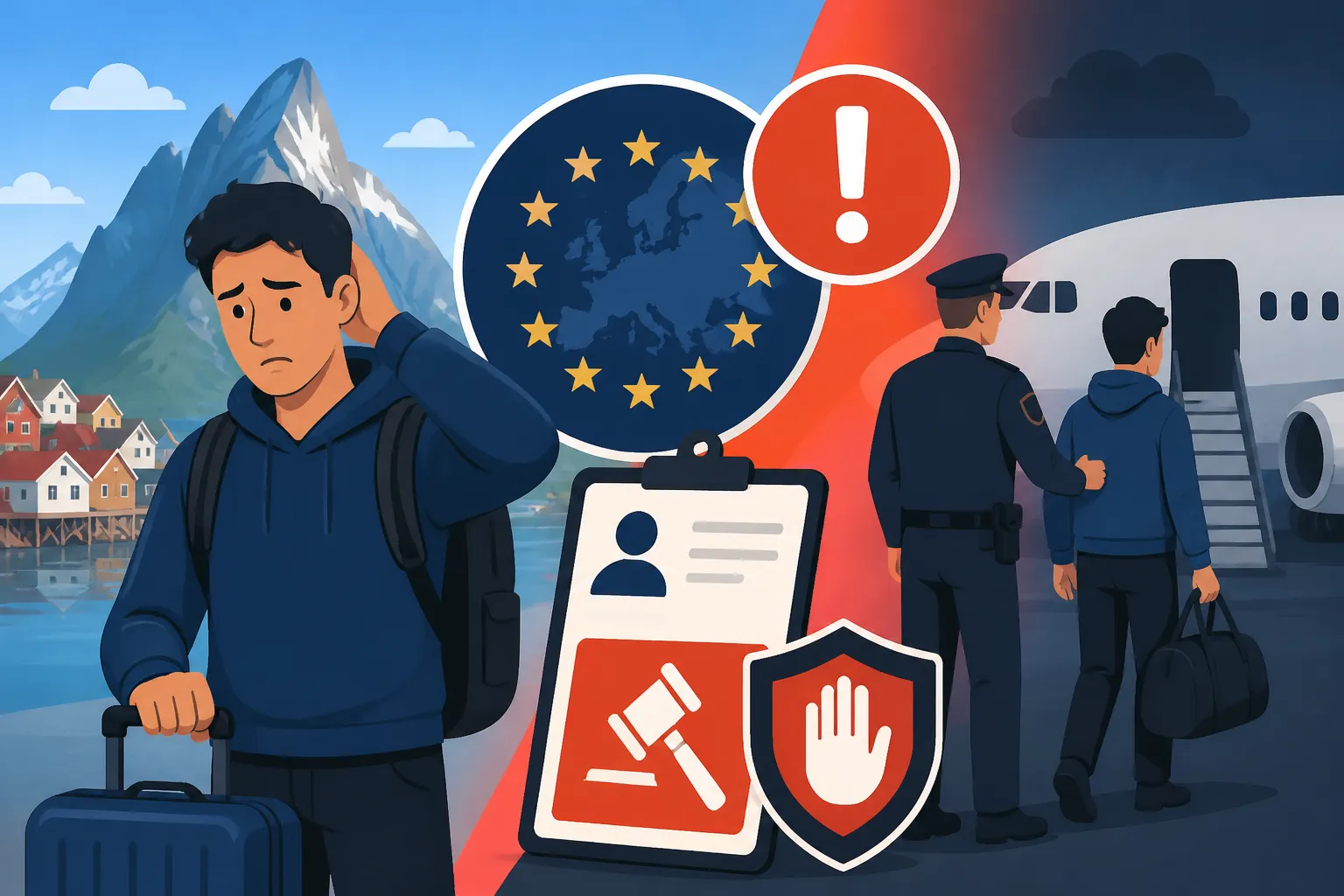
Overstaying a Schengen Visa in Norway: Penalties and Deportation Risk
It’s a scenario no one wants to face, but it happens more often than you might think: you’ve lost track of your days, misunderstood the rules, or simply fallen in love with Norway and stayed a little too long. Overstaying your Schengen visa can feel like a terrifying cliff edge, with severe consequences ranging from hefty fines to future travel bans and even deportation. This guide is here to walk you through the realities, potential penalties, and crucial steps you need to take if you find yourself in this incredibly stressful situation.
Understanding the Schengen Visa and Its Limits
Navigating the intricacies of international travel and visa regulations can be a headache, even for seasoned globetrotters. The Schengen Area, which Norway is a part of, operates under a very specific set of rules, and a simple miscalculation can lead to significant problems. It's not just about getting into the country; it's about understanding how long you can truly remain here.
The 90/180-Day Rule in Detail
This is the golden rule for most short-stay visitors to the Schengen Area, and it's where many people stumble. The "90/180-day rule" means that you can stay in the Schengen Area for a maximum of 90 days within any 180-day period. Crucially, this isn't 90 days per calendar year, nor is it 90 consecutive days. It's a rolling window. Every time you wish to enter the Schengen Area, you need to look back 180 days from that planned entry date and count how many days you've already spent within the zone during that period. If that count is less than 90, you can enter. If it hits 90, you can't.
Imagine you spent 60 days in Norway in January and February, then left. If you want to come back in June, you need to count how many of those January-February days fall within the 180-day window preceding your June entry. It can be incredibly confusing to track manually, especially if you've made multiple trips in and out of the Schengen zone. Many expats and frequent travelers use online Schengen calculators to avoid accidental overstays. Missing this simple calculation is often the root cause of what people perceive as an "accidental" overstay.
What complicates it further is that the clock doesn't reset just because you leave one Schengen country and enter another. The entire Schengen Area is treated as one single entity for visa duration purposes. So, if you spend 30 days exploring the fjords of Norway, then hop over to France for another 30 days, and then decide to ski in the Alps for 30 more, you've hit your 90-day limit within that 180-day window. You would then need to leave the Schengen Area entirely and wait until enough days have passed outside the zone for your "used" days to cycle out of the 180-day look-back period.
What Exactly is a Schengen Visa?
At its core, a Schengen visa is a short-stay visa that allows the holder to travel to any member country of the Schengen Area for tourism, visiting family, business, or short-term study. It's usually issued for a maximum stay of 90 days within that rolling 180-day period we just discussed. It can be a single-entry visa, meaning once you leave the Schengen Area, you can't re-enter even if you haven't used all 90 days. More commonly, for tourists, it's a multiple-entry visa, allowing you to enter and exit multiple times as long as you don't exceed the 90-day total within any 180-day period.
The purpose of the Schengen visa is for short, temporary stays. It is absolutely not a pathway to long-term residency or employment in Norway or any other Schengen country. Attempting to use a Schengen visa for purposes other than those it was issued for, such as working illegally or seeking permanent residence without proper authorization, will almost certainly lead to immediate refusal of entry, visa cancellation, or even deportation if discovered while already inside the country.
It's also important to differentiate between the "duration of stay" and the "validity" of your visa. A visa might be valid for six months, but that doesn't mean you can stay for six months. It means you can use your 90 days of stay anytime within that six-month period. For example, your visa could be valid from January 1st to June 30th, but your permitted stay is still only 90 days within any 180-day rolling period. Always double-check both dates on your visa sticker.
D-Visas and Other Exceptions
While the Schengen visa (Type C) is for short stays, there are other types of visas and permits that allow for longer periods in Norway, and these are often confused with the standard Schengen tourist visa. The most common of these is the National Visa (Type D), which is issued by an individual Schengen country (like Norway) for stays longer than 90 days. This could be for purposes such as studying, working, or family reunification. A D-visa allows you to stay in the issuing country for longer than 90 days, and it also permits transit through other Schengen countries to reach your destination in Norway.
Once you arrive in Norway on a D-visa, you'll typically need to apply for a formal residence permit (oppholdstillatelse) with the UDI (Norwegian Directorate of Immigration) and register with the police. This is a completely different process from a short-stay Schengen visa. If you're planning on living, working, or studying in Norway for an extended period, you should be applying for the appropriate residence permit, not relying on a series of Schengen visits. Confusing these two can lead to serious immigration issues. For comprehensive information on longer stays, you might want to look into topics like Skilled Worker Visa in Norway: Eligibility, Salary Thresholds, and Process or Study Permits in Norway: Requirements, Financial Proof, and Renewals.
Furthermore, citizens of EU/EEA countries have different rules altogether. They have the right to live and work in Norway without a visa, but they still need to register with the police if they plan to stay for more than three months. This distinction is crucial, as the penalties for overstaying a Schengen visa apply primarily to non-EU/EEA nationals who require a visa for entry.
Immediate Consequences of Overstaying
The moment your permissible stay runs out, you become an "overstayer," or ulovlig opphold in Norwegian, and you are technically in Norway illegally. The consequences can be swift and severe, not just for your current trip, but for all your future travel plans. This isn't just a minor administrative oversight; it's a violation of immigration law.
Entry Refusal and Future Travel Bans
This is arguably the most dreaded consequence. If you are caught overstaying, either at the border when you try to leave or by the police during a routine check, you will almost certainly face an entry ban from the entire Schengen Area. The duration of this ban depends on how long you overstayed. A minor overstay of a few days or weeks might result in a ban of one or two years. However, a significant overstay, say for several months or even years, can lead to a ban of five years or more. These bans are recorded in the Schengen Information System (SIS II), a shared database used by all Schengen member countries.
Once you're in the SIS II system as a person with an entry ban, it becomes virtually impossible to re-enter any Schengen country until that ban expires. This means no more holidays to Spain, no business trips to Germany, and certainly no visiting friends or family in Norway. Trying to re-enter during a ban will result in immediate refusal at the border and being sent back to your country of origin. It's a black mark on your immigration record that is incredibly difficult, if not impossible, to remove before its designated expiry.
Fines and Administrative Penalties
Beyond the travel ban, overstaying usually comes with financial penalties. The Norwegian authorities (typically the police or UDI) have the discretion to issue fines, which can vary widely depending on the length of your overstay and the specific circumstances. These fines can range from a few thousand Norwegian kroner for a short overstay to tens of thousands for longer periods or repeated offenses. It's not uncommon for these fines to be imposed at the airport when you attempt to leave, or if you're apprehended internally.
It’s absolutely critical to pay any fines levied against you. Ignoring these fines will only exacerbate your problems, potentially leading to additional legal action or making any future attempts to appeal a ban or apply for a visa even more complicated. You might also be held responsible for the costs of your own deportation, should it come to that. These aren't just polite suggestions; they are legal obligations that need to be taken seriously.
Detention and Deportation Proceedings
While it's the worst-case scenario, detention and deportation are very real possibilities, especially for significant overstays or if there's suspicion of other illegal activities. If you are apprehended by the police or UDI as an overstayer, you may be detained while your case is processed. This could be in a police holding cell or a dedicated detention center for foreign nationals. The duration of detention can vary, but it's meant to ensure that you comply with removal orders and don't abscond.
Deportation (utvisning) means you are forcibly removed from Norway and the Schengen Area. You will typically be escorted to the airport by police and put on the next available flight to your home country. This process is expensive, and you may be charged for the flight and the escort. Furthermore, a deportation order almost always comes with an automatic, and often lengthy, entry ban to the Schengen Area. The emotional and psychological toll of detention and deportation is immense, not to mention the practical difficulties of returning home under such circumstances.
Long-Term Repercussions and Immigration Hurdles
The immediate consequences of overstaying a Schengen visa are painful enough, but the damage doesn't stop there. An overstay can cast a very long shadow over your future immigration aspirations, not just for Norway or the Schengen Area, but for many other countries as well.
Impact on Future Visa Applications
One of the most significant long-term repercussions is how an overstay affects future visa applications. When you apply for any visa—whether it's another Schengen visa, a work permit for Norway, a tourist visa for the USA, a student visa for the UK, or even a visitor visa for Canada—your past immigration history is thoroughly scrutinized. Having a record of an overstay will raise a huge red flag for immigration officials globally. They often interpret an overstay as an indication of disregard for immigration laws and a high risk of future non-compliance.
Even if your Schengen ban eventually expires, the fact that you overstayed remains on your record. It makes proving "immigrant intent" or convincing a visa officer that you will comply with visa terms much harder. You will likely need to provide detailed explanations for the overstay, demonstrate significant ties to your home country, and present a compelling case that you are now a law-abiding traveler. This can be a lengthy and often frustrating process, requiring substantial documentation and possibly legal assistance. You may find yourself needing to get various documents translated by services like RushTranslate or Translayte, to prove your case.
Difficulty in Obtaining Residence Permits in Norway
If your dream is to eventually move to Norway for work, study, or family reunification, an overstay record is a major hurdle. The UDI keeps meticulous records of all interactions and incidents related to foreign nationals. An overstay on your record signals to Norwegian immigration authorities that you have previously violated their rules, making them highly skeptical of granting you a residence permit. It will significantly complicate any application for a Family Immigration to Norway: Visas for Spouses, Children, and Parents or a Skilled Worker Visa in Norway: Eligibility, Salary Thresholds, and Process.
While it might not be an absolute bar, you will face a much higher burden of proof to demonstrate that you are now trustworthy and will adhere to all regulations. This can involve providing extensive documentation, a letter of explanation, and possibly undergoing a more rigorous interview process. In many cases, it might mean waiting until any associated entry ban has expired, and even then, your past will always be a factor. The best way to navigate this is with impeccable planning and compliance from the start, rather than trying to fix a past mistake.
Reputation and Record Keeping
Beyond official government databases, an overstay can impact your personal and professional reputation, especially within tight-knit expat communities or if you've been working "under the table." Word travels fast, and having a reputation for violating immigration laws can make it difficult to find legitimate employment, secure housing, or even build a social network. Employers in Norway, who are themselves subject to strict regulations regarding hiring foreign workers, will be extremely wary of anyone with a history of immigration violations.
For your own peace of mind and future dealings, it's crucial to address any overstay issues directly. Keep all documentation related to your departure, any fines paid, and any communication with authorities. If you left voluntarily and paid your fines, that looks much better than if you were deported or tried to evade detection. This record-keeping can be invaluable if you ever need to apply for a future visa or residency, allowing you to clearly articulate what happened and what steps you took to rectify the situation.
What to Do If You've Overstayed (Or Are About To)
Discovering you've overstayed, or realizing you are about to, can trigger panic. However, it's crucial to remain calm and take immediate, strategic steps. Ignoring the problem will only make it worse. Proactivity and transparency, though uncomfortable, are often your best allies.
Seek Legal Counsel Immediately
This is perhaps the single most important piece of advice. As soon as you realize you've overstayed, or are facing imminent overstay, contact an immigration lawyer specializing in Norwegian or Schengen law. An experienced lawyer can assess your specific situation, explain your rights and obligations, and guide you through the complex legal processes. They can advise you on the best course of action, whether it's self-deportation, applying for a special permit, or preparing a defense.
A lawyer can also act as an intermediary between you and the Norwegian authorities (UDI or police), ensuring that your communication is clear and legally sound. They can help you understand the severity of the penalties you might face and work to mitigate them. Trying to navigate this alone, especially if you're not fluent in Norwegian or familiar with the legal system, is a recipe for further complications. Many expat communities can recommend reputable English-speaking immigration lawyers in Norway.
Contacting Authorities Proactively
While counterintuitive for some, proactively contacting the UDI or the local police can sometimes work in your favor, especially for minor, unintentional overstays. However, this must be done with extreme caution and, ideally, under the guidance of legal counsel. Reporting yourself shows good faith and can be seen as a mitigating factor, potentially leading to a lighter penalty or a shorter ban compared to being caught by authorities.
If you decide to contact authorities, be prepared to explain exactly what happened, provide evidence (e.g., flight tickets, medical records for emergencies), and demonstrate your intent to leave Norway as soon as possible. Your embassy can also be a point of contact, offering consular assistance, although they cannot intervene in immigration decisions. They can, however, provide information on legal resources and emergency travel documents. Remember, presenting documents to the authorities may require them to be officially translated; services like RushTranslate or Translayte are invaluable for this purpose.
Preparing to Leave and Mitigating Damage
If you know you've overstayed, the best course of action is almost always to leave Norway voluntarily and as soon as possible. Purchase a ticket for the earliest available flight out of the Schengen Area. If you don't have a valid passport or it's about to expire, contact your embassy immediately for an emergency travel document.
Before you go, gather all relevant documents: your passport, expired visa, flight tickets, any proof of unforeseen circumstances (like medical certificates or natural disaster declarations), and financial records. Be prepared for questioning at the airport, potentially by border police. Be honest, explain your situation calmly, and present your documentation. If a fine is imposed, pay it then and there if possible, and get a receipt. Voluntarily leaving and settling any penalties often results in a less severe ban than waiting to be apprehended and deported. This proactive approach shows responsibility and can reflect positively on your record for any future visa applications.
Preventing Overstays: Best Practices for Travelers
While accidents happen, overstaying a visa is largely preventable with careful planning and awareness. For anyone visiting Norway or the broader Schengen Area, developing robust habits around visa management is essential.
Meticulously Track Your Days
The 90/180-day rule is a rolling calculation, which can be tricky. Don't rely on guesswork or a fuzzy memory. Be meticulous! You can use online Schengen visa calculators which automatically compute your remaining days based on your entry and exit stamps. Simply input your travel dates, and it will tell you your remaining allowance. Keep a physical or digital log of your entry and exit dates to and from the Schengen zone. Set calendar reminders for yourself, perhaps a week or two before your 90 days are up, to ensure you have ample time to plan your departure.
Always carry a small notebook or use a digital app to track your stays. Every time you cross a border into or out of the Schengen Area, record the date. This simple habit can save you a world of trouble. Remember, the border control officers at Oslo Gardermoen or any other Schengen airport will have access to your travel history and will easily spot any discrepancies. Ignorance of the rule is never an accepted excuse.
Applying for Extensions or D-Visas in Advance
In very rare and exceptional circumstances, it might be possible to apply for an extension of your Schengen visa, or to transition to a D-visa (national visa) for a longer stay. However, these are not routine options and are typically only granted for compelling humanitarian reasons, serious medical emergencies that prevent travel, or force majeure situations (like a natural disaster or widespread travel ban). Simply wanting to stay longer because you enjoy Norway is not a valid reason for an extension.
If you believe you have a genuine and urgent reason to extend your stay, you must apply to the UDI well before your current visa expires. This means weeks, if not months, in advance. You will need to provide extensive documentation, including medical certificates, travel disruption proof, and financial statements. Applying after your visa has expired will automatically put you in an illegal situation. For more about long-term stay options, research topics like Visas and Residence Permits in Norway: The Complete UDI Guide (2027) for a broader overview of legal routes.
Understanding "Visa Run" Fallacies
A common misconception among some travelers is the idea of a "visa run." This involves leaving the Schengen Area briefly (e.g., to a non-Schengen country like the UK, Ireland, or a Balkan nation) with the intention of immediately returning to "reset" the 90-day clock. This strategy simply does not work for the Schengen 90/180-day rule. The rule is based on a rolling 180-day period, meaning any days spent in Schengen during that period count, regardless of temporary exits.
Leaving the Schengen Area for a few days or weeks and then attempting to re-enter won't give you another fresh 90 days if you've already used your allowance within the preceding 180-day window. Border control officers are well aware of this tactic and will deny you entry if you exceed your limit. This can lead to refusal of entry, immediate deportation, and an entry ban. The only way to get a new 90-day allowance is to spend enough time outside the Schengen Area for your previously used days to fall outside the 180-day look-back period.
Case Studies and Real-Life Scenarios
Understanding the rules is one thing, but seeing how they play out in real life can offer valuable perspective. Overstay scenarios vary widely, from genuine mistakes to intentional breaches, and the outcomes often reflect the circumstances and the individual's response.
The Accidental Overstayer
Meet Anna, an American tourist who fell in love with Norway's stunning landscapes. She visited in January for 30 days, went to England for a month, and then returned to Norway in March, planning to stay for another two months. She thought she had 90 days per visit. By late May, when she decided to buy a flight home, she realized her original 90-day allowance within the 180-day rolling window had been exhausted in mid-May. She had overstayed by about two weeks.
Upon realizing her mistake, Anna immediately booked the next flight out of Oslo. At passport control, she was pulled aside. She admitted her mistake, showed her original entry stamps and her new flight booking, and tearfully explained her misunderstanding of the 90/180-day rule. The officer was stern but noted her immediate departure attempt. She was issued a fine of NOK 8,000 and given a one-year ban from the Schengen Area, recorded in SIS. While painful, her proactive and honest approach likely prevented a longer ban or more severe penalties.
The Intentional Overstayer
Then there's David, a non-EU citizen who came to Norway on a tourist visa with the intention of finding undeclared work. He found a cash-in-hand job in a small restaurant and stayed for seven months, well past his 90-day limit. He actively avoided public spaces where his passport might be checked and used cash for everything. He hoped to save enough money before leaving quietly.
However, during a routine workplace inspection, police discovered David working without a valid permit. His overstay was immediately apparent. He was detained, fined a significant amount (over NOK 25,000), and deported from Norway. He also received a five-year entry ban to the entire Schengen Area. His intentional violation, coupled with illegal employment, led to the harshest possible outcome, severely impacting his future travel and immigration prospects worldwide. The authorities take a very dim view of those who exploit the system.
Overstaying Due to Unforeseen Circumstances
Consider Elena, a Canadian student visiting a friend in Bergen for the summer. A month into her stay, she suffered a severe hiking accident, breaking her leg and requiring extensive surgery and recovery time that prevented her from flying. Her Schengen visa expired while she was still hospitalized. Her friend immediately contacted the UDI, providing medical certificates translated by a professional service.
With the help of her embassy, Elena's situation was explained to the Norwegian authorities. She applied for an emergency extension of her visa, providing all necessary documentation. Given the clear and compelling medical reasons preventing her departure, the UDI granted her a temporary extension until she was medically cleared to fly. She was not fined or banned because her overstay was involuntary and demonstrably due to a force majeure event. Her proactive communication and solid documentation were crucial here. This highlights that while extensions are rare, legitimate emergencies are indeed considered, especially with official records and potentially documents translated by a trusted service like RushTranslate or Translayte.
Schengen Overstay Penalties Overview
To give you a clearer picture of the general consequences, here's a simplified overview of typical penalties for overstaying a Schengen visa. Please remember, these are general guidelines, and actual outcomes can vary based on individual circumstances, the discretion of authorities, and specific national laws.
| Overstay Duration | Typical Fines (NOK) | Schengen Ban Duration | Additional Consequences |
|---|---|---|---|
| 1-14 Days | 5,000 – 10,000 | 0 – 1 Year | Warning, increased scrutiny on future applications |
| 15 Days – 3 Months | 8,000 – 25,000 | 1 – 3 Years | Difficulty with future Schengen/other visa applications |
| 3 Months – 1 Year | 20,000 – 50,000+ | 3 – 5 Years | Detention, forced deportation, major visa hurdles |
| 1 Year + (or repeat) | Significant (>50,000) | 5+ Years (up to 10) | High risk of detention, long-term global travel issues |
| With Illegal Employment | Higher fines, up to 75,000+ | 5+ Years | Immediate deportation, criminal record implications |
Note: These figures are indicative and can change. Always consult official sources or legal advice for the most current information.
Disclaimer
The information provided in this guide is for general informational purposes only and does not constitute legal advice. Immigration laws are complex and subject to change. While we strive to provide accurate and up-to-date information, individual circumstances can vary significantly. If you have overstayed your visa or have questions regarding your specific immigration situation in Norway or the Schengen Area, it is imperative to seek professional legal counsel from a qualified immigration lawyer. Relying solely on general information may not be sufficient to address your particular case.