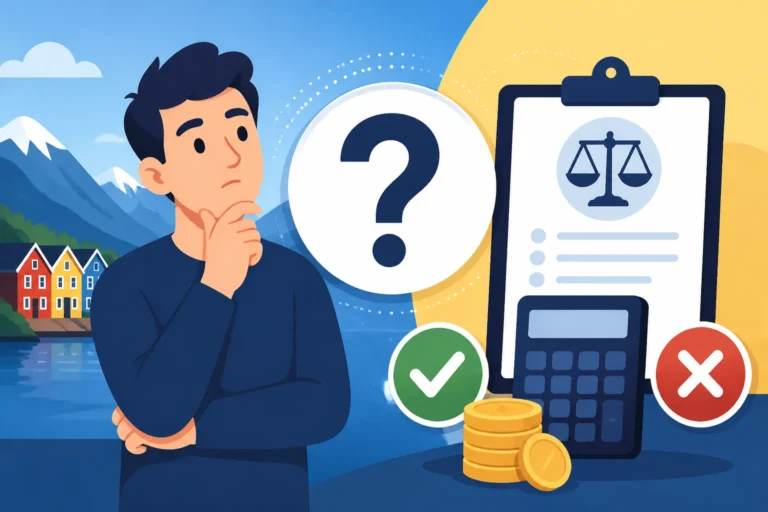
PAYE Scheme (Kildeskatt på Lønn) for Foreign Workers: Pros and Cons
Navigating the Norwegian tax system as a newcomer can feel like trying to solve a Rubik's Cube blindfolded – especially when you first land and hear about terms like "Kildeskatt på Lønn." Many expats arrive wondering if this special tax scheme is a golden ticket to simplicity or a hidden trap. This guide will thoroughly break down Norway's Pay-As-You-Earn (PAYE) scheme, exploring its true benefits and the often-overlooked downsides, so you can make an informed decision for your financial future here.
What Exactly is Kildeskatt på Lønn (PAYE)?
When you first start working in Norway, you'll inevitably encounter the concept of tax. For many foreign workers, particularly those on shorter assignments or new to the country, Norway offers a simplified tax scheme known as Kildeskatt på Lønn, which translates to "Pay-As-You-Earn tax on wages." It's designed to streamline the tax process, but as with many things in Norway, 'simple' often comes with its own set of nuances.
The Basics of the Scheme
At its core, Kildeskatt på Lønn is a flat-rate tax applied directly to your gross salary and other benefits. It's automatically deducted by your employer each payday, which means less fuss for you. The tax rate is currently 25%. This rate covers income tax, national insurance contributions (folketrygdavgift), and any bracket tax (trinnskatt) you might otherwise incur. The idea is that this single, flat deduction simplifies things immensely, especially for those who might only be here for a limited time. You don't get the same deductions as someone on the ordinary tax scheme, but in return, the administrative burden is significantly reduced. It sounds quite appealing, doesn't it? No complex calculations, no annual tax return to file.
Who is Eligible for PAYE?
The PAYE scheme isn't for everyone, and there are specific criteria you need to meet to be eligible. Generally, it's aimed at foreign workers who are new to Norway or are considered non-tax resident. The primary requirement is that you must either be considered a tax resident for less than 183 days within any 12-month period, or if you do become a tax resident, you must be working for an employer based in Norway and choose this scheme. Crucially, your employer must be a Norwegian entity or have a permanent establishment here. You also cannot simultaneously be eligible for certain other tax deduction schemes. This usually means if you're planning on a long-term stay, say more than two years, the PAYE scheme might not be the most advantageous option for you, even if you technically qualify in your first year. It's often the default for many seasonal workers or those on shorter-term contracts before they fully integrate into the Norwegian tax system.
The "Pros" of Opting for PAYE
Okay, let's talk about the good stuff. Why would anyone choose this scheme? For many, especially those just dipping their toes into the Norwegian work-life, the benefits of PAYE can feel like a breath of fresh air compared to the complexities of other national tax systems.
Simplicity and Predictability
One of the biggest advantages of Kildeskatt på Lønn is its sheer simplicity. Imagine: you get paid, and a fixed percentage is automatically deducted. No surprises, no worrying about estimated taxes, and critically, no annual tax return to file with Skatteetaten (the Norwegian Tax Administration). This is a huge relief for many new arrivals who are already grappling with learning a new language, understanding the culture, and setting up their lives. The predictability of knowing exactly what percentage of your income will go to taxes allows for much easier budgeting. For those who aren't planning to claim many deductions anyway, or who are here for a very short stint, this straightforward approach is incredibly appealing. It takes away a significant administrative headache, freeing up your mental energy for more important things, like learning Norwegian or finding out where to buy the best brunost.
No Annual Tax Return Hassle Usually
This point really needs to be emphasized for expats. The ordinary Norwegian tax return, known as Skattemelding, can be quite daunting. It's pre-filled, which sounds helpful, but checking all the details, understanding the terminology (often in Norwegian), and making sure you haven't missed any potential deductions can be a stressful experience. With PAYE, for most people, this annual ritual simply doesn't exist. Your tax obligations are considered fulfilled at the point of deduction. This means no scrambling for receipts, no poring over financial statements, and no waiting anxiously for your tax assessment. It’s a "set it and forget it" system that can dramatically reduce the stress associated with end-of-year financial obligations, which is a massive plus for anyone who finds tax forms intimidating. However, it's vital to remember that "usually" is the key word here; there are exceptions, as we'll discuss in the "cons" section.
The "Cons" and Hidden Drawbacks of PAYE
While simplicity is a tempting offer, the PAYE scheme isn't without its downsides. Many expats, particularly those who end up staying longer or earning more than initially anticipated, discover that the flat-rate ease comes at a cost. It’s crucial to understand these potential drawbacks before committing to the scheme.
Missed Deductions and Higher Overall Tax
Here's the kicker: with Kildeskatt på Lønn, you cannot claim any deductions. None. Zero. This is a significant point of difference from the ordinary tax scheme, where you can often deduct things like interest on loans, certain travel expenses, union fees, and even expenses related to commuting between your home country and Norway (though these Commuter Tax Deductions: Claiming Travel Between Home and Work are highly specific). For many, these deductions can considerably lower their taxable income, resulting in a lower overall tax burden.
Let's say you're paying a substantial amount of interest on a mortgage back home, or you have significant travel costs to visit family. Under the ordinary scheme, a portion of these might be deductible. With PAYE, you simply pay 25% on your gross income, regardless. For those with higher incomes, or individuals who would qualify for significant deductions, this flat rate often means you end up paying more tax overall than if you were on the ordinary system. It's a trade-off: administrative ease for potentially higher taxes. This is where it really pays to run the numbers, perhaps with help from a specialized service like Taxes for Expats, to see which scheme is genuinely more beneficial for your personal financial situation.
Limitations for Longer Stays or Higher Incomes
The PAYE scheme is truly designed for short-term stays. If you find yourself in Norway for more than 183 days in a 12-month period, you generally become a Norwegian tax resident, and the limitations of PAYE become even more apparent. While you can choose to remain on the PAYE scheme for up to 24 months, if you are a tax resident, you typically cannot opt for PAYE if your income exceeds a certain threshold. For 2026, this threshold is 696,000 NOK. If your income goes above this, you are automatically moved to the ordinary tax scheme.
This can be a rude awakening for those who initially chose PAYE for its simplicity but then saw their income increase or decided to extend their stay. Suddenly, you're thrust into the ordinary system, potentially with a backlog of deductions you could have claimed in previous years. Furthermore, if you exceed the 24-month limit for PAYE as a tax resident, you will also be automatically moved to the ordinary system and will then be required to file a tax return. It's critical to be aware of these caps and timelines, as they can significantly impact your financial planning in Norway. Ignoring them can lead to unexpected tax bills or missed opportunities for savings.
When PAYE Might Be a Good Fit for You
Despite the potential drawbacks, there are indeed scenarios where the PAYE scheme is not just convenient but genuinely the most sensible choice for foreign workers in Norway. It's about aligning the scheme with your personal circumstances and length of stay.
Short-Term Contracts and Seasonal Work
If you're coming to Norway for a short burst – think summer jobs in tourism, a few months on an oil rig, or a specific project that lasts less than a year – PAYE is often your best bet. For seasonal workers, the quick and clean deduction means you don't have to worry about the complexities of becoming a full tax resident or understanding Norway's annual tax cycle. You work, you get paid, and the tax is handled. This is especially true if your income falls below the threshold that would make significant deductions worthwhile. You simply pay your 25%, and your tax obligations for that income period are settled. This allows you to focus on your work and enjoy your time in Norway without the added stress of tax administration.
Specific Scenarios for Choosing PAYE
Beyond short-term contracts, PAYE can also be a good fit if you know for certain that you won't have any significant tax-deductible expenses. Perhaps you're single, renting a room, and have no loans or dependants. In such a scenario, the benefits of standard deductions might be minimal anyway, making the simplicity of PAYE attractive. It's also often chosen by those who are truly just testing the waters in Norway and aren't sure if they will stay. It provides a simple entry point into the tax system without requiring a deep dive into its intricacies. However, as soon as your situation changes – you buy property, get married, or decide to stay long-term – it's definitely time to reassess. You can also opt for PAYE if you are considered a tax resident for up to two years, provided your income stays below the aforementioned threshold.
Switching from PAYE to Ordinary Taxation
Life in Norway, like everywhere else, is rarely static. What starts as a short-term adventure can quickly turn into a long-term commitment. When that happens, or when your financial situation changes, you might find that the PAYE scheme no longer serves your best interests. Thankfully, you're not locked into it forever.
How and When to Make the Change
If you're on PAYE and decide that the ordinary tax scheme would be more beneficial (perhaps after calculating potential deductions or realizing your income will exceed the PAYE threshold), you absolutely can switch. This isn't a unilateral decision by Skatteetaten; it's your choice. You generally make this election by submitting an ordinary tax return (Skattemelding) for the relevant income year. By filing a complete tax return, you are effectively opting out of the PAYE scheme and informing the tax authorities that you wish to be assessed under the standard rules. This process usually happens early in the year following the income year you want to change for. For instance, if you want to switch for your 2026 income, you'd file your 2026 tax return (typically available in March 2027) as an ordinary taxpayer. It’s crucial to understand that once you opt for the ordinary scheme for a given year, you cannot go back to PAYE for that same year. You've made your bed, so to speak.
What Happens After You Switch
Once you switch to the ordinary tax scheme, you become subject to all the rules, benefits, and obligations that apply to permanent residents and other long-term workers. This means you will need to file an annual tax return (Skattemelding) every year. You will also be eligible to claim deductions that were unavailable under PAYE, which could include interest expenses, travel deductions, and potentially other allowances. Your income will be taxed progressively, meaning higher earners pay a higher percentage through bracket tax (trinnskatt) on top of the base rate, but again, with the benefit of deductions. Your contributions to the National Insurance Scheme (folketrygden) will continue as before, but the overall calculation of your tax liability will be more nuanced. It can feel like a big jump from simple flat-rate deductions to navigating comprehensive tax forms, but it's often a financially smarter move in the long run. If you're planning to stay in Norway long-term, it's worth understanding the intricacies of the Folketrygden Basics: Who is Covered by the National Insurance Scheme to ensure you're aware of all your rights and responsibilities.
Key Considerations Before Choosing PAYE
Making a tax decision, even a seemingly simple one like choosing PAYE, should never be taken lightly. It has long-term implications for your financial health in Norway, and it's essential to weigh all factors carefully.
Understanding Your Total Financial Picture
Before you tick that box for PAYE, take a moment to look at your entire financial situation, not just your salary. Do you have significant student loans back home? Are you planning to buy property in Norway, or do you already own property elsewhere with a mortgage? Do you have dependent children, or are you supporting family members? Are you paying high rent in a major city that might have a tax relief component? All these factors can influence whether the deductions available under the ordinary tax scheme would outweigh the simplicity of the flat 25% PAYE rate. Many expats find that while the 25% seems appealingly low at first glance, the lack of deductions quickly makes it more expensive than the ordinary scheme, especially with the 22% base income tax rate plus additional bracket tax (trinnskatt) potentially being offset by generous deductions. It's truly about your personal context.
The Role of Tax Advisors and Helsenorge
Navigating the Norwegian tax landscape can be complex, and there's no shame in seeking professional help. Tax advisors specializing in expat taxation, such as Taxes for Expats, can provide invaluable insights into your specific situation, helping you calculate whether PAYE or the ordinary scheme is more advantageous. They can also assist with the transition if you decide to switch. While the Norwegian Tax Administration (Skatteetaten) provides a lot of information on their website, it can be overwhelming, and specific advice is hard to come by without a direct consultation.
Remember that Helsenorge, while primarily a health portal, also integrates with some public services, but it's not a tax advisory platform. For managing your Skattekort (tax deduction card) and checking your Frikort status, Helsenorge and Skatteetaten's online portals are your go-to. It's often recommended to check your Skattekort annually, especially if your income or deductions change, to ensure you're paying the correct amount of tax throughout the year. If you're ever in doubt about the nuances of your financial situation, reaching out to a professional is a wise investment.
PAYE vs. Ordinary Taxation: A Quick Comparison
To help crystallize the differences, here's a table summarizing the key aspects of the PAYE scheme and the ordinary tax scheme in Norway:
| Feature | PAYE Scheme (Kildeskatt på Lønn) | Ordinary Tax Scheme |
|---|---|---|
| Tax Rate | Flat 25% on gross income | Progressive (22% base + Trinnskatt) |
| Deductions | None allowed | Various deductions allowed |
| Annual Tax Return | Not required (usually) | Mandatory |
| Eligibility | New foreign workers, non-tax residents, or tax residents for <24 months, income below threshold | Most tax residents, long-term workers, higher earners |
| Max Duration (as tax resident) | 24 months, if income below threshold | Unlimited |
| Complexity | Simple, 'set it and forget it' | More complex, requires active management |
| Potential Outcome | Predictable deductions, but possibly higher overall tax for some | Lower overall tax for those with deductions, but more administrative work |
This comparison highlights that while PAYE offers undeniable simplicity, it can be a more expensive choice if you would benefit from common deductions under the ordinary scheme. For instance, if you're exploring options like Private Health Insurance in Norway: Is It Worth the Extra Cost?, remember that these typically don't have direct tax implications under PAYE, but understanding the broader tax system is key for any long-term financial planning. Similarly, if you're already using services like Wise to manage international money transfers, you're likely someone who values efficient financial management, and delving into the tax implications of both schemes is a logical next step.
Ultimately, the choice between PAYE and the ordinary tax scheme hinges on your individual circumstances, how long you plan to stay in Norway, and your total financial picture. Don't let the initial promise of simplicity overshadow the potential long-term financial benefits of the ordinary system.
Disclaimer
The information provided in this guide is for general informational purposes only and does not constitute financial, tax, or legal advice. Tax laws and regulations in Norway are subject to change. It is highly recommended to consult with Skatteetaten (the Norwegian Tax Administration) or a qualified tax advisor for personalized advice regarding your specific situation.