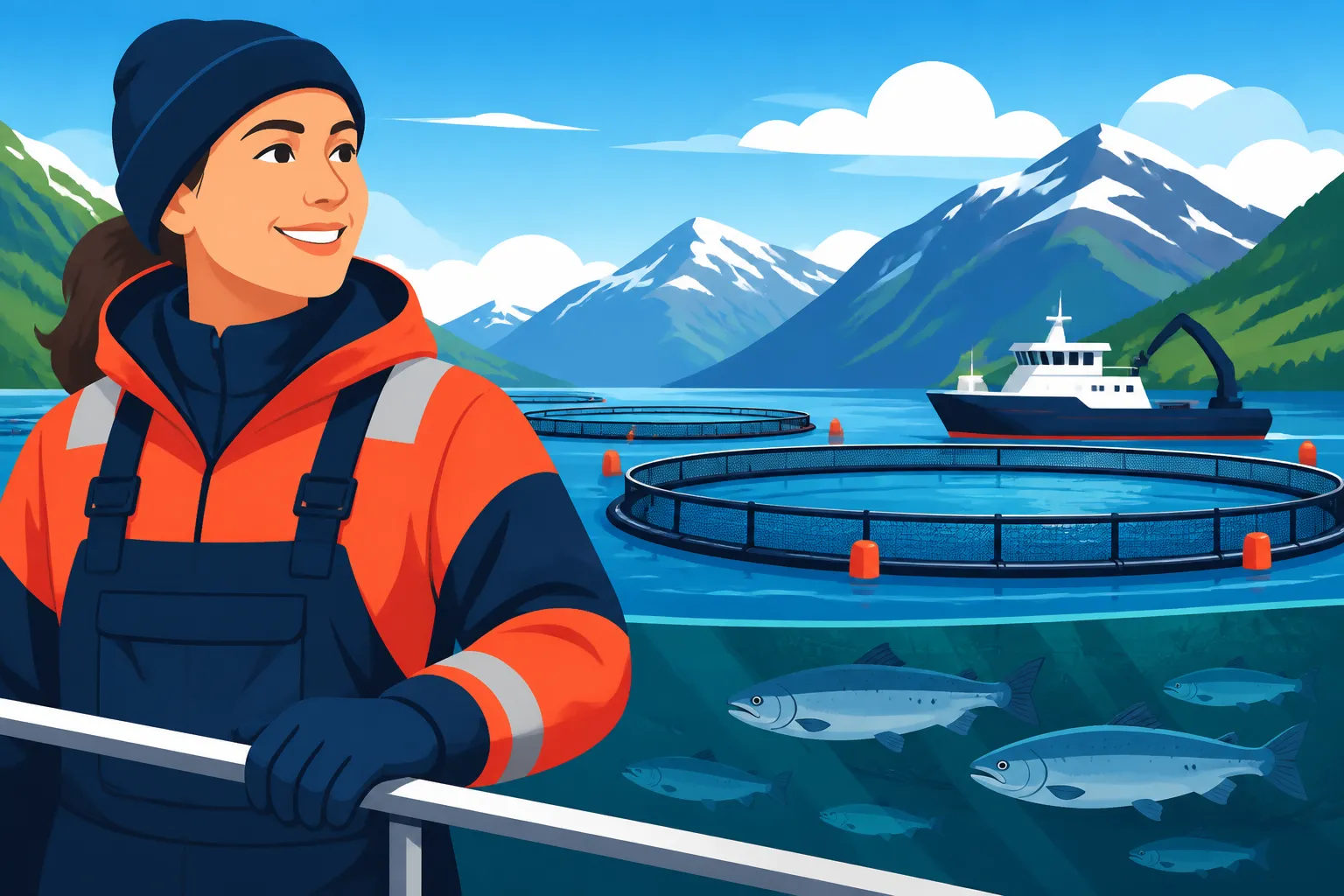
Working in Norway’s Salmon Farming and Aquaculture Industry
Trying to navigate the Norwegian job market from abroad, especially in a niche industry, can feel like trying to catch a salmon with your bare hands – challenging, to say the least! I remember the sheer confusion of deciphering job descriptions that sounded like they were written in an entirely different language (because, well, they often were!). But fear not, this guide will cast a wide net, helping you understand the thriving salmon farming and aquaculture industry in Norway, and how you can land a job within it.
The Lure of the Blue Revolution: Why Aquaculture in Norway?
Norway’s aquaculture industry, often dubbed the "Blue Revolution," is far more than just fish farms dotting the fjords; it's a colossal, high-tech enterprise that plays a pivotal role in the global food supply. This isn't just about throwing feed into the water; it's a sophisticated ecosystem of research, engineering, logistics, and sustainable practices that supports entire coastal communities. For expats, this sector offers a unique opportunity to contribute to a vital industry in a country renowned for its innovation and commitment to sustainability.
A Booming Industry with Global Reach
Norway stands as the world's largest producer of Atlantic salmon, and this isn't by accident. The industry has seen phenomenal growth, driven by a combination of ideal natural conditions along its expansive coastline, continuous investment in cutting-edge technology, and stringent regulatory frameworks ensuring quality and environmental responsibility. From the icy waters of the north to the milder fjords in the south, salmon farms are highly integrated operations, leveraging advanced sensors, automated feeding systems, and even AI to monitor fish health and growth. This growth translates directly into a constant demand for skilled labor across a spectrum of disciplines, making it a dynamic and relatively stable sector for job seekers. The global demand for Norwegian salmon continues to rise, securing the industry’s long-term prospects and creating a robust environment for career development.
Diverse Roles Beyond the Farm
When most people picture salmon farming, they often imagine rugged individuals working directly with fish cages. While farm operations are indeed a core component, the aquaculture industry offers a surprisingly diverse array of roles that extend far beyond the water's edge. Think about it: a modern salmon farm requires everything from marine biologists and veterinarians to IT specialists managing complex data systems, engineers designing new equipment, and logistics experts ensuring fresh salmon reaches markets worldwide. You'll find opportunities in feed production, processing plants, research and development, sales and marketing, quality control, environmental monitoring, and even finance and administration. Companies like Mowi, SalMar, and Cermaq are not just fish farmers; they are global corporations with intricate supply chains and sophisticated operational needs, meaning a vast ecosystem of roles that require both niche expertise and transferable skills from other industries. This broad spectrum of jobs means that even if you don't have direct aquaculture experience, your background in tech, engineering, or business might be highly relevant.
Navigating the Job Market: Finding Your Footing in Salmon Farming
Finding a job in Norway’s aquaculture sector, especially as a foreigner, requires a strategic approach. It’s not just about having the right skills; it’s about understanding where to look, what qualifications truly matter, and how to present yourself in a way that resonates with Norwegian employers. The industry, while international in scope, often values local knowledge and language skills, so a proactive attitude is key.
Essential Skills and Qualifications
First and foremost, the specific requirements will vary greatly depending on the role. For hands-on farm work, a strong back, a willingness to work outdoors in all weather conditions, and a basic understanding of marine life can be a start. However, increasingly, even these roles benefit from vocational training in aquaculture, often referred to as an "akvakulturfagbrev." For more specialized positions, a university degree in fields like marine biology, veterinary medicine, aquaculture engineering, environmental science, or food technology is often mandatory. Experience, naturally, is highly valued, especially practical experience with fish husbandry, net cleaning, or operating specialized marine equipment.
One crucial aspect often underestimated by newcomers is language. While many larger companies operate in English, especially at higher-level and scientific positions, proficiency in Norwegian can be a significant advantage, particularly for roles that involve daily interaction with local teams or local authorities. Learning Norwegian for Work: Norskprøven and Language Courses are genuinely invaluable. I highly recommend platforms like italki for finding affordable tutors to practice conversational Norwegian; it makes a huge difference not just in interviews but in integrating into the workplace and local community. Don’t wait until you land the job; start learning as soon as you consider moving. Many employers see the effort to learn Norwegian as a strong indicator of your commitment to living and working in Norway long-term.
Where to Look: Job Portals, Networking, and Direct Applications
The Norwegian job market has its own quirks, and knowing the right channels is half the battle. While global platforms like LinkedIn certainly host many listings, the primary hub for Norwegian job advertisements is Finn.no Masterclass: How to Navigate Norway’s Biggest Housing Site. You’ll find a dedicated "jobb" section there, and it’s often the first place companies post their openings. Other specialized portals for maritime or aquaculture roles might also exist, but Finn.no is usually the main gateway.
Beyond job boards, don't underestimate the power of networking, even if it feels daunting in Norway’s more reserved culture. Attending industry conferences (such as Aqua Nor or HavExpo) or webinars, connecting with professionals on LinkedIn, and even reaching out directly to companies you’re interested in can open doors. Many jobs, especially in smaller towns along the coast where farms are located, are filled through word-of-mouth or internal recommendations. Remember that "Janteloven" influences Norwegian interactions, so a humble, persistent approach works better than aggressive self-promotion.
When applying, tailor your CV and cover letter meticulously for each role. Norwegian employers appreciate directness and relevance. Ensure your qualifications are clearly articulated and, if necessary, translated or recognized by NOKUT, the Norwegian Agency for Quality Assurance in Education. For a comprehensive overview, checking out resources like Working in Norway: The Ultimate Job Hunting Guide for Expats can provide a solid foundation for your application strategy.
Here's a quick look at common job titles you might encounter:
| Job Category | Example Roles | Typical Education/Experience |
|---|---|---|
| Farm Operations | Fish Farmer (Røkter), Operations Technician, Service Boat Operator, Feeding Operator | Vocational training (Akvakulturfagbrev), relevant experience, maritime certificates |
| Specialist/Technical | Marine Biologist, Veterinarian, Environmental Manager, Fish Health Biologist, Quality Control Specialist, Automation Engineer, Data Analyst, Dive Technician | University Degree (BSc/MSc) in relevant field, professional certifications, practical experience |
| Management/Office | Farm Manager, Production Manager, Logistics Coordinator, Sales Manager, HR Specialist, Finance Controller | University Degree (BSc/MSc) in Business/Management, significant industry experience, leadership skills |
| Processing | Processing Worker, Quality Inspector, Production Line Supervisor, Maintenance Technician | Vocational training, relevant experience in food processing or manufacturing |
Life and Work on the Norwegian Coast: What to Expect
Moving to Norway, especially for a job in a coastal or rural area, is about embracing a new lifestyle. The aquaculture industry often operates in stunning, yet sometimes remote, locations. This means experiencing Norway’s incredible nature firsthand, but also adapting to its unique rhythm and expectations, both at work and in daily life.
The Day-to-Day Realities
Work in salmon farming can be physically demanding, especially for those directly involved in farm operations. Expect early starts, outdoor work in all weather conditions (rain, snow, wind – Norway has it all!), and a strong emphasis on health and safety protocols. The industry is highly regulated, and adherence to safety guidelines is paramount. You might be working shifts, including nights and weekends, especially in roles that require continuous monitoring of the fish. However, for every challenge, there’s a reward. The views from many workplaces are breathtaking, the sense of camaraderie with colleagues (often referred to as "kollegaer") is strong, and there's a deep satisfaction in contributing to a vital food source.
For those in more technical or office-based roles, the work environment will be more typical of a Norwegian office, characterized by flat hierarchies and a focus on collaboration. You’ll find that Norwegian Work Culture: Flat Hierarchies and Communication Styles often means direct communication, but also a strong emphasis on consensus and work-life balance. Long hours are generally frowned upon, and personal time is highly valued. The industry is constantly innovating, so expect to be working with modern equipment and sustainable practices, which can be very stimulating if you're passionate about environmental responsibility.
Understanding Salaries, Benefits, and Taxes for Expats
Salaries in Norway’s aquaculture industry are generally competitive and reflect the high cost of living. While there isn't a national minimum wage in Norway, many sectors, including parts of the aquaculture industry, are covered by collective agreements (tariffavtaler) that set minimum rates. Salaries and Minimum Wage in Norway: Industry Benchmarks can give you a better idea of expected earnings. Entry-level positions might start around 350,000-450,000 NOK annually, while experienced specialists or managers can earn significantly more, often upwards of 600,000 NOK or even 800,000+ NOK depending on the role and company.
Beyond the salary, Norwegian employment packages typically include comprehensive benefits. This usually means generous sick leave provisions (Sykepenger) and holiday pay (Feriepenger), alongside contributions to a mandatory occupational pension scheme (Tjenestepensjon). Understanding your Employment Rights in Norway: The Working Environment Act Explained is crucial to knowing your entitlements.
When it comes to finances, navigating The Complete Guide to Norwegian Taxes for Expats (Skatteetaten) will be critical. Your income will be subject to progressive taxation, and Norway also has a national insurance scheme (Folketrygden) that covers public healthcare and social security benefits, which you will contribute to through your wages. It's wise to familiarize yourself with how your income tax (Skattekort) is calculated and to ensure you understand your tax obligations from day one. Resources like Taxes for Expats can be incredibly helpful in understanding your specific situation, especially if you have complex international tax considerations. They can guide you through the intricacies of Norwegian tax law and potential double taxation agreements.
Practicalities of Moving and Settling In
Relocating to Norway for work involves more than just finding a job; it’s about establishing your life in a new country. From securing your right to work to finding a place to live, each step requires careful planning.
Visa and Residence Permit Considerations
For most non-EU/EEA citizens, securing a job in the aquaculture industry means applying for a Skilled Worker Visa in Norway: Eligibility, Salary Thresholds, and Process. This is a critical step, and your eligibility will largely depend on having a concrete job offer that meets specific salary thresholds and educational requirements. The Norwegian Directorate of Immigration (UDI) handles these applications, and the process can take time, so patience is key. Ensure all your documents are in order, translated, and certified as required. If you're an EU/EEA citizen, the process is simpler, involving registration with the police after arrival.
Once your visa is secured, you'll also need to get a D-number or Fødselsnummer, which is essential for almost everything else, from banking to healthcare. Read up on D-Number vs Fødselsnummer: How It Affects Your Banking Options early on to avoid delays.
Integrating into Local Life
Living in the often remote coastal communities where many aquaculture jobs are located can be a unique experience. These towns are typically close-knit, with a strong sense of community. While English is widely spoken in professional settings, making an effort to learn Norwegian will significantly enhance your social integration. Participating in local dugnad (community volunteering days) or joining local sports clubs and volunteer groups to make friends are fantastic ways to connect with Norwegians.
The Cost of Living in Norway 2026: Budgeting for Singles and Families is famously high, so meticulous financial planning is essential. This applies to everything from groceries (where supermarket loyalty apps like Trumf or Æ can save you a few krone) to Renting in Norway: Apartments, Contracts, and Tenant Rights. Housing might be more affordable in rural areas compared to major cities, but options can also be limited, so start your search early. Finding Short-Term Rentals for the First Month in Norway might be a good stepping stone while you secure a long-term place. Embrace friluftsliv – the Norwegian love for outdoor life – as it's often the heart of social activity outside of work in these areas. Whether it's hiking, fishing, or skiing, participating will not only keep you active but also help you connect with your new surroundings and community.
Disclaimer
The information provided in this guide is intended for general informational purposes only and does not constitute legal, financial, or immigration advice. While we strive to keep the information up-to-date and accurate, regulations and conditions in Norway can change rapidly. Always consult official government sources, such as UDI, Skatteetaten, and NAV, or seek professional advice for your specific situation.