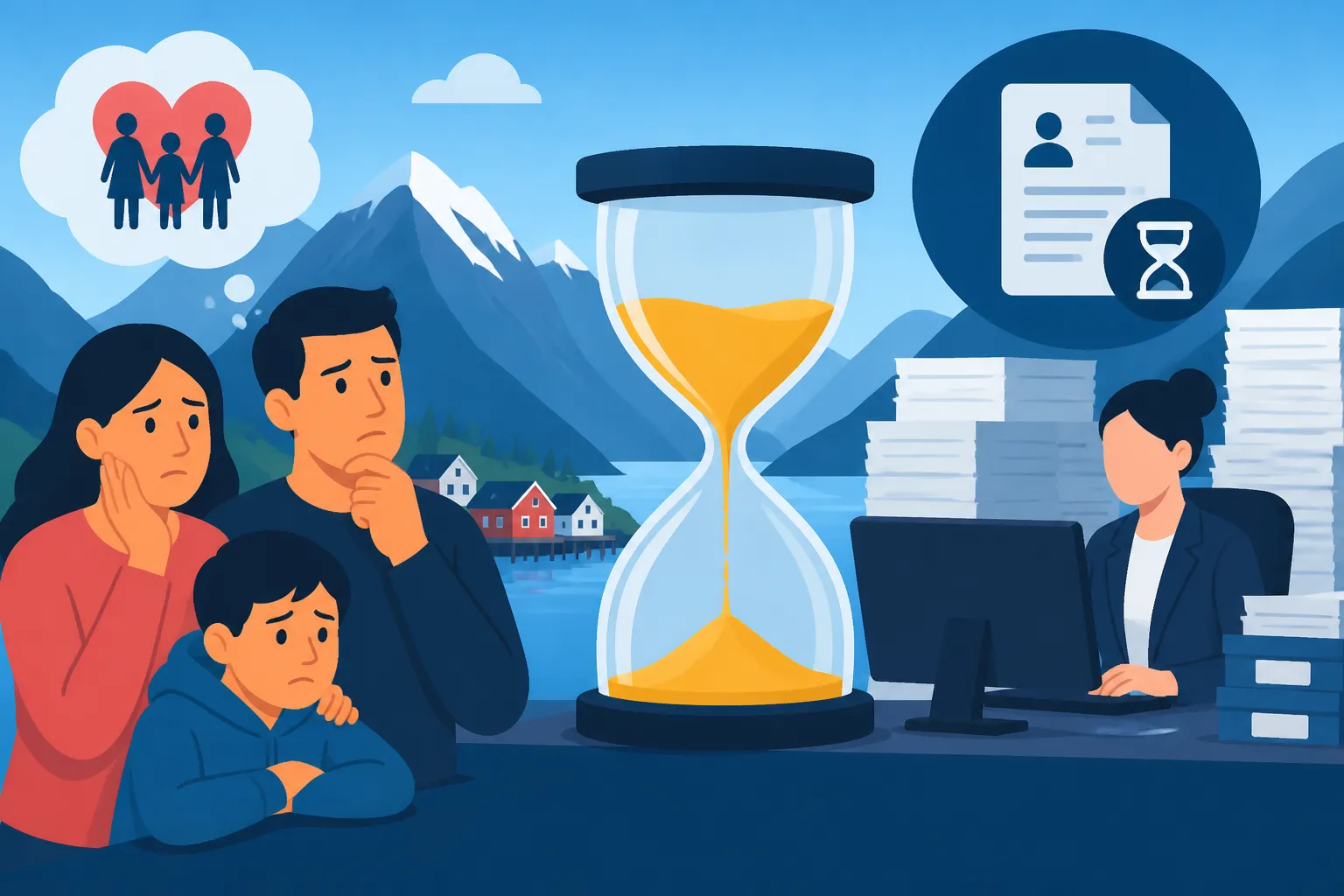
UDI Processing Times in 2026: Why Are Family Visas So Slow?
If you're an expat in Norway, or aspiring to be one, you've likely heard the whispered tales of UDI's legendary processing times – especially when it comes to family visas. It’s infuriating when your entire life, your family's future, hangs in the balance, stuck in a bureaucratic limbo for what feels like an eternity. This guide is here to help you understand why these delays happen, what to realistically expect in 2026, and how to navigate this incredibly frustrating journey.
Understanding the Landscape: The Unpredictable World of UDI Family Visa Processing
Let’s be honest, the Norwegian Directorate of Immigration (UDI) has a reputation for being thorough, which often translates to slow. For those of us who have moved to this beautiful country, or are trying to bring our loved ones here, the waiting period for family immigration applications can be a source of immense stress and uncertainty. While the UDI website provides official processing time estimates, the reality on the ground, especially for family reunification cases, often tells a different, much longer story.
Imagine you've meticulously gathered every document, translated every certificate, and paid all the fees, only to face months, sometimes even a year or more, of deafening silence. This isn't just an inconvenience; it's a profound disruption to your life. You can't plan for jobs, secure long-term housing, or enroll children in schools without a clear timeline. The official UDI estimates, while a starting point, can sometimes feel like a cruel joke when your application far exceeds them. For instance, while a skilled worker visa might have a published processing time of a few weeks or months, a family reunification visa involving complex ties or documents from non-EU/EEA countries can stretch far beyond that. The sheer volume of applications, coupled with the detailed investigative work required for family cases, creates a bottleneck that seems to grow year after year. It truly makes you feel like your future is held captive.
The distinction between a "complete" application and one that's "ready for processing" is crucial, and often misunderstood. Just because you've submitted all the required forms and attachments doesn't mean UDI considers it ready to be looked at. They often have internal queues and verification steps that add to the overall waiting period. This is particularly relevant for family visas, where UDI needs to verify the authenticity of relationships, financial stability of the sponsor, and even cultural nuances that might affect the application. It's a bureaucratic labyrinth designed for thoroughness, but it unfortunately comes at the cost of speed and applicant peace of mind.
Deeper Dives: Core Reasons Why Family Visa Applications Face Such Significant Delays
The "why" behind the delays isn't a simple answer, but a complex interplay of internal systemic challenges within UDI and external factors that have only intensified over time. It’s not just about one missing document; it’s about a system under pressure.
Staffing, Funding, and Bureaucratic Backlogs
One of the most immediate and often cited reasons for sluggish processing is a persistent issue with staffing and funding within the UDI. Norway, despite its high standard of living, grapples with allocating sufficient resources to handle the ever-increasing number of immigration applications. Each family immigration case requires a dedicated case worker to review documents, conduct checks, and sometimes even arrange interviews. This is a labor-intensive process, and if the number of case workers doesn't keep pace with the influx of applications, backlogs are inevitable. It's a classic supply-and-demand problem in a very sensitive area. Imagine a mountain of paperwork constantly growing, with only a limited number of people to sort through it.
Moreover, the UDI system itself, while digitalized to a certain extent with the UDI and Police Portal, still involves numerous manual checks and inter-agency coordination. They need to verify information with the police, the tax authorities, and sometimes even international bodies. Each of these touchpoints can introduce its own micro-delay, and when you combine dozens of these, the weeks turn into months. The detailed verification process for family immigration, in particular, requires a deep dive into personal histories, financial records, and relationship authenticity, making it far more complex than, say, a straightforward skilled worker visa application. They're not just checking boxes; they're trying to build a comprehensive picture to prevent fraud and ensure compliance with immigration laws. This thoroughness, while understandable from a national security and legal standpoint, directly contributes to the protracted waiting times we experience.
The Impact of Increased Immigration and Global Events
Beyond internal operational issues, external pressures play a massive role in UDI's workload. Norway remains an attractive destination for skilled workers, students, and those seeking a better life, leading to a steady increase in overall immigration applications. The more people who apply, the greater the strain on the system, and family reunification visas are an integral part of this overall volume.
Furthermore, global events, such as humanitarian crises or geopolitical conflicts, can trigger sudden surges in asylum applications or family reunification requests from specific regions. These urgent cases often receive priority, understandably so, but this necessarily diverts resources and attention away from routine applications, including many family immigration cases that were already in the queue. For example, the impact of the war in Ukraine on European immigration systems, including Norway's, meant a significant re-prioritization of resources to handle the influx of refugees. While essential, this inevitably slowed down other categories of applications. These unpredictable surges mean UDI is constantly playing catch-up, and family visas, unfortunately, often bear the brunt of these shifts, making already slow processes even slower. It’s a constant juggle that leaves many families in an agonizing state of limbo, not knowing when their application will finally get its turn.
Your Action Plan: Strategies to Mitigate Delays and Survive the UDI Waiting Period
While you can't magically speed up the UDI, there are proactive steps you can take to ensure your application is as robust as possible, minimizing unnecessary delays, and coping with the long wait. Think of it as preparing for a marathon, not a sprint.
Meticulous Preparation: Why "Complete" Doesn't Always Mean "Ready"
The single most impactful thing you can do is submit an absolutely flawless, comprehensive application package right from the start. UDI is notorious for sending applications back or requesting additional documents, and each one of these requests can add weeks or months to your processing time. This is where the difference between a "complete" application (meaning all boxes ticked) and a "ready" application (meaning all supporting documents are robust, well-organized, and clearly presented) becomes critical.
Before you even think about submitting, scrutinize the UDI's checklist for your specific visa category. Don't just tick boxes; understand the spirit of what they are asking for. For example, if they ask for proof of relationship, don't just send a marriage certificate. Consider including photos, communication logs, joint leases, or shared bank statements to paint a more convincing picture. This level of detail, especially when showing a "genuine relationship" for a Cohabitant (Samboer) Visas: Proving 2 Years of Living Together application, can make a huge difference.
Remember, every document that is not in Norwegian or English must be translated by an authorized translator. This isn't a suggestion; it's a hard requirement. Poor translations or unofficial ones are a common reason for delays. This is where professional translation services like RushTranslate or Translayte become invaluable. They specialize in legal and official document translation, ensuring your documents meet the stringent requirements of Norwegian authorities. Their expertise can prevent your application from being rejected on technicalities and save you precious time. Do you need an apostille stamp on your documents? Make sure you check the requirements for Document Translation for UDI: Do I Need an Apostille Stamp? as this can be another point of contention.
Beyond the initial submission, keep digital copies of everything. Every email, every confirmation, every document. If UDI asks for something again, you want to be able to provide it instantly. This includes proof of your current residence and financial stability, which are often reassessed during long waiting periods. For a comprehensive overview of general visa requirements, refer to Visas and Residence Permits in Norway: The Complete UDI Guide (2027).
Staying Informed and When to Follow Up
Once your application is submitted, you'll be given an application number. This number is your key to tracking its progress via the UDI online portal. Log in regularly, not obsessively, to check for updates. While the status might not change for long periods, it's the official channel for communication. You can also get important information by checking out Navigating the UDI and Police Portal: Booking Appointments and Tracking.
When it comes to following up directly with UDI, patience is key, but so is persistence. Don't bombard them with emails or calls daily. It won't speed things up and might actually clog their communication channels further. However, if your application has significantly exceeded the published processing times, or if you have a genuine emergency (e.g., serious illness, a job offer with an expiring deadline), it's absolutely appropriate to contact them. UDI has specific guidelines for urgent inquiries, which you should adhere to. Focus on providing your application number and a concise, factual explanation of your situation. You can find more targeted advice on how to communicate with them effectively through guides like UDI Contact Info: How to Actually Reach a Human on the Phone.
It's also worth noting that some family visa types, like those for children of Skilled Worker Visa in Norway: Eligibility, Salary Thresholds, and Process holders, might have slightly different processes or priorities. Always ensure you are looking at the specific guidance for your family category. Remember, if you are a EU/EEA Citizens Moving to Norway: Registration Rules and Rights, your family reunification rules might differ slightly from those of non-EU/EEA nationals.
The Emotional and Practical Toll of Prolonged Waiting
The waiting period isn't just about paperwork; it takes a significant emotional toll. It's a stressful time that can strain relationships, impact mental health, and put your life plans on an indefinite hold.
It's crucial to acknowledge these feelings. It's okay to be frustrated, anxious, or even angry. You're not alone in feeling this way. Many expats experience similar emotions while navigating the Norwegian immigration system. Reach out to expat communities online or in person; sharing experiences can be incredibly validating and provide unexpected tips. Focus on what you can control: your well-being, your relationships, and your short-term plans. Don't let the waiting game consume every aspect of your life. Find healthy coping mechanisms, whether it's embracing Friluftsliv: Embracing the Norwegian Outdoors and "Right to Roam" or simply having honest conversations with your partner and family about the uncertainty.
On the practical side, understand that without a residence permit, your ability to work, study, or access certain social services in Norway is severely limited. This means if your family member is waiting for a permit, they cannot simply pick up a job or enroll in a long-term course. For those with children, this can impact school enrollment. If you're currently in Norway waiting, make sure you understand the nuances of Renting in Norway: Apartments, Contracts, and Tenant Rights and how your immigration status might affect your options. If one parent is waiting for a family visa, ensure you are fully aware of Maternity Pay and Leave: How Your Health Impacts Foreldrepenger and how this might apply to your family situation, although direct access to these benefits is usually tied to a valid residence and work permit. Planning for these restrictions is vital for managing expectations and finances during the wait. Keep in mind that securing Permanent Residence in Norway: Requirements, Timelines, and Language Tests is a multi-year journey, and the family visa is just the first significant step for many.
Common Application Pitfalls Leading to Delays
| Pitfall | Description | Impact on Processing | Mitigation Strategy |
|---|---|---|---|
| Incomplete Documentation | Missing forms, signatures, or required supporting documents. | Application returned or put on hold for requests, adding months. | Double-check UDI checklist; have someone else review it. Use a pre-submission checklist. |
| Uncertified Translations | Documents not translated by an authorized translator, or poor-quality translations. | Immediate rejection or request for new translations. | Use reputable, professional translation services like RushTranslate or Translayte. Ensure translator is authorized. |
| Insufficient Proof of Relationship | For family visas, lack of strong evidence proving the genuineness and longevity of the relationship beyond basic certificates. | Leads to requests for more evidence, potential interviews, and extended review. | Provide a variety of evidence: photos, joint bills, communication logs, statements from friends/family. Explain cultural contexts if relevant. |
| Financial Requirements Not Met | Inadequate proof of the sponsor's income, consistent employment, or sufficient housing. | Application rejection or lengthy requests for further financial documentation. | Ensure sponsor consistently meets income threshold. Provide official pay slips, employment contracts, and updated bank statements. Have a proper housing contract ready. |
| Incorrect Application Type | Applying for the wrong type of residence permit (e.g., trying to apply for skilled worker when family reunification is appropriate). | Immediate rejection; requires starting a completely new application process. | Carefully read UDI guidance for each visa type. Consult UDI's chat function or an immigration lawyer if unsure. |
| Criminal Record/Security Concerns | Undisclosed or problematic criminal history, or issues flagged during background checks. | Leads to extensive additional security vetting, significant delays, or outright rejection. | Be completely transparent. If there's a minor issue, provide full details and explanation. |
Disclaimer
The information provided in this guide is intended for general informational purposes only and does not constitute legal advice. Immigration laws and processing times are subject to change without notice. Always consult the official UDI website or a qualified immigration lawyer for the most accurate and up-to-date information regarding your specific situation.